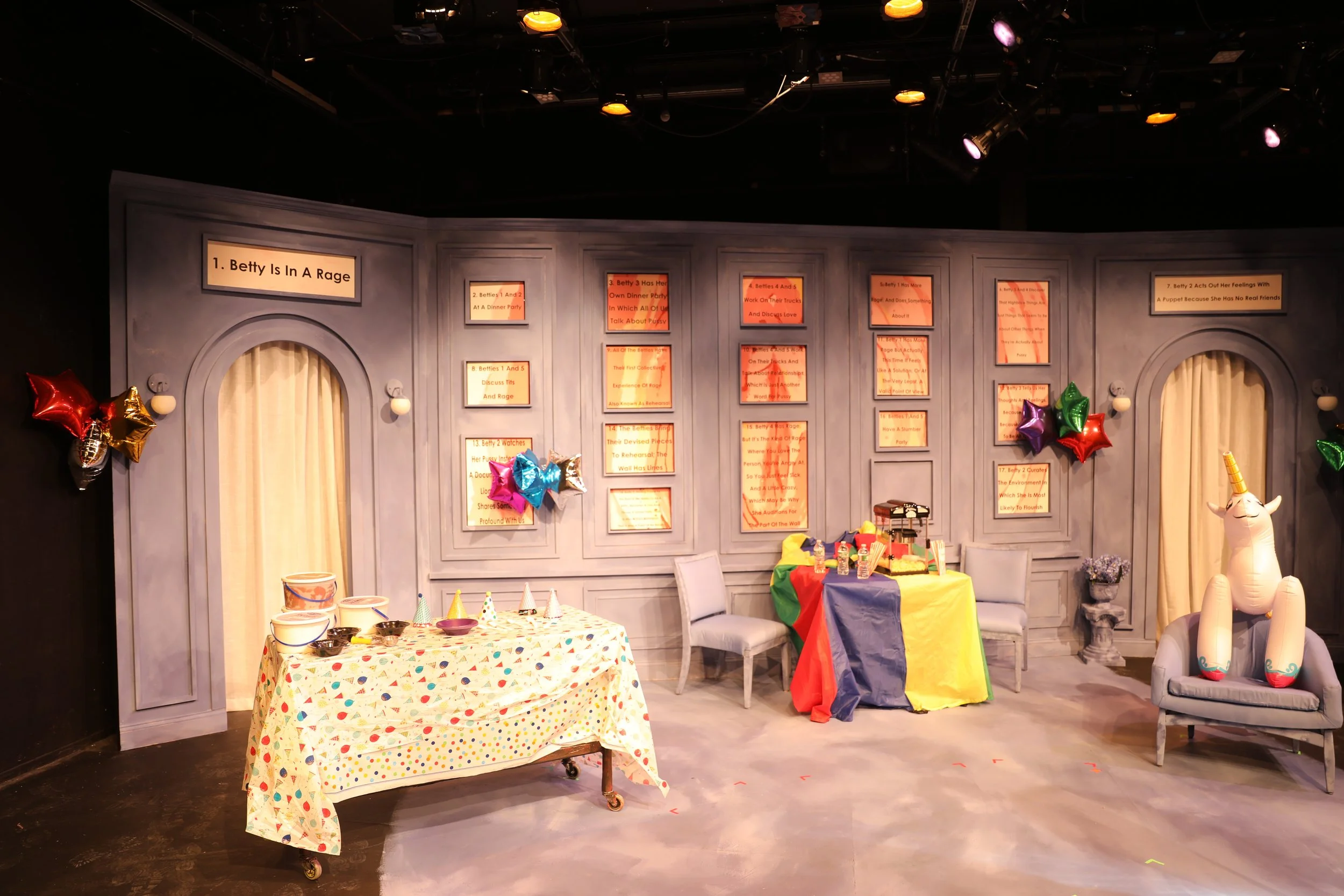
Collective Rage
Photo Credits: Topher Morris
Collective Rage: A Play in Five Betties by Jen Silverman
Directed by Julie Kiernan
Collective Rage - Director’s note
What a treasure it has been for me to work on this play now alongside the news onslaught with unbelievable headlines that are, unfortunately, factual. It is all too easy to be lost and disconnected now amidst headlines consumed through the alienating devices of social media. Creating this production in real life has allowed me the great fortune of connection and community that I needed to find hope. I am truly glad you came to share this space with us today. To witness these five Betties grappling with their Collective Rage, a rage that can be an impetus for change but often does something else altogether. Misdirected by fear, this rage tightens around our hearts, strangulates our voices, and fractures our minds.
Through these five Betties, Jen Silverman has crafted a clear message. It is through real-life connections, having courage, and taking action that the future unfolds with hope rather than despair. Ironically enough, Silverman uses many Brechtian theatrical devices of alienation to allow us to come together and find ourselves. Despite its name, the goal of alienation as a theatrical device is to keep the audience personally invested and engaged in the action so that the message will not be lost. Bertolt Brecht (1898-1956), a playwright and director, fled Nazi Germany and became a stateless citizen.
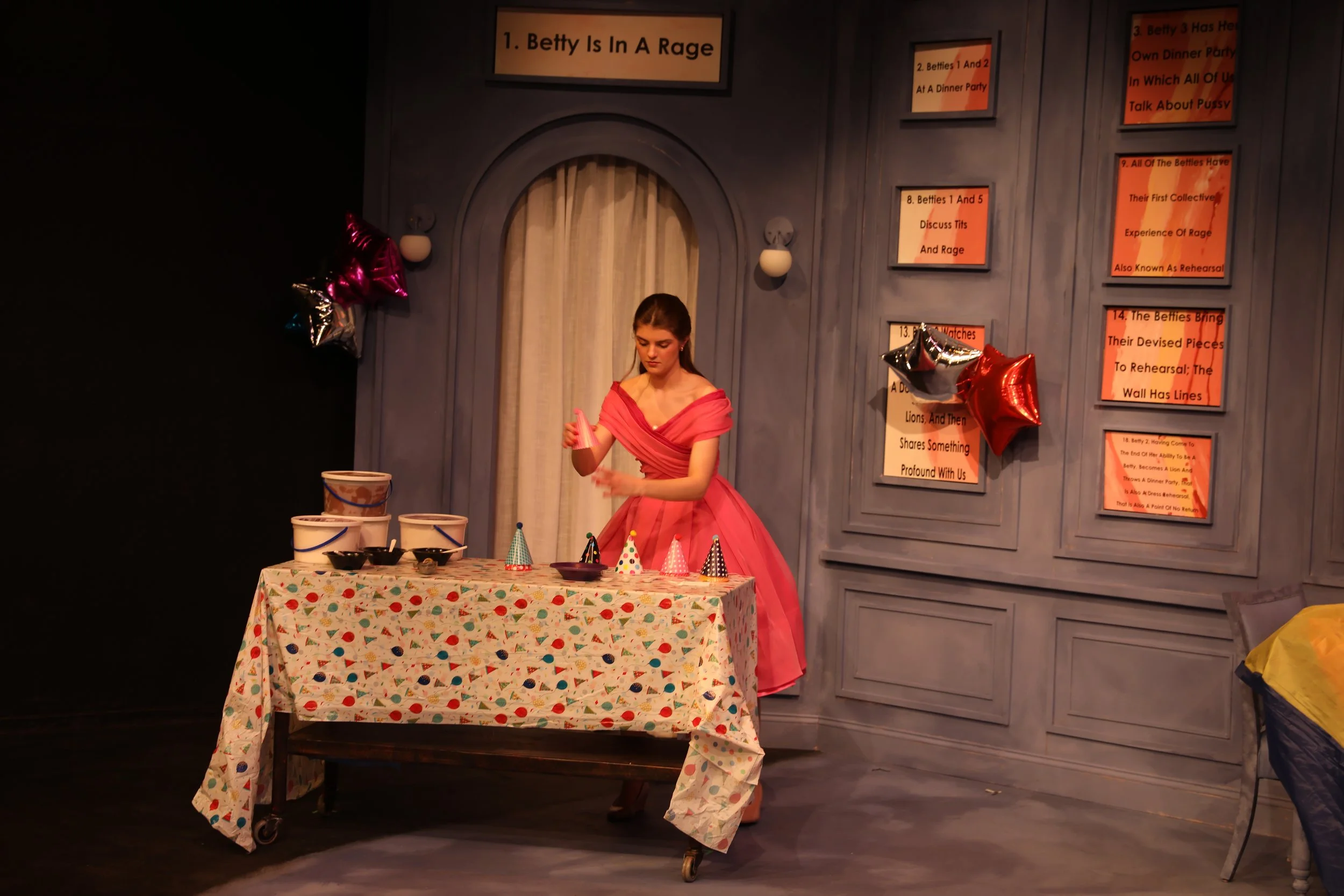
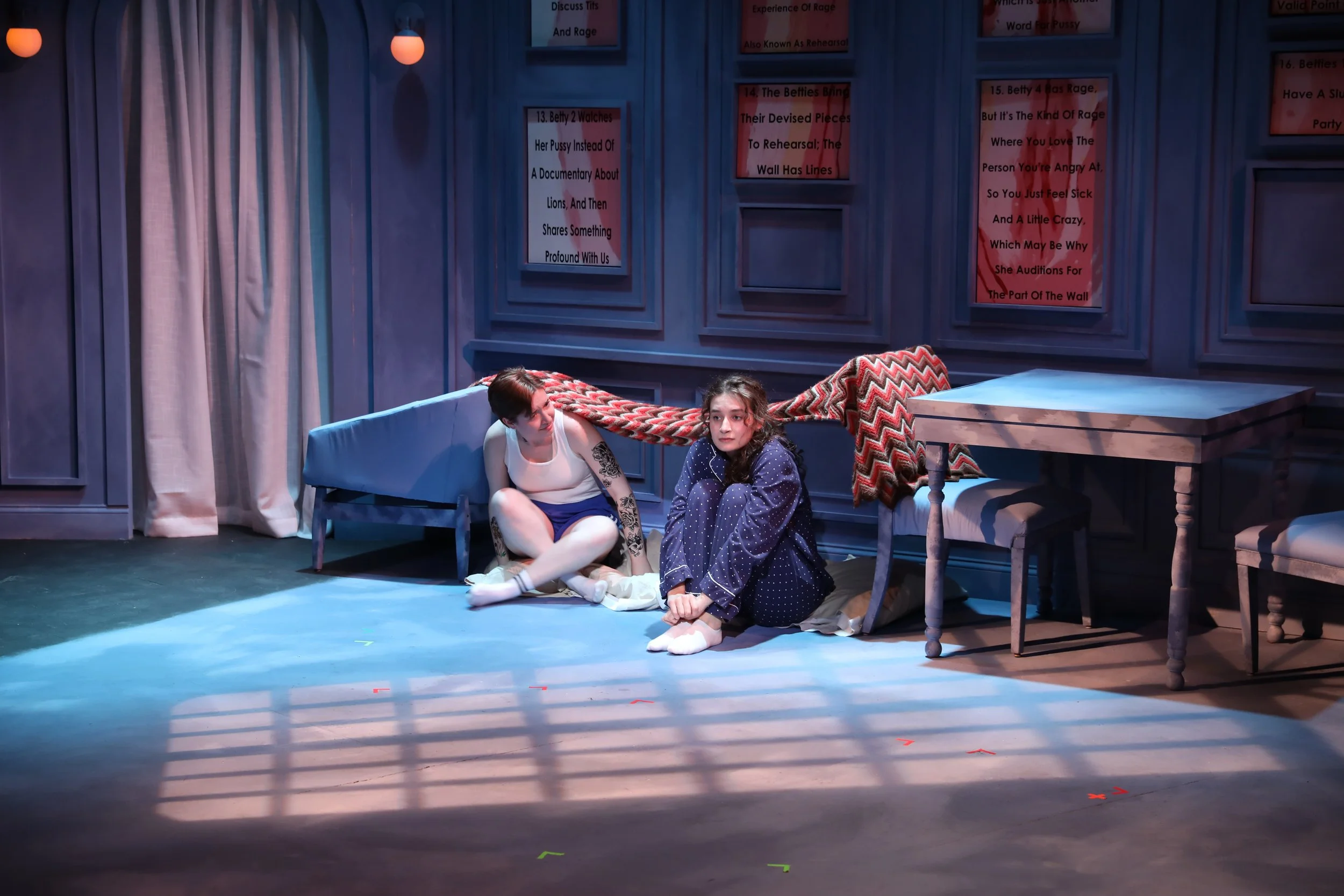
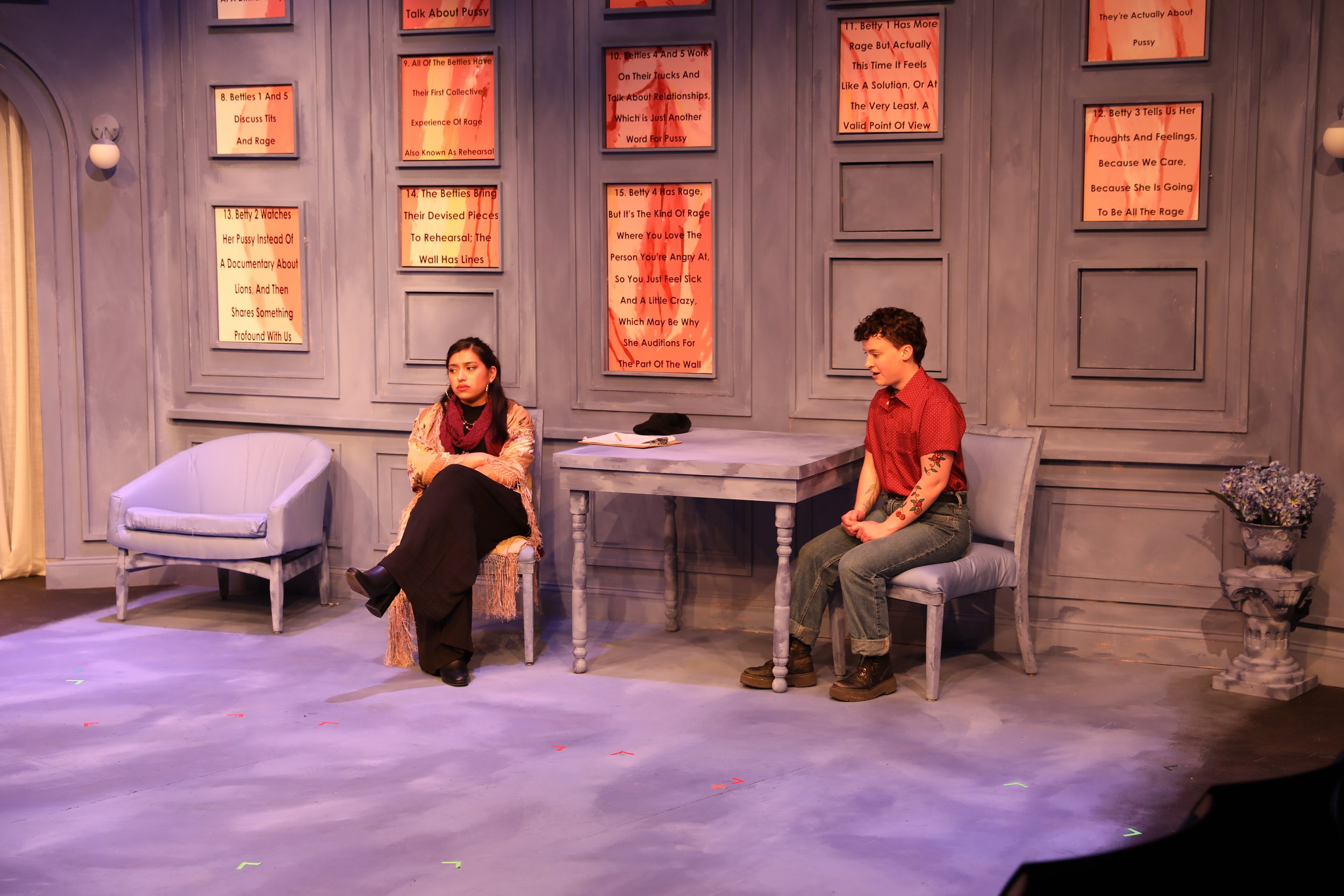
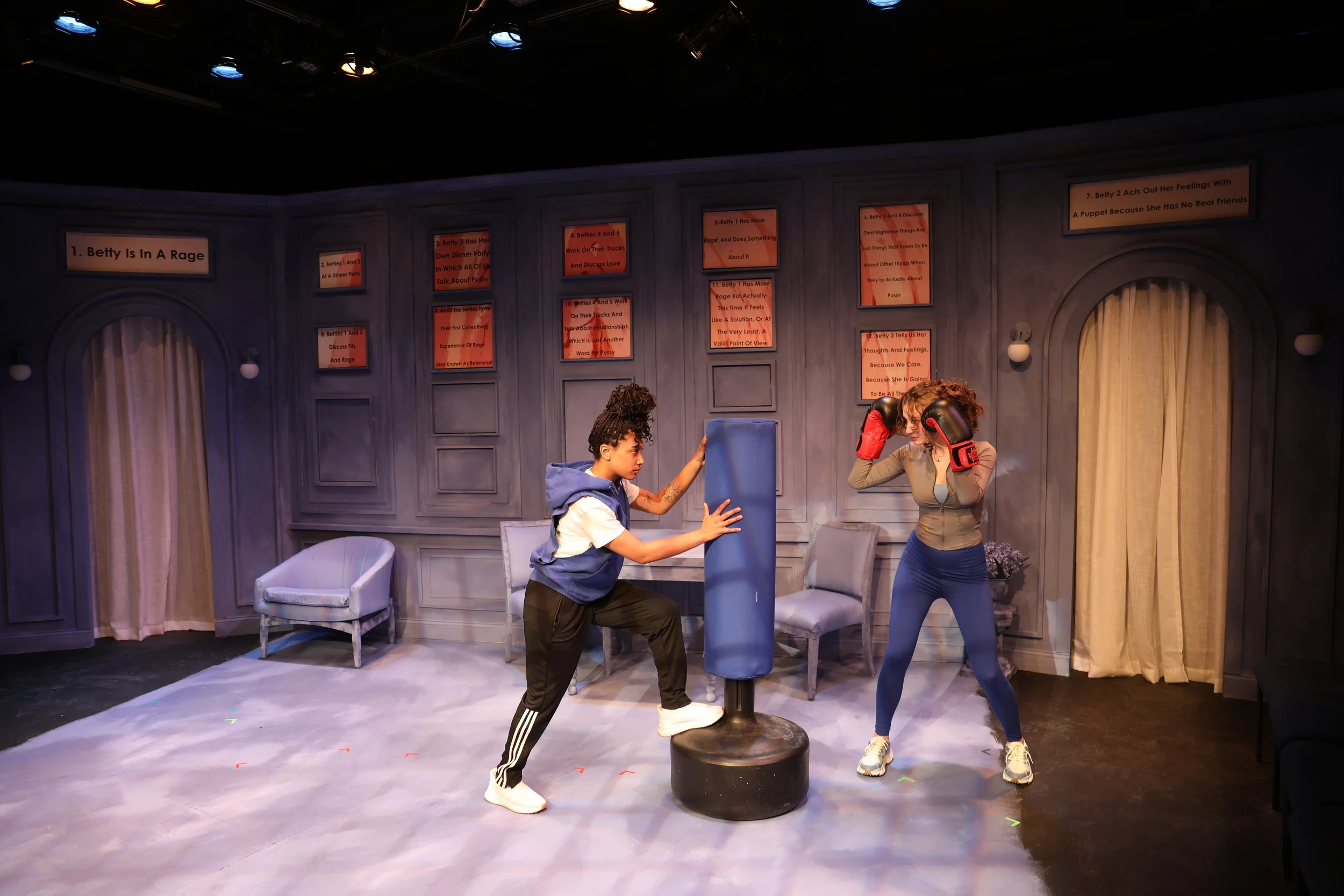
Silverman employs several Brechtian theatre devices, encouraging audiences to think critically and question social and political issues. These devices pull you, as the audience, out of the action to remind you that the play's themes are lived out in your real life. One device used is placards, revealing the moment's truth to the audience. The long subtitle of this play, as well as the lengthy titles of the 19 scenes, make use of this device. Silverman instructs that the play’s long subtitle must be included in the program and that the titles of the scenes are to be projected to the audience. In this production, additionally, to ensure the titles are fully accessible to the audience, the titles are presented in writing in this program and will be presented audibly. They speak the truth in a funny, digestible way.
Alienation is also achieved by having actors break the 4th wall of the theatre playing space, speaking directly to the audience. The audience is reminded that this action, these people, this play, is not just happening to others in this story, it is happening to us all, everywhere, all the time. Comedy and song are used in alienation theatre, allowing audiences to laugh and have playful fun while thinking about serious issues. In addition, it has simplified scenic design and selective realism in props and costumes. You will see all of these in this production.
None of these Betties can have transformation (and they all have a transformation) without interacting in real life with each other, simultaneously being uniquely themselves and collectively human. The fact that these Betties shine brighter due to their interactions with each other reminds me of a diamond that can only be polished by other diamonds. They learn that they are allowed to see and love themselves through each one’s individual existence and collective interaction.
Brecht is famous for saying, “Art is not a mirror with which to reflect reality but a hammer with which to shape it.” Through this play, Silverman is handing us all a mirror, not to reflect life’s distorted reality, but to see life’s universal truth that we are all valuable and necessary not despite but because of our unique identities.
The process of directing this production of Collective Rage has filled my hammer with hope. I plan to wield it wildly, breaking walls and disrupting societal alienation by bringing together a collective love that transcends and transforms. I hope this play loosens the grip of fear on your heart, voice, and mind and that you will join me in leaving this theatre with a hammer of hope.
Julie Kiernan
Director