Orlando
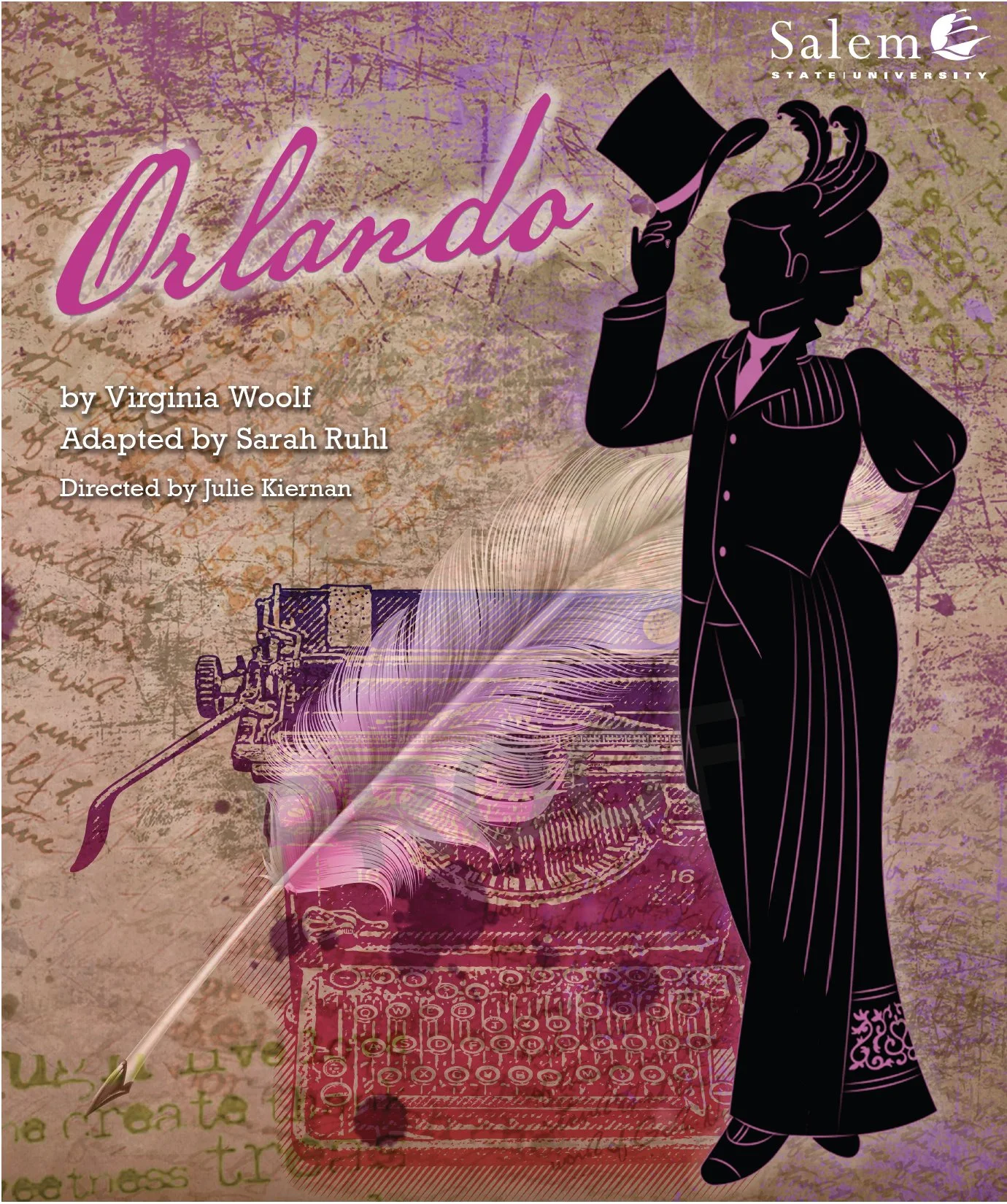
Poster design: Salem State University
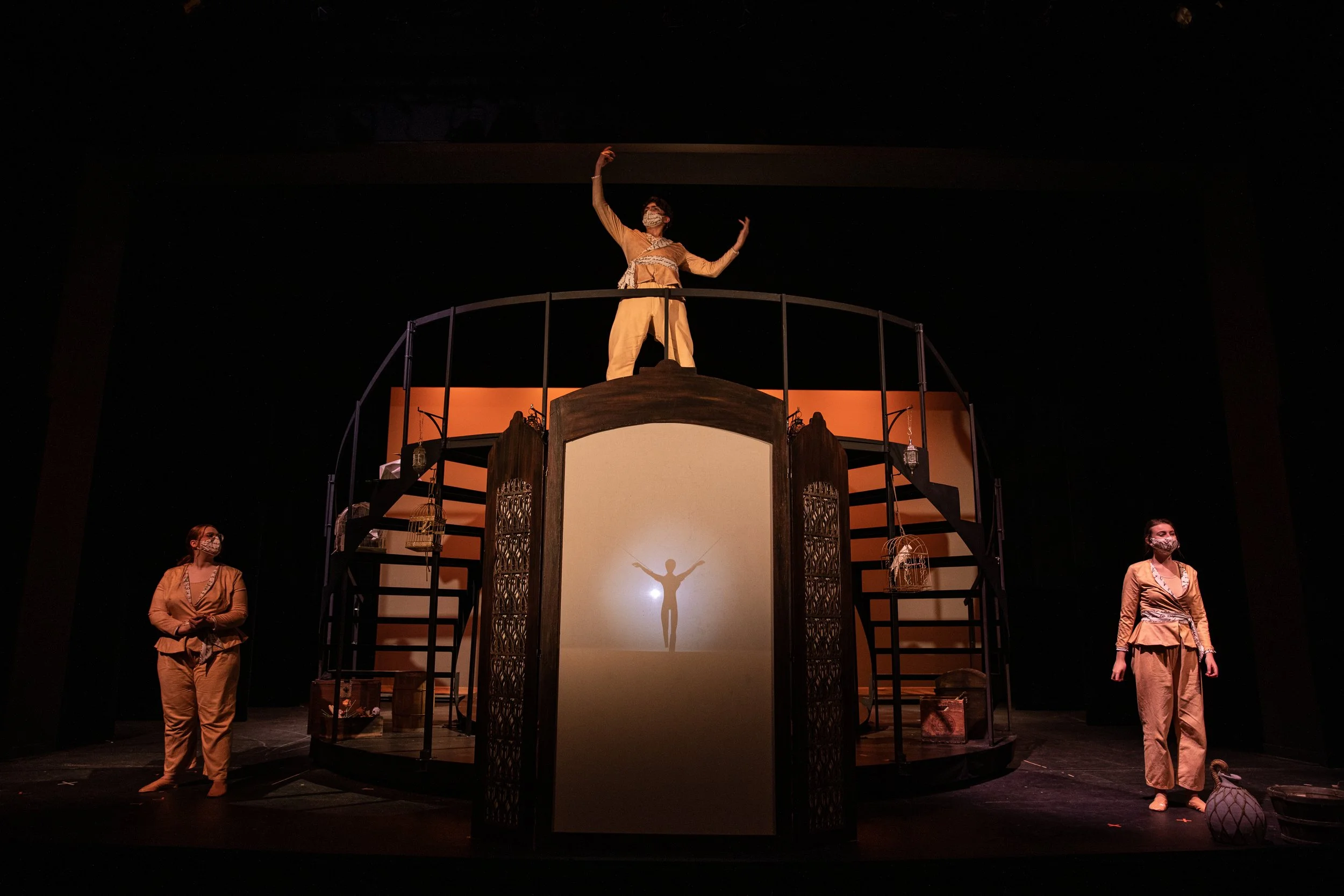
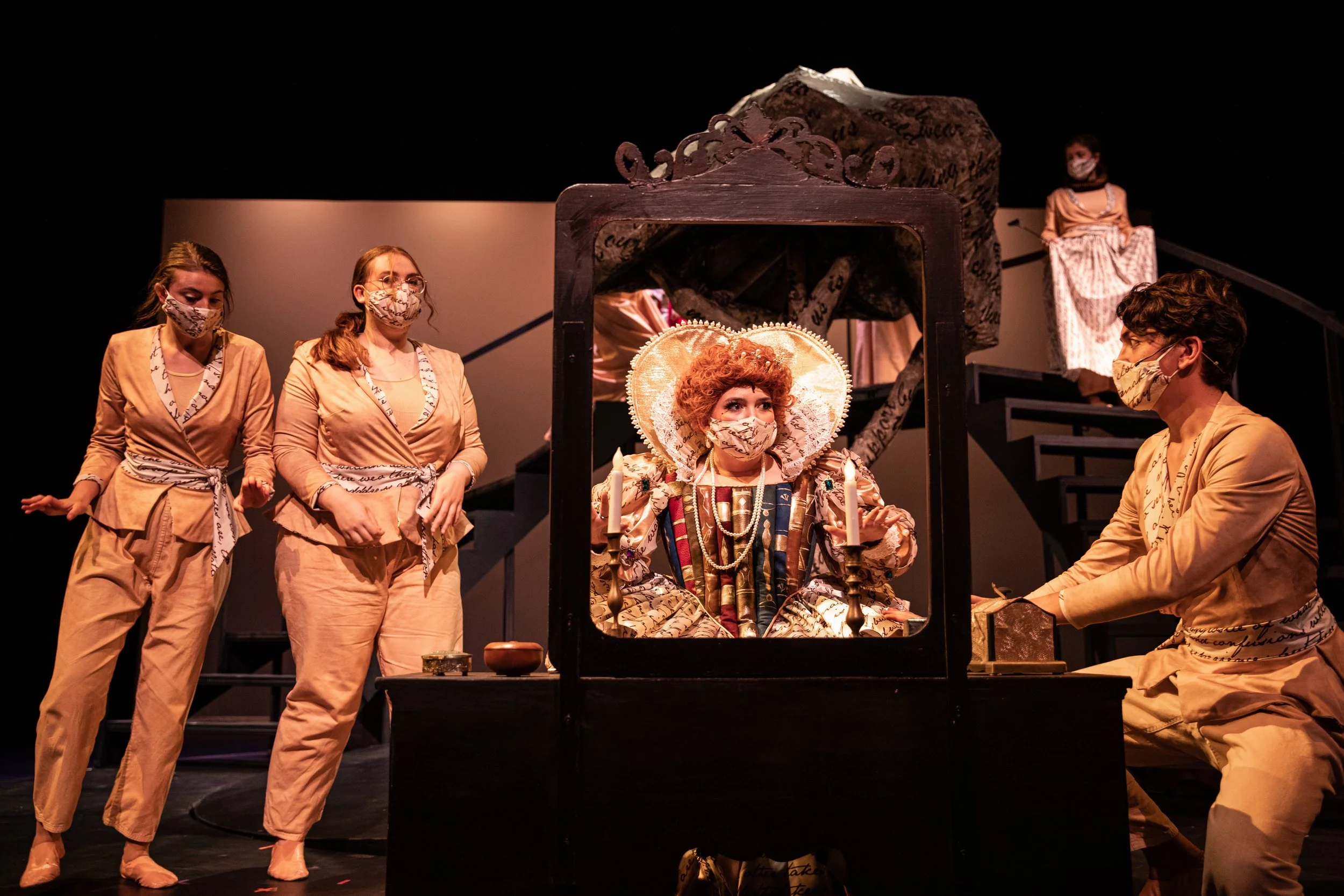
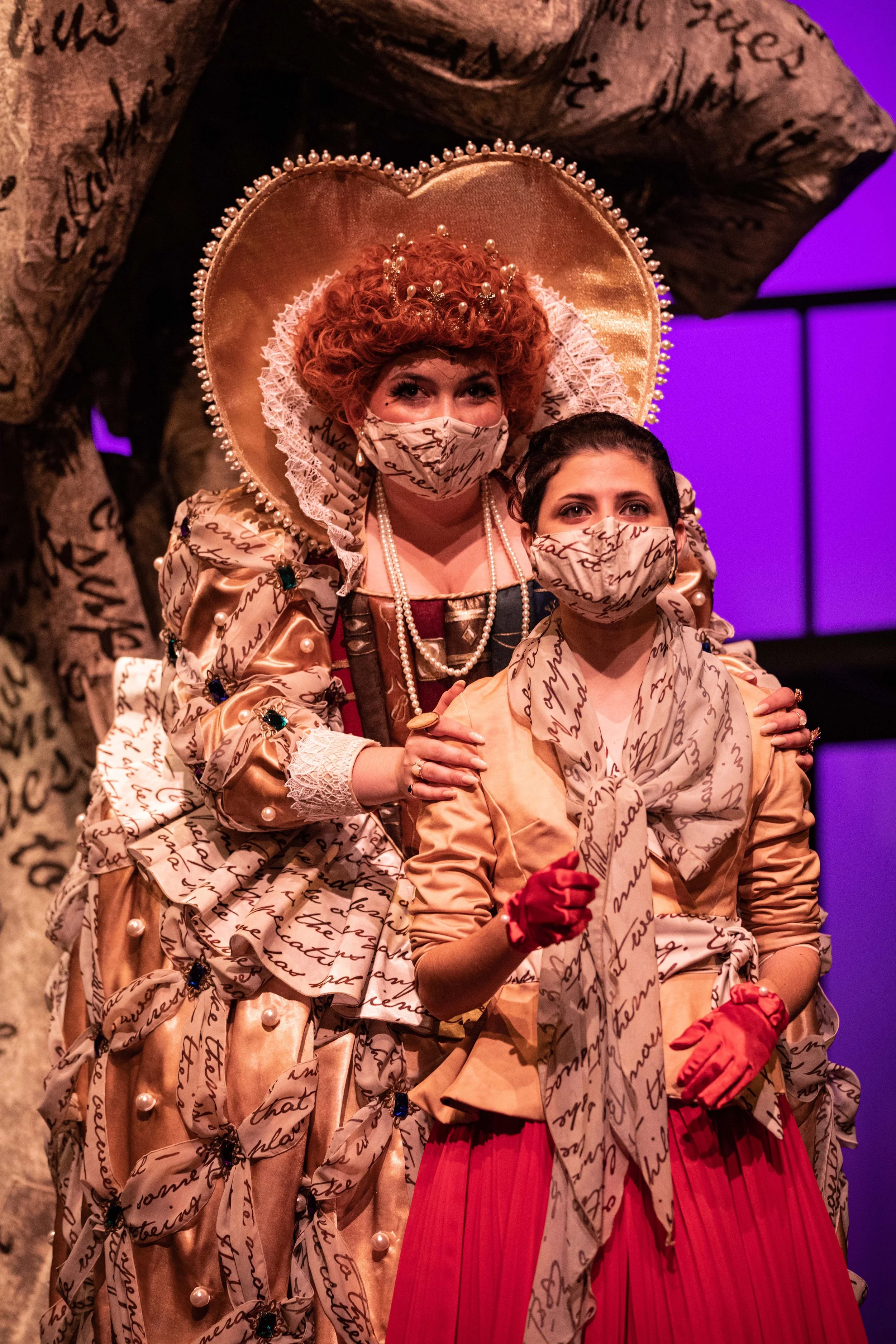
Photo Credits: Benjamin Rose Photography
Orlando by by Virginia Woolf
Adapted by Sarah Rhul
Directed by Julie Kiernan
Orlando - Director’s note
"I want fun, I want fantasy," Virginia Woolf wrote of her 1928 novel, Orlando. Beyond fun and fantasy, though, Orlando was, and is, a radical criticism of patriarchal societal norms. Ruhl's theatrical adaptation is filled with the novel's curiosity, whimsy, and poetry, and still resonates, perhaps more than ever, a century later. The play questions who we are, who we can and cannot love, what we call love, and how society dictates our perceptions and experiences. Orlando is an exploration of self-discovery and self-acceptance that transcends time.
Woolf based the character of Orlando on her extra-marital lover, Vita Sackville West, who was also a writer. Vita's son described the novel as "the longest and most charming love letter in literature." Orlando as a mirror of Vita was never a secret. When Woolf asked Vita for her permission, Vita was “thrilled and terrified … at the prospect of being projected into the shape of Orlando." Like Orlando, Vita was not allowed to inherit an estate given to her ancestors by Queen Elizabeth I because she was a woman. Orlando's relationship with Sasha is similar to Vita's lesbian relationship with Violet Trefusis, where she crossdresses and the relationship ends due to jealousy. After this affair, Vita begins dressing androgynously, and in the play, Orlando changes from man to woman. The biographical connections are clear. Woolf was honoring her lover in a novel while simultaneously commenting on society's confines and constraints on them both.
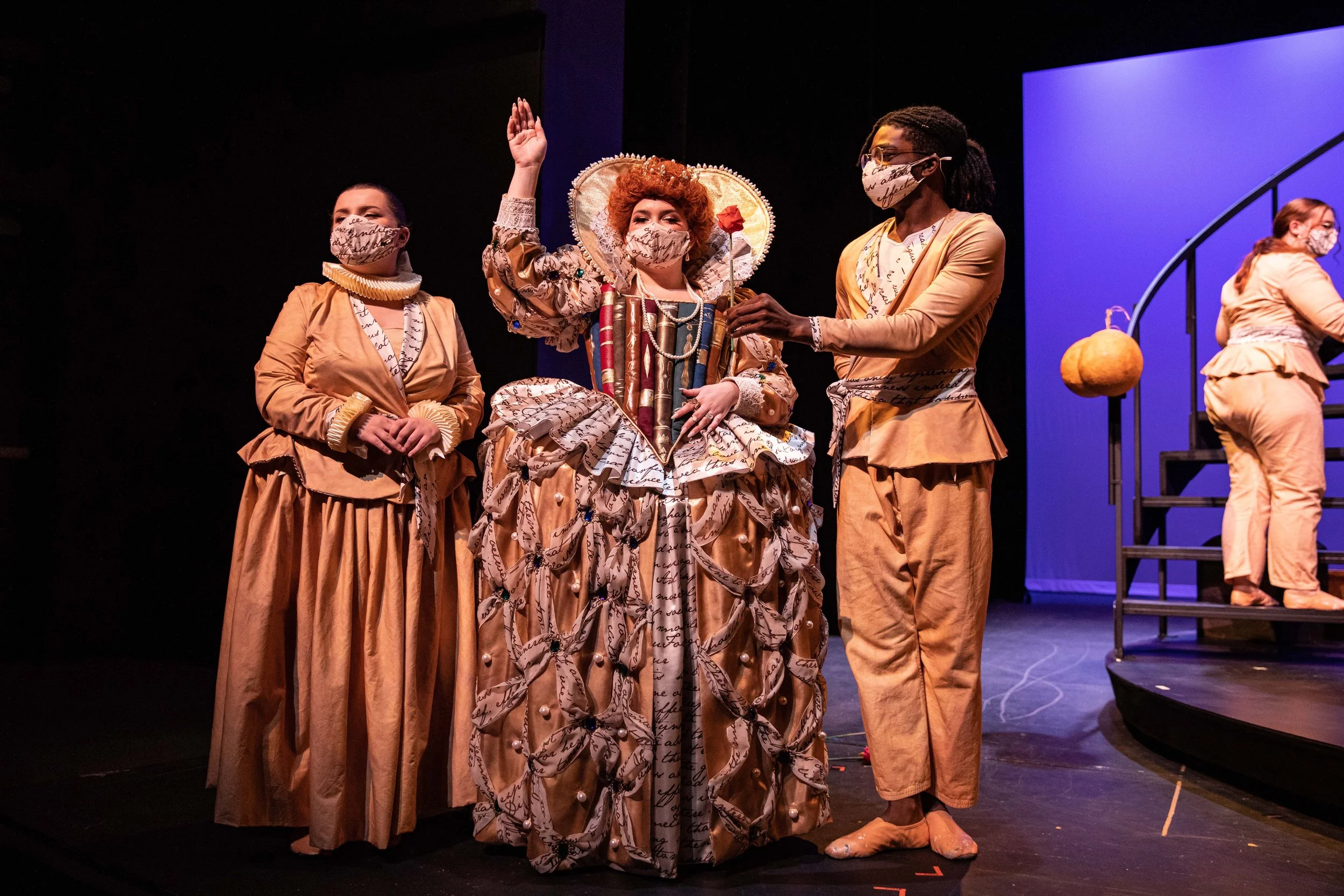
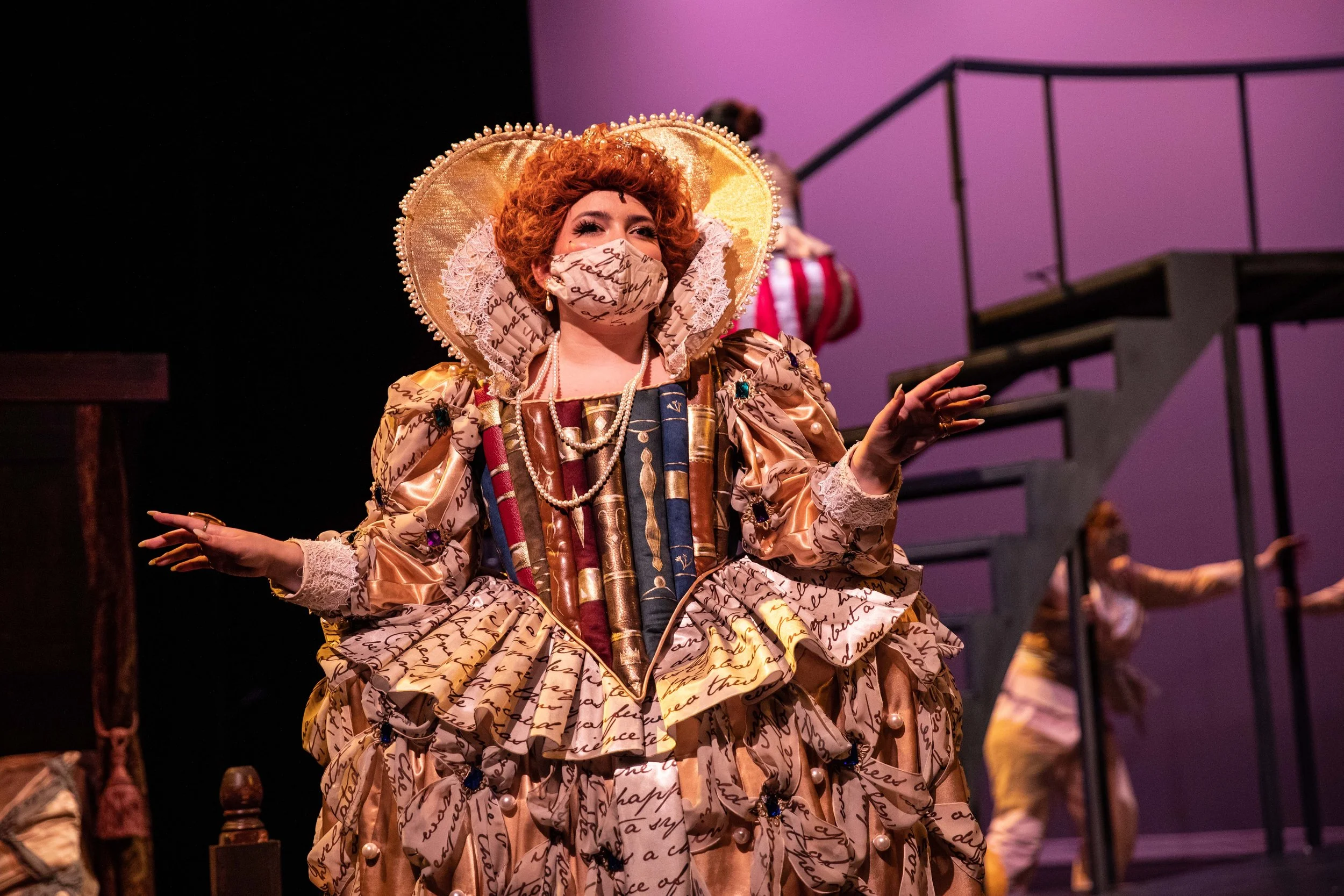
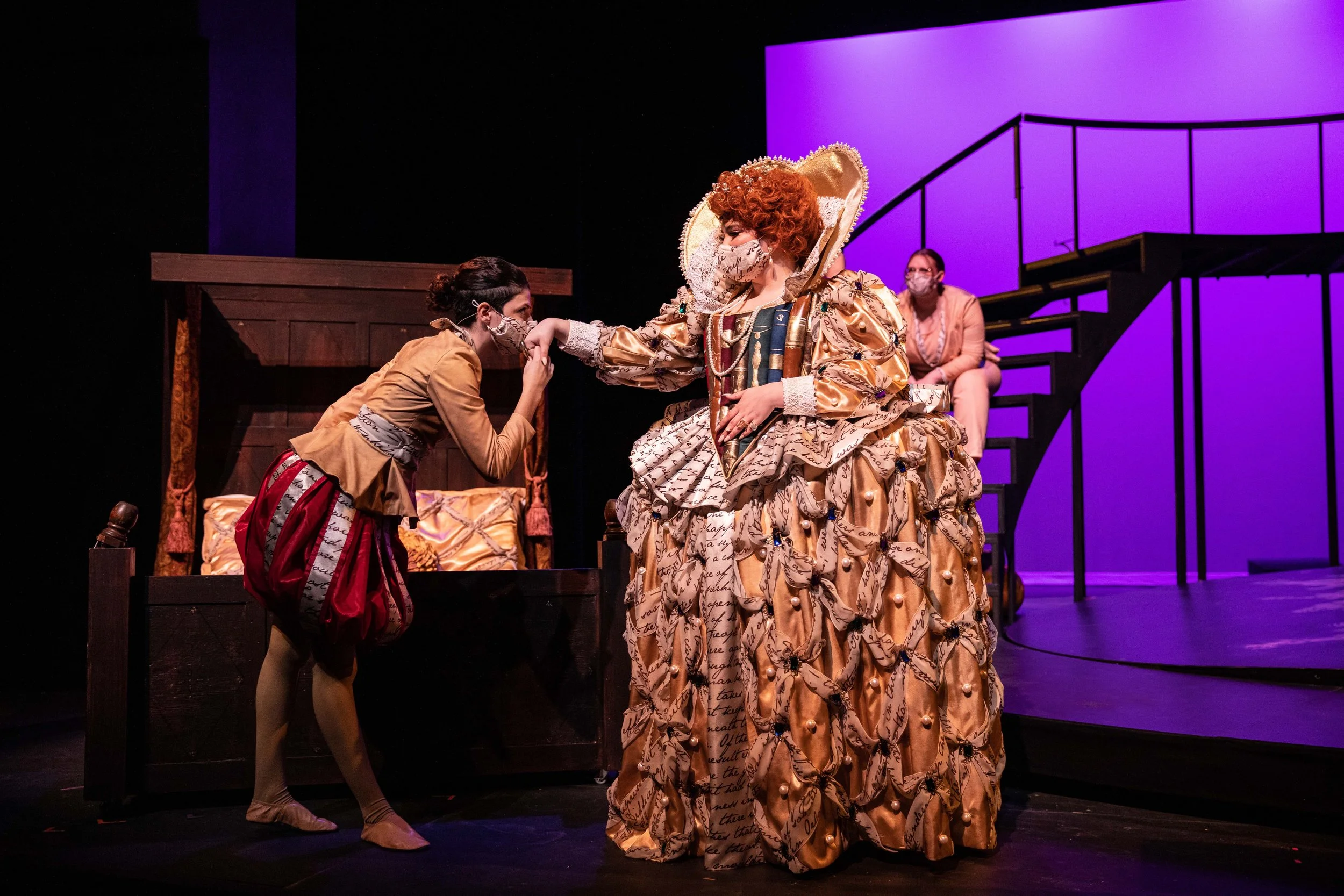
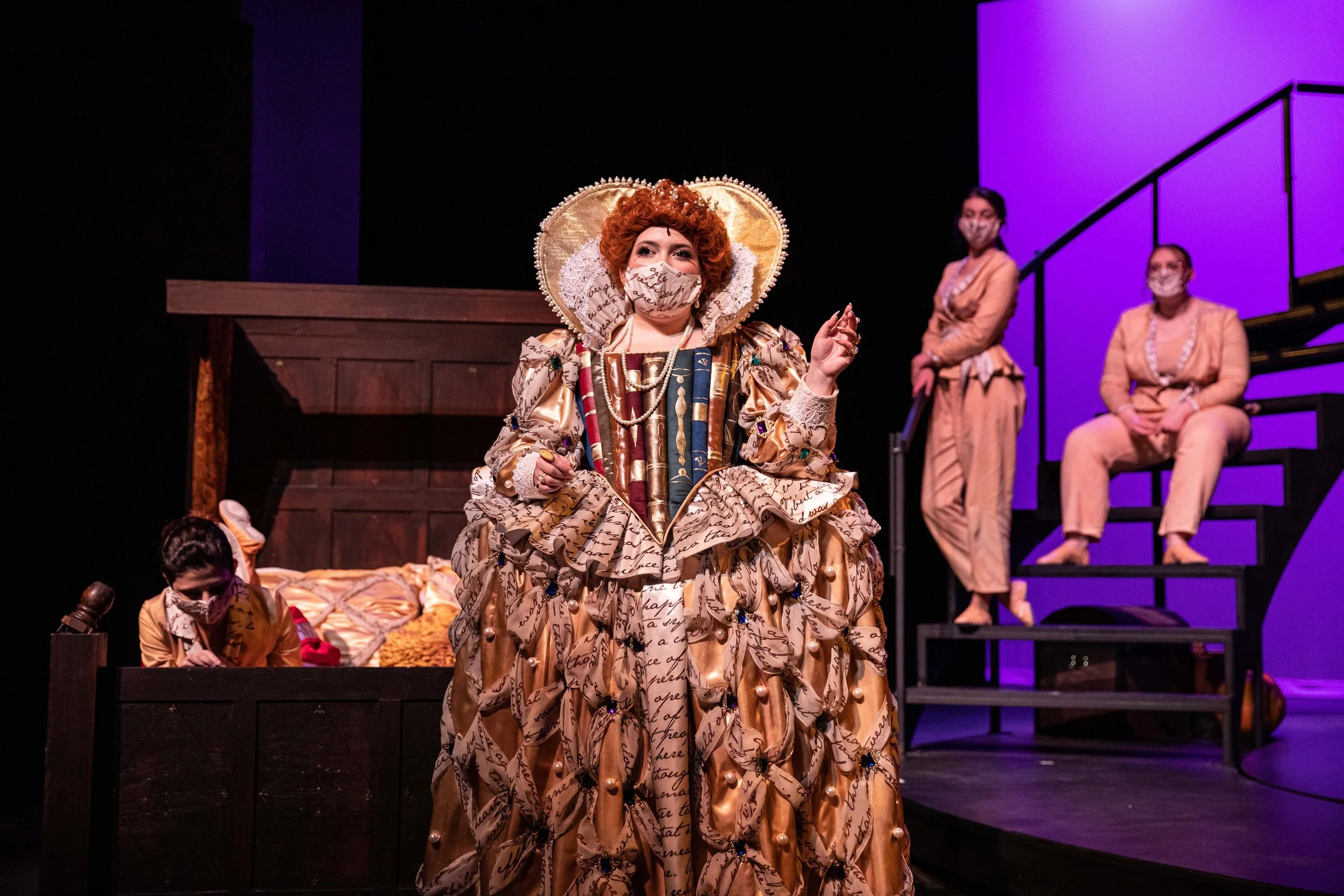
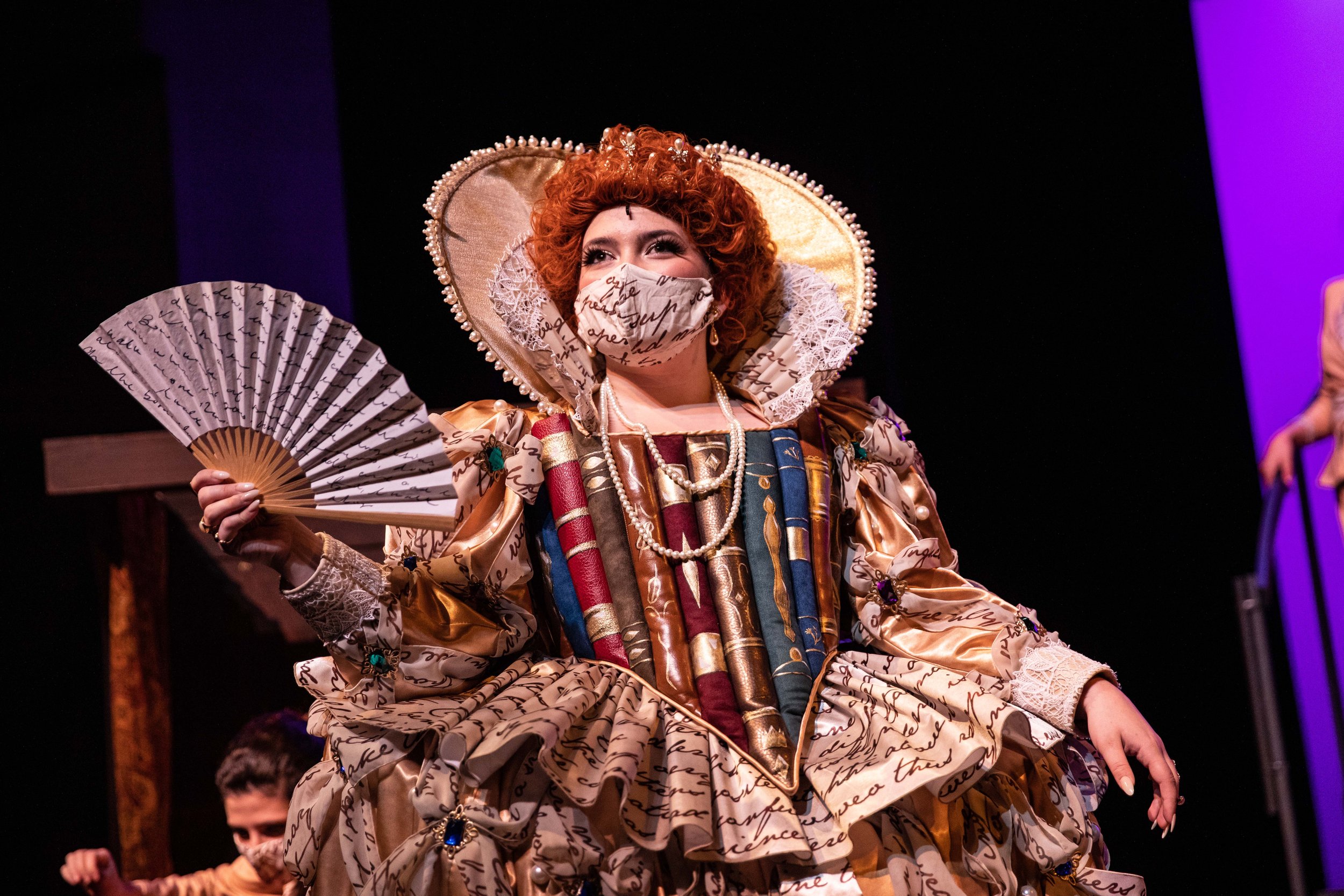
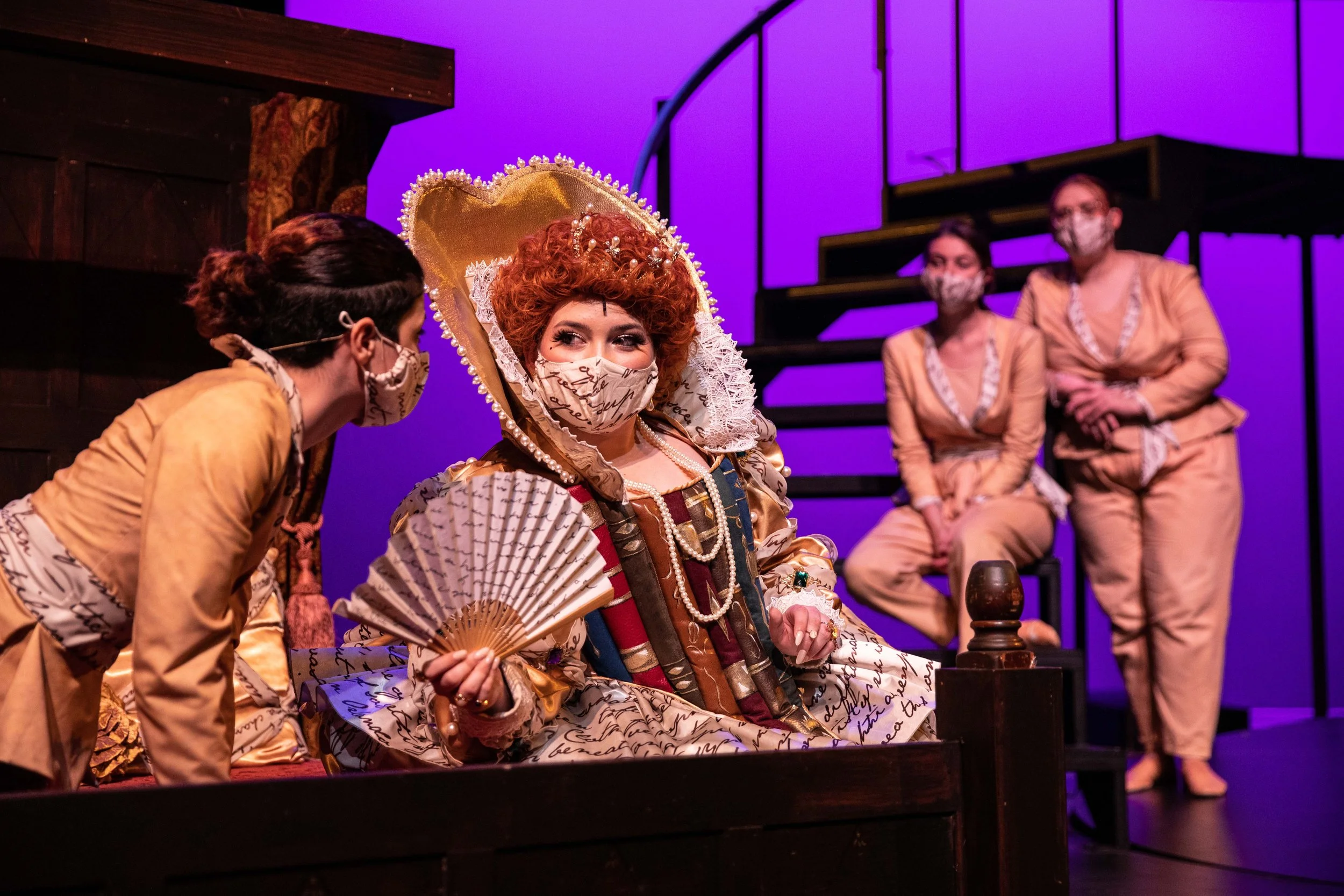
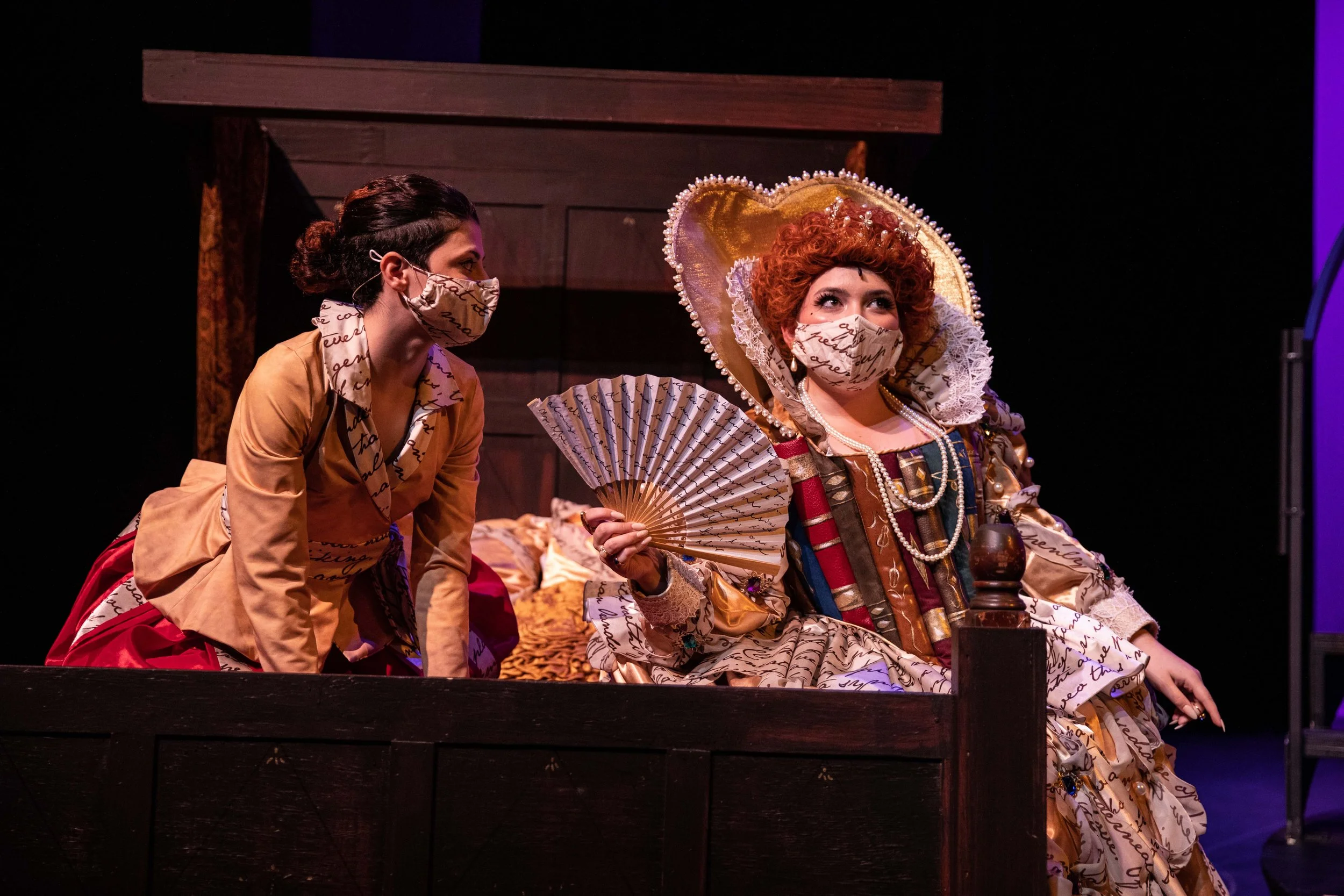
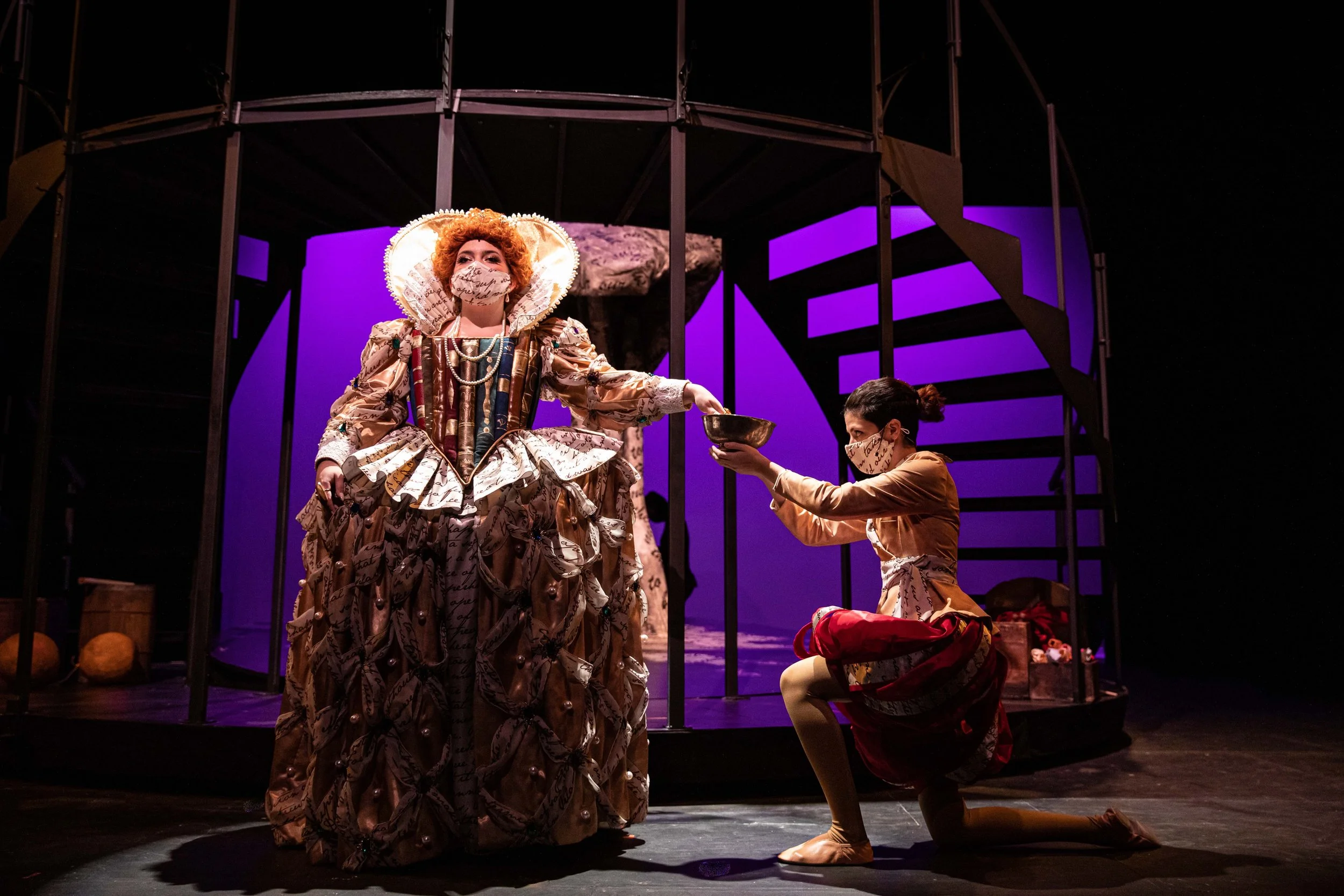
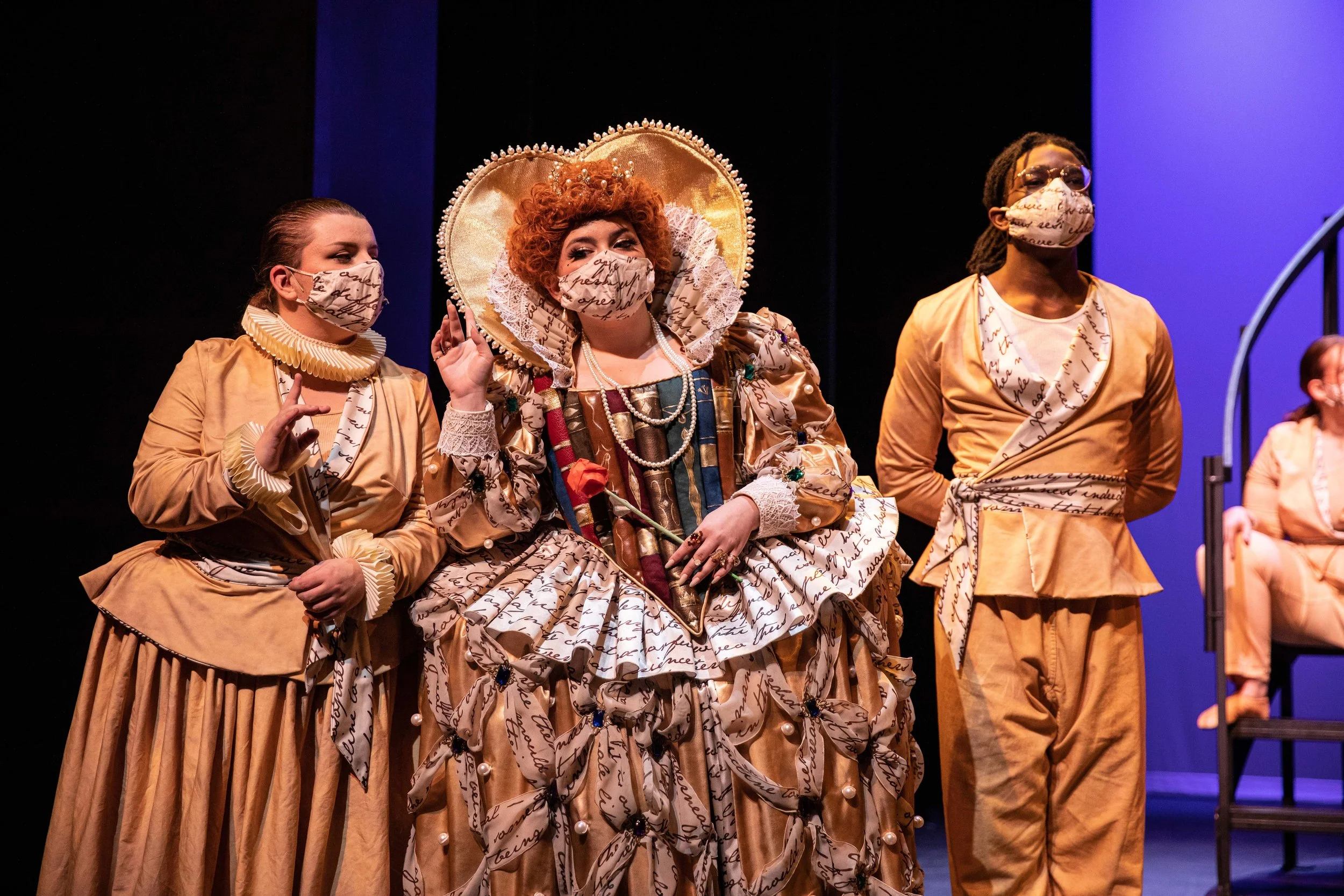
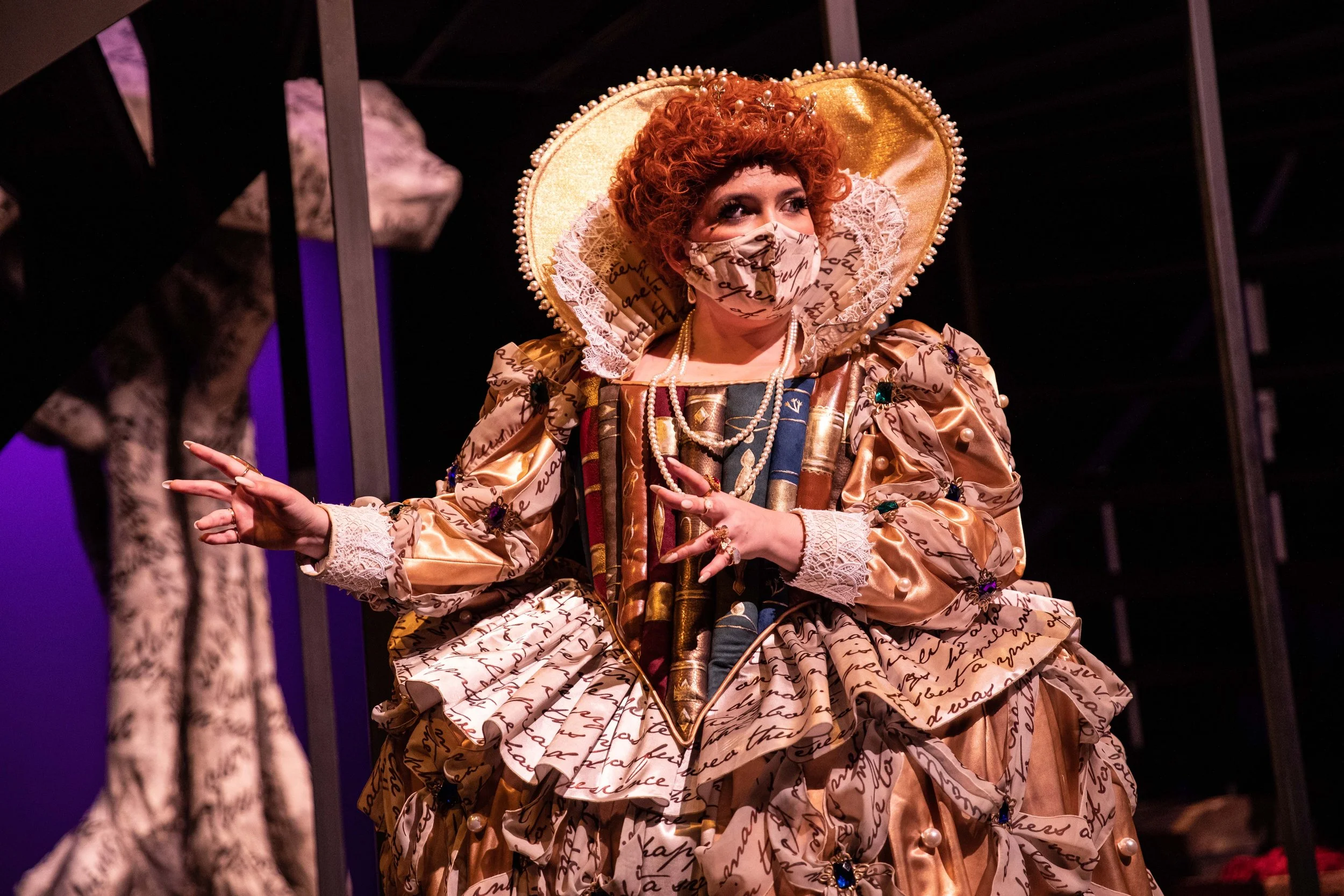
Orlando is an exploration of self-discovery and self-acceptance that transcends time itself. Woolf's distortion of time is one way she subverts societal norms by having Orlando live through hundreds of years from Elizabethan England to "the present moment" while only aging to 36 years. This defiance of reality is treated as casually as Orlando's transformation from a man to a woman. "Orlando had become a woman---there is no denying it. But in every other respect, Orlando remained precisely as he had been." Orlando lives hundreds of years trying to find the words to write a single poem, a life's passion. Falling in and out of love with a variety of people fills Orlando's life, as it does for most of us. These loves include Queen Elizabeth, a manly Russian princess named Sasha, a vulture-like Romanian crossdressing Archduke, and an androgenous sailor named Marmaduke.
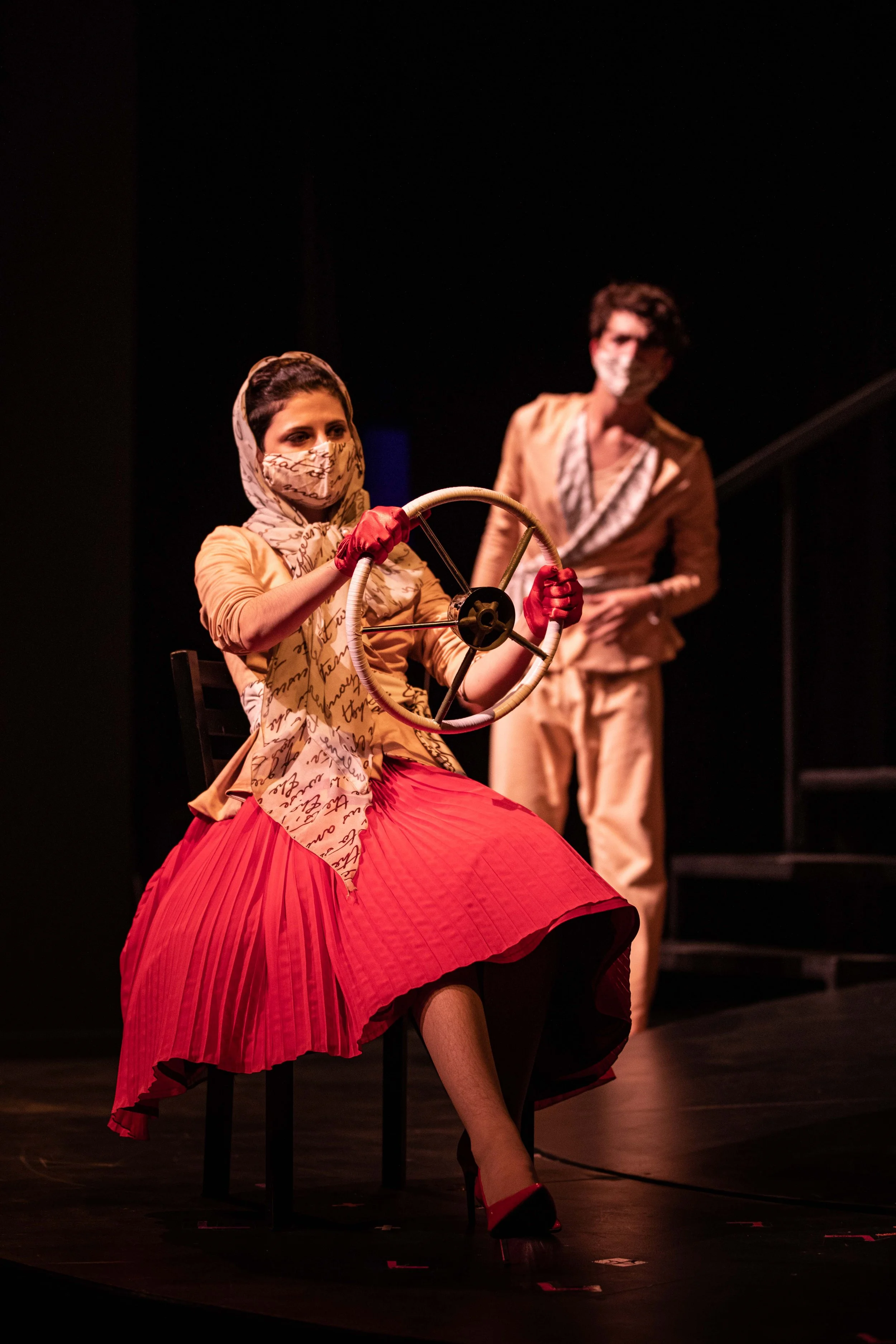
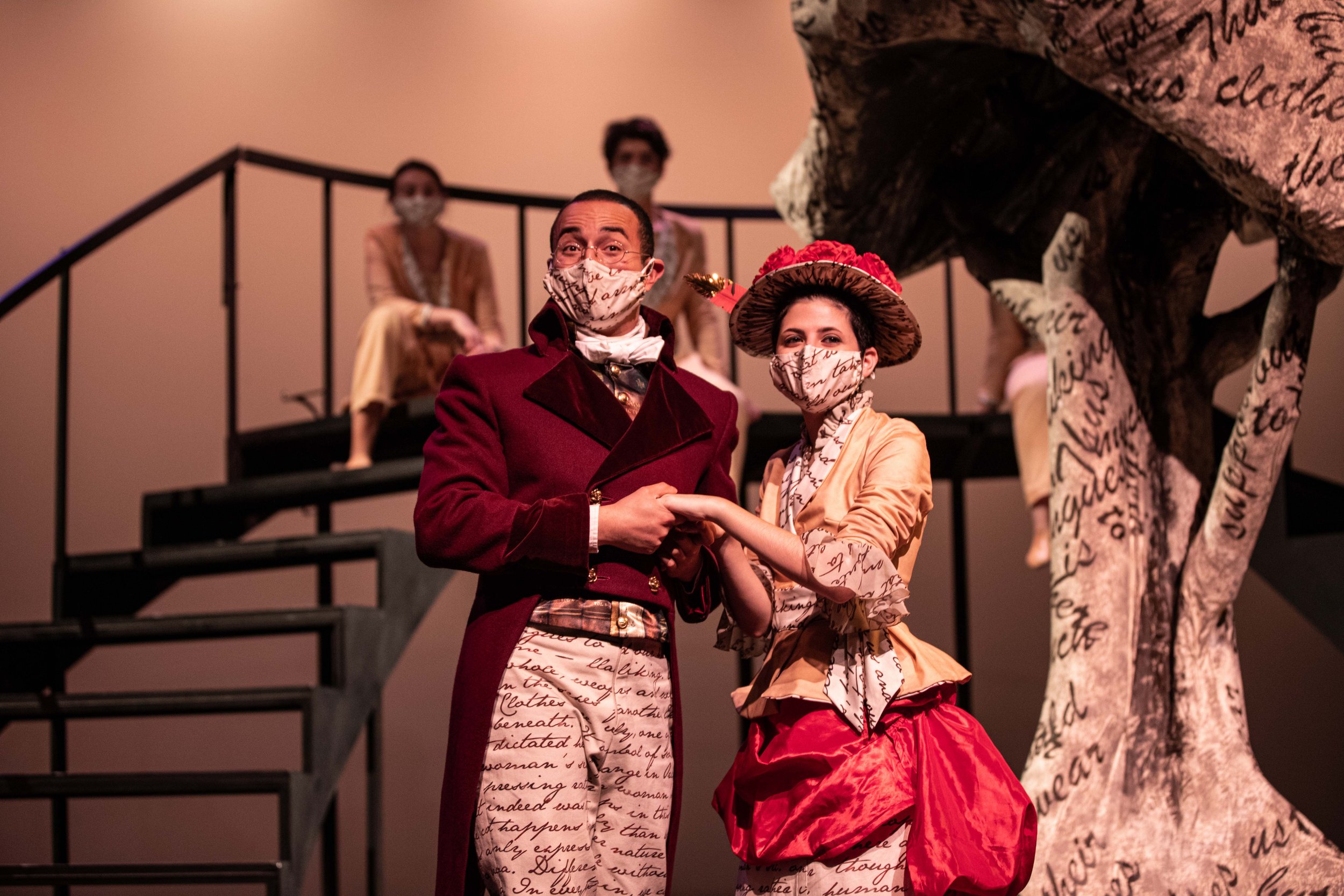
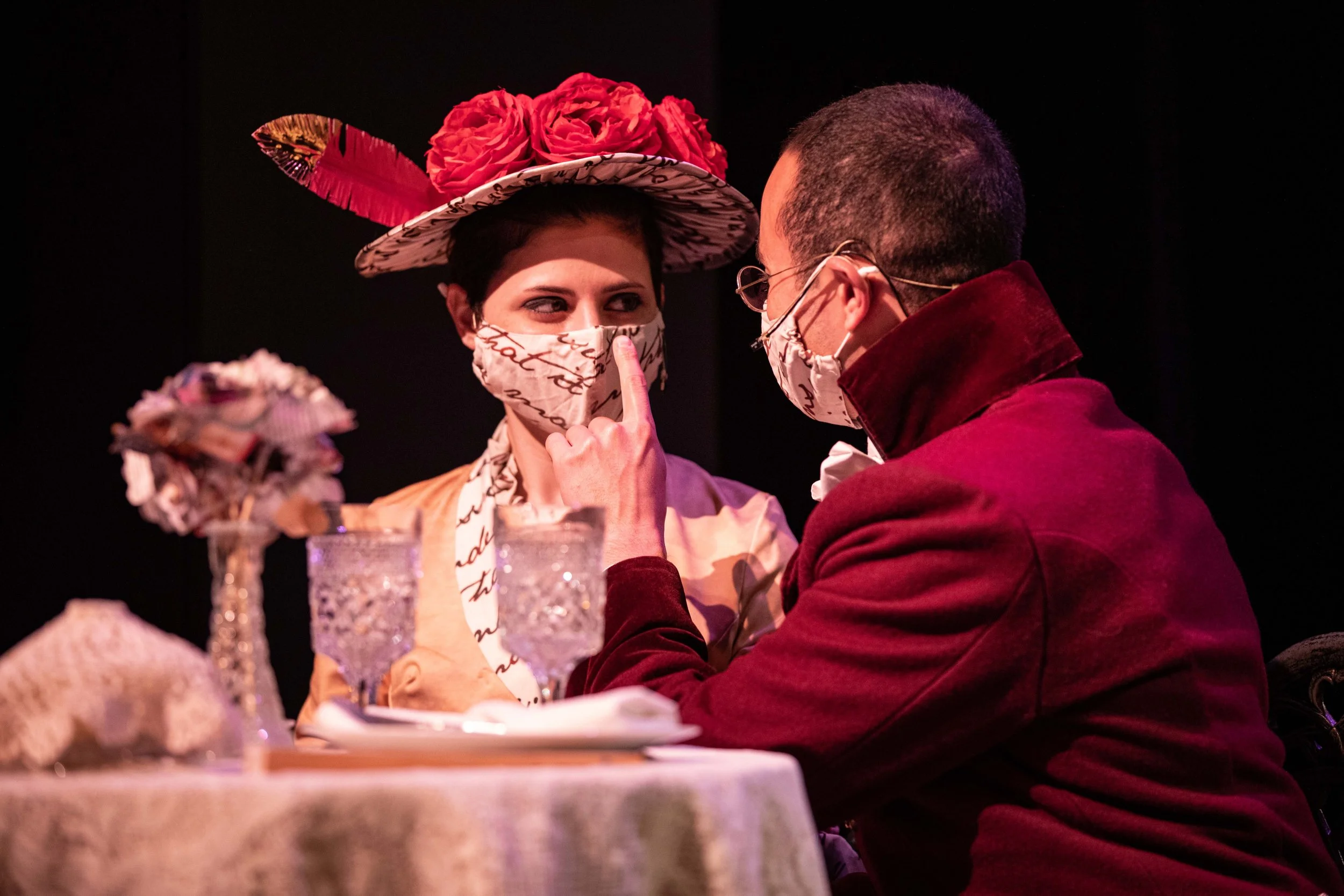
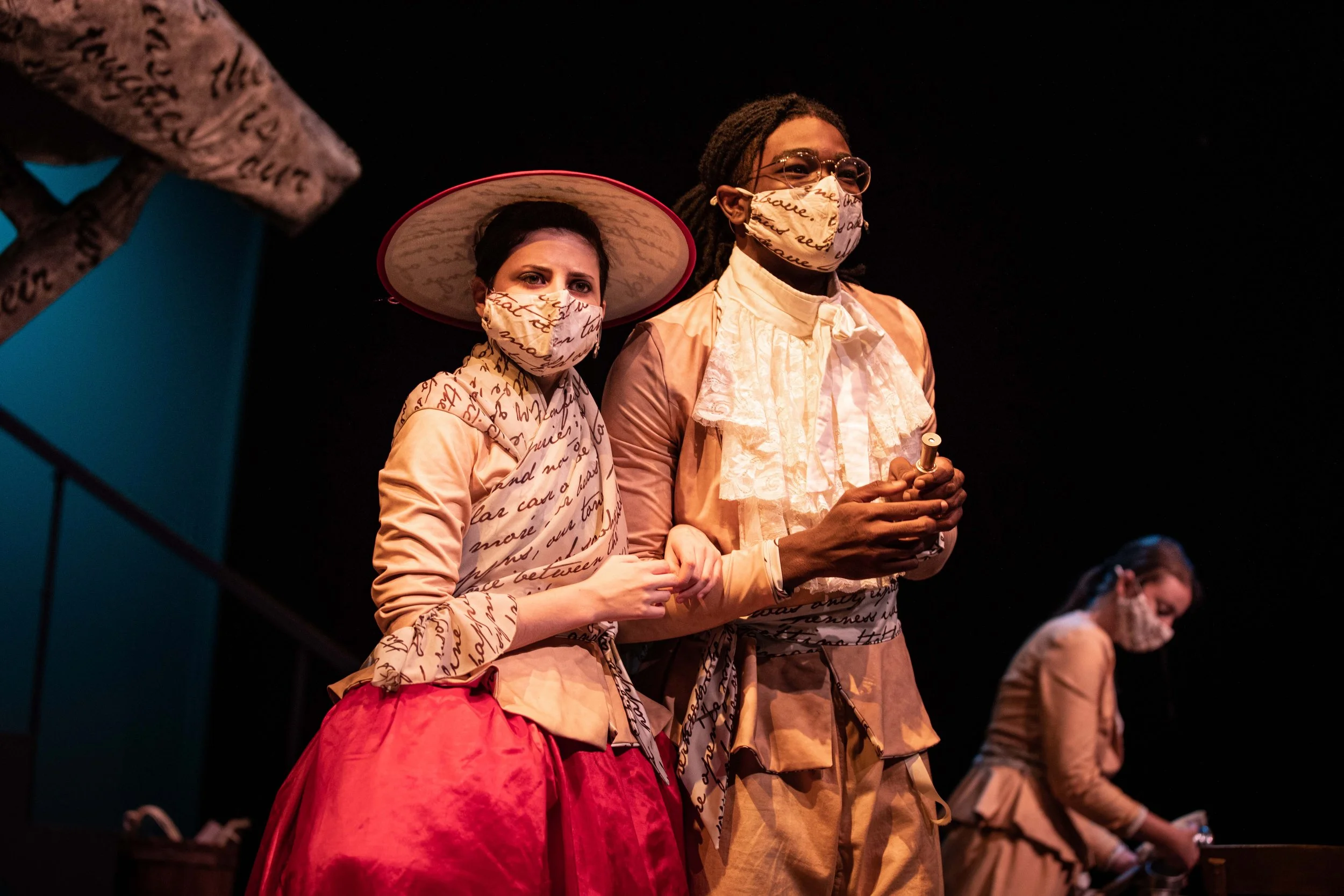
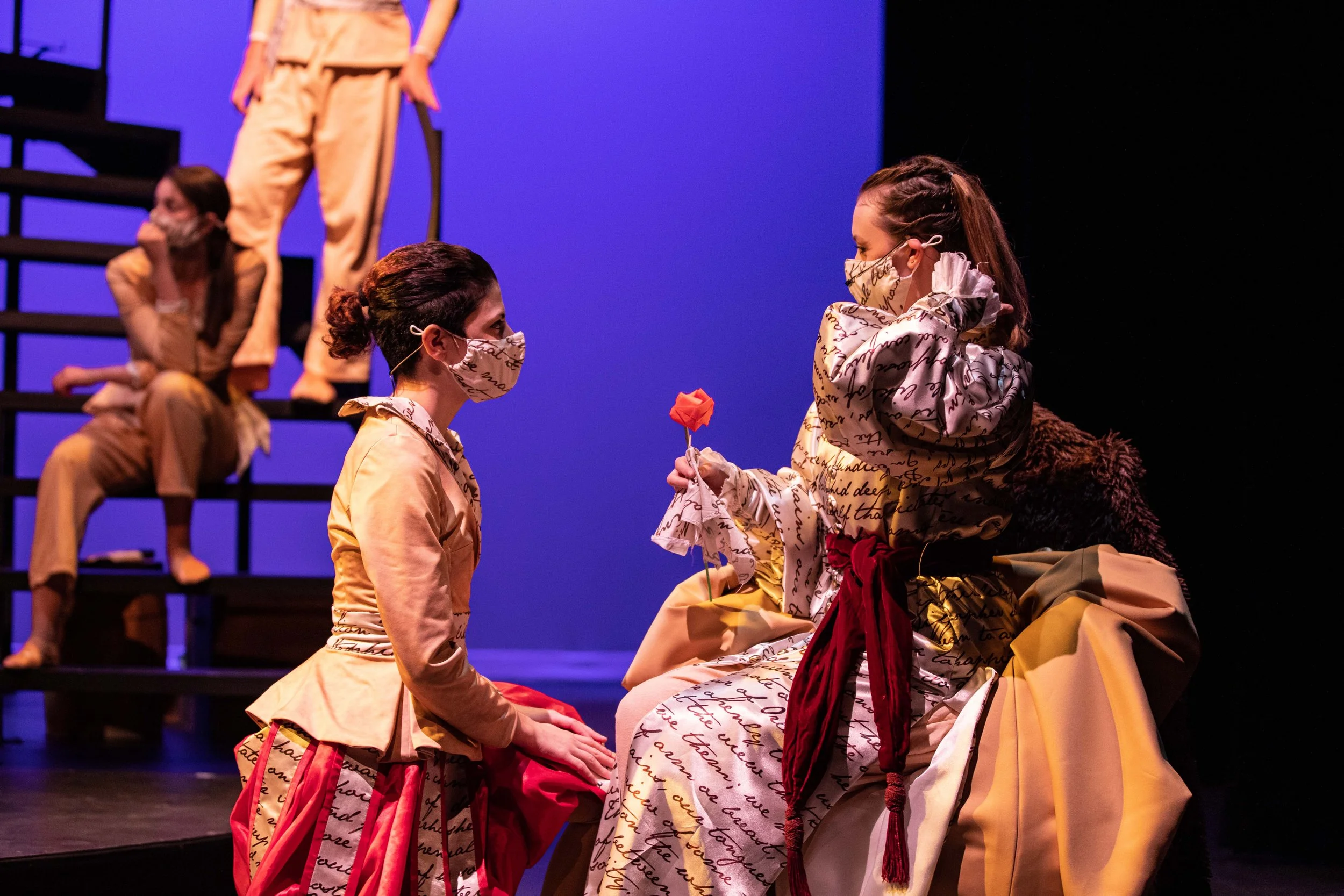
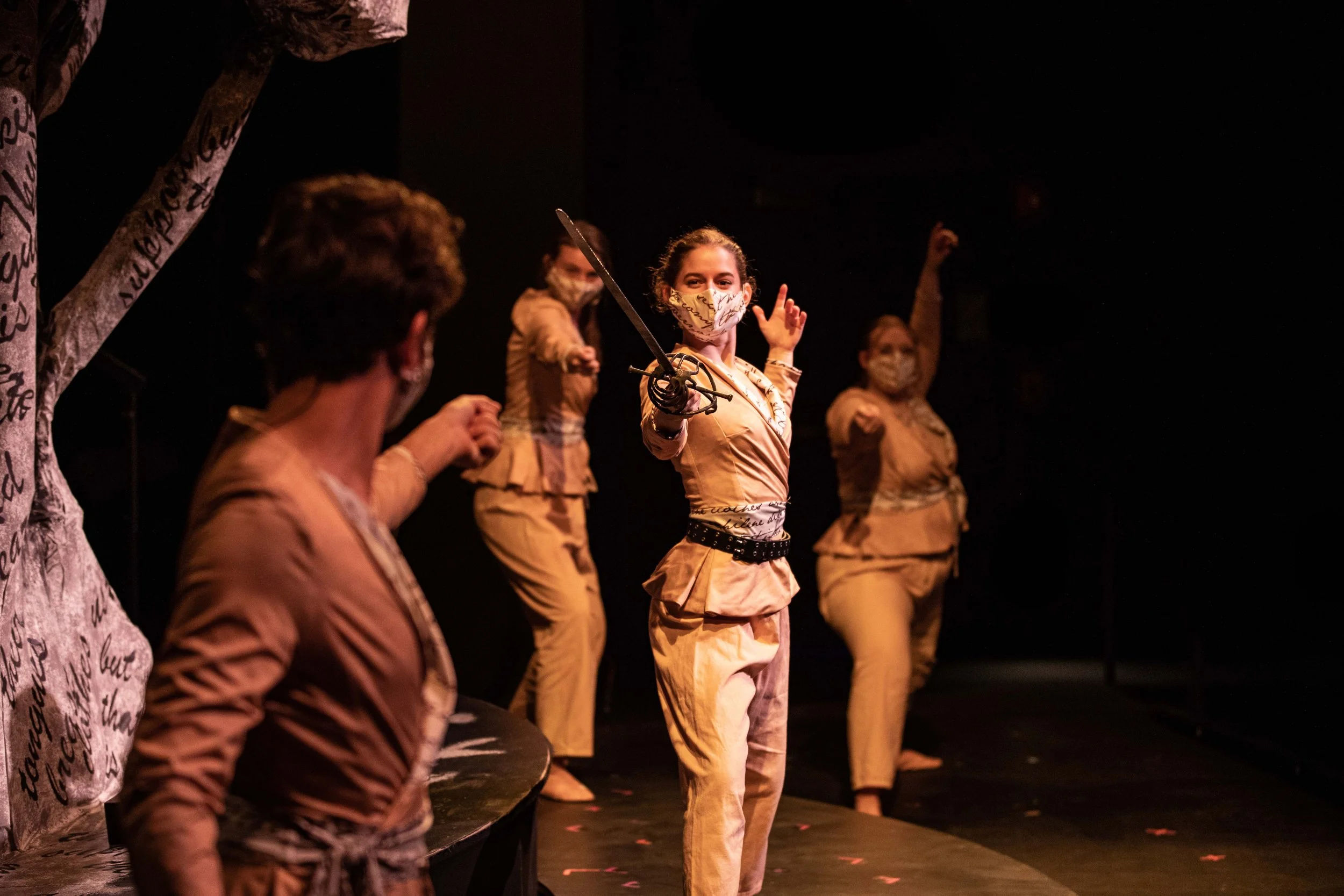
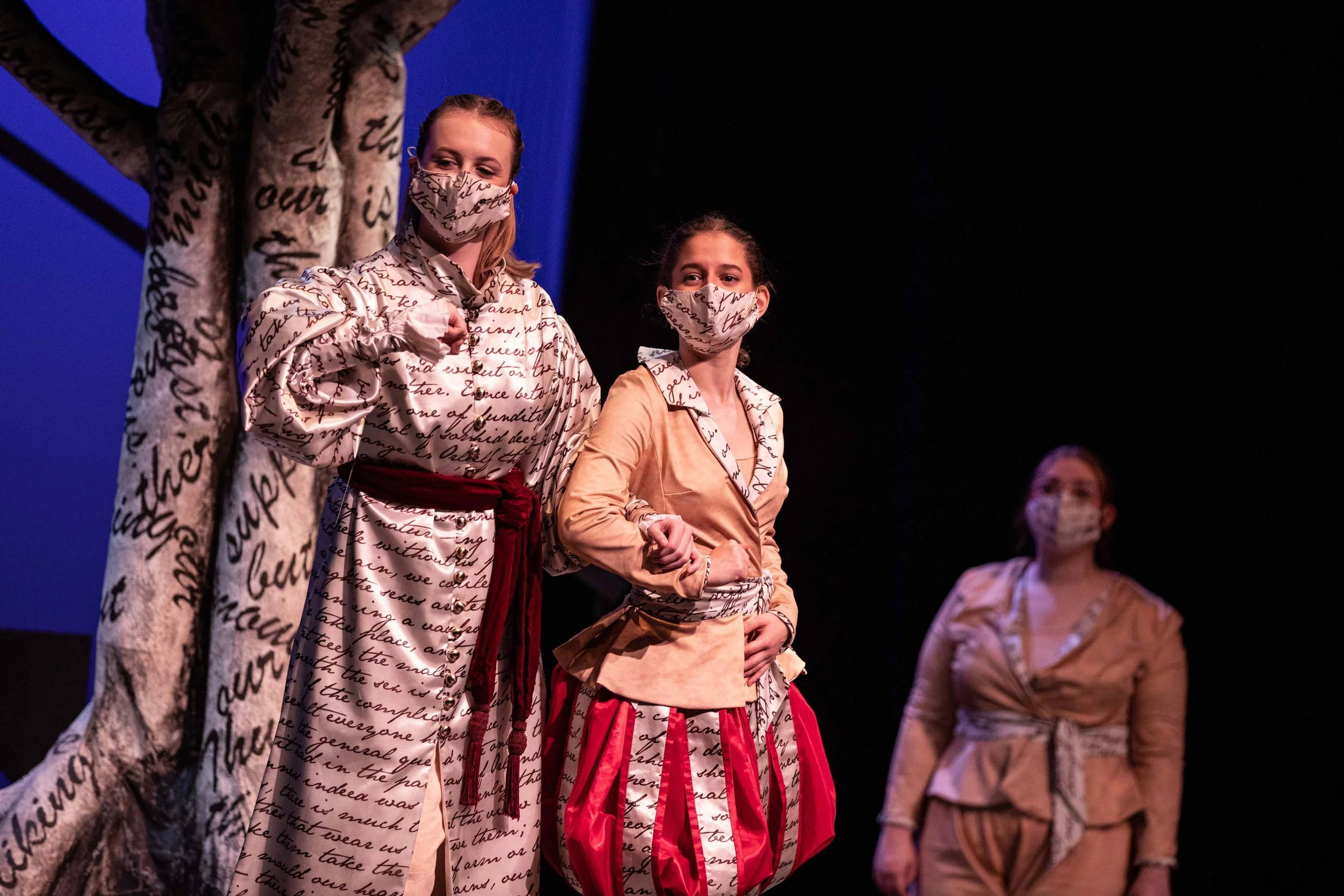
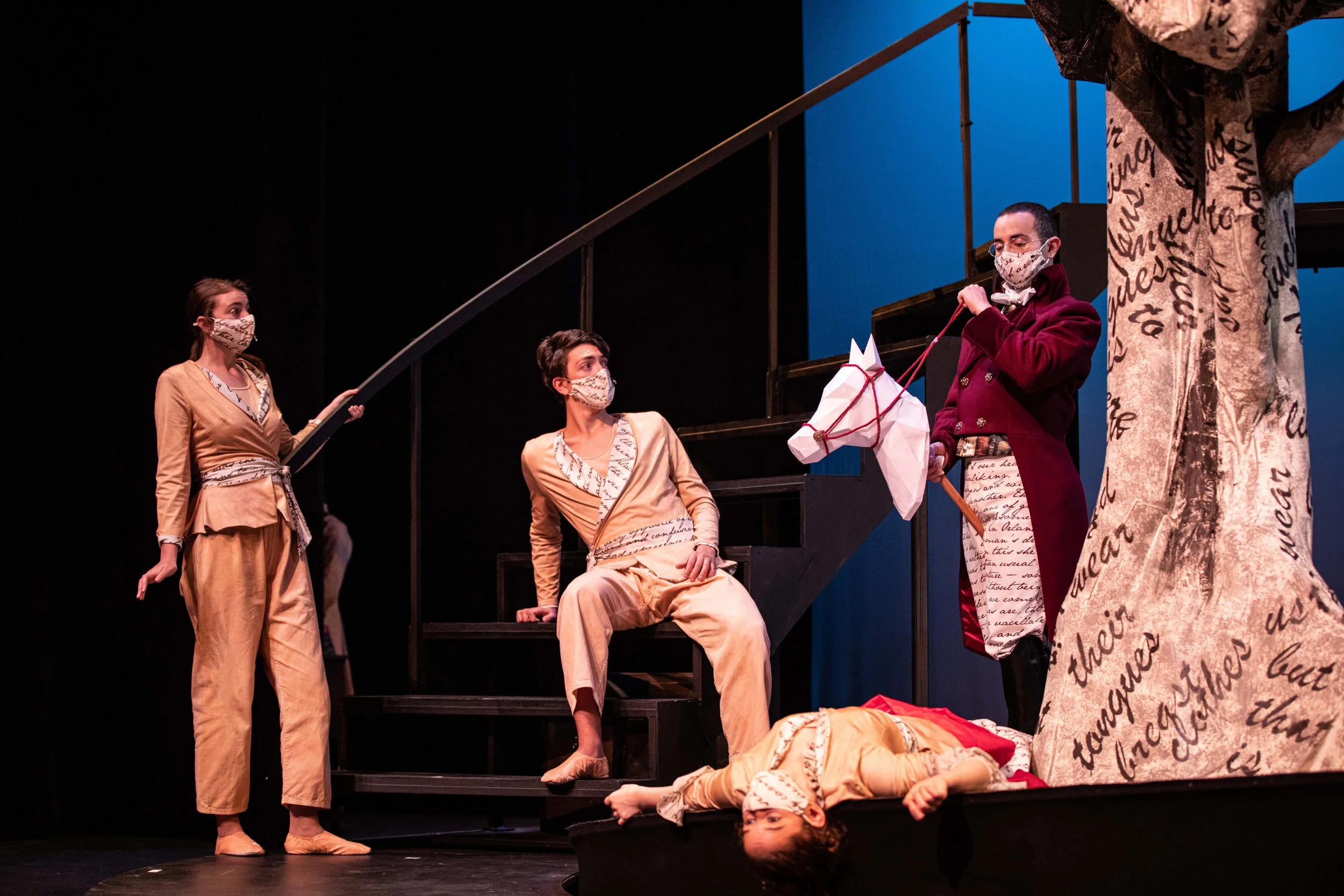
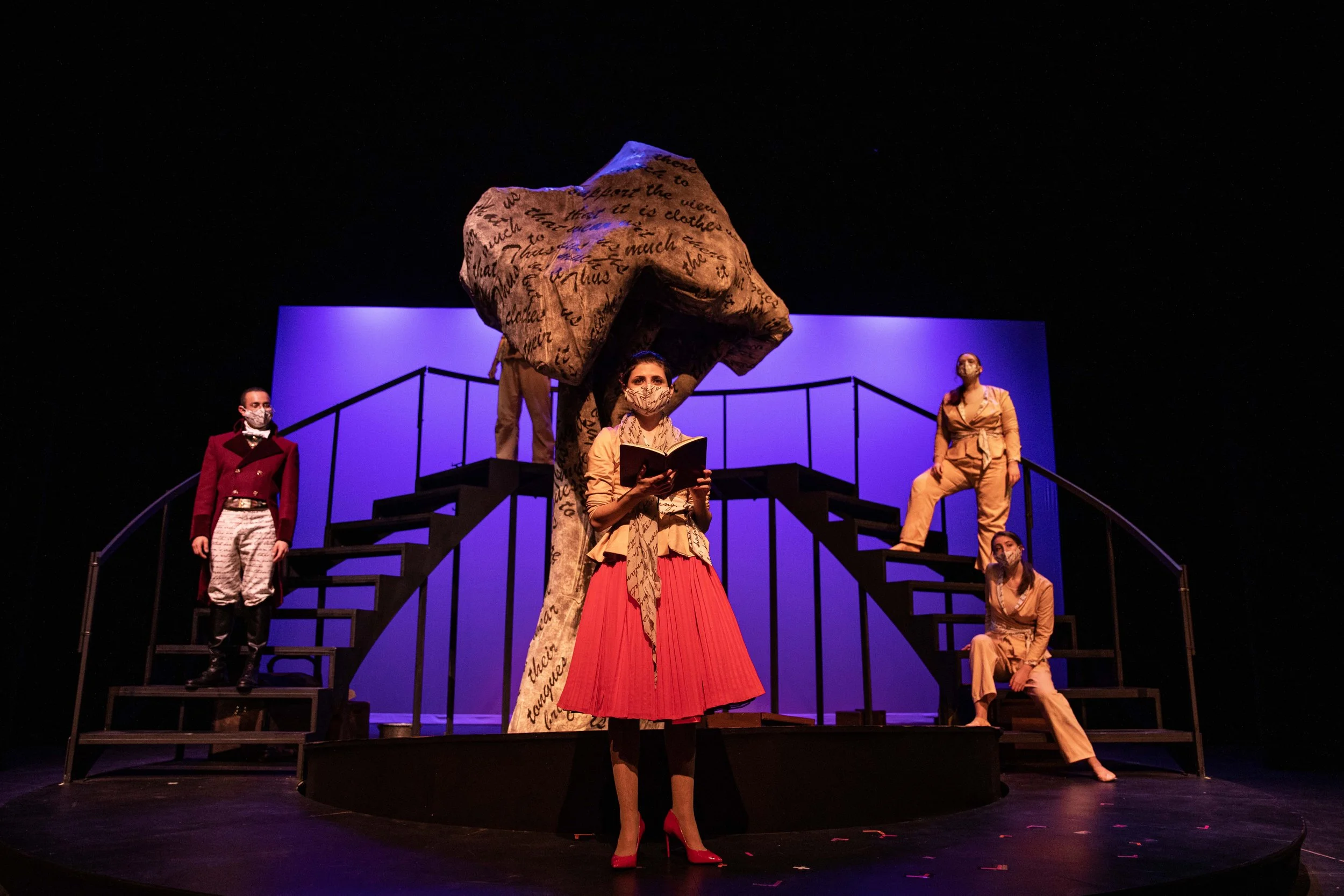
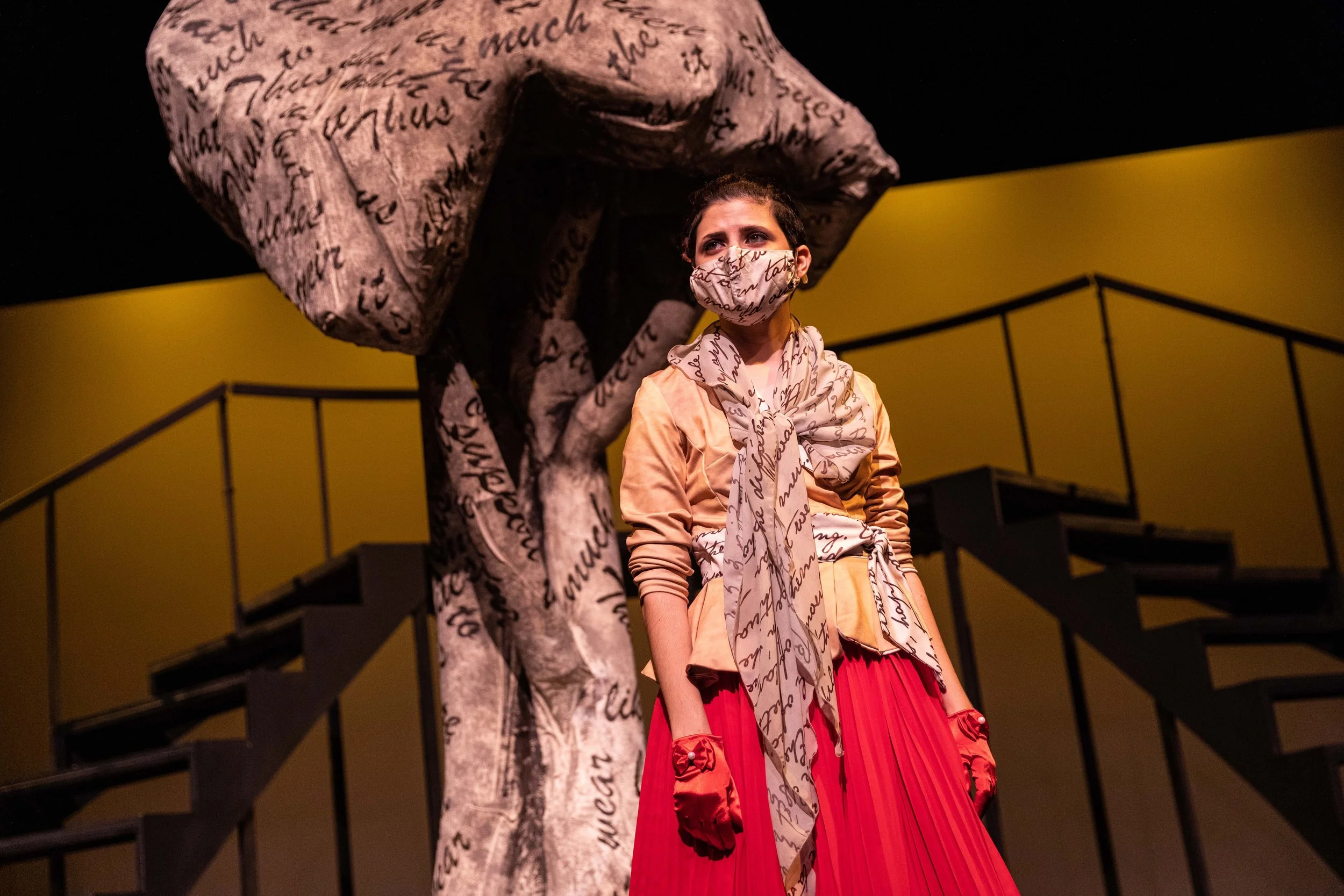
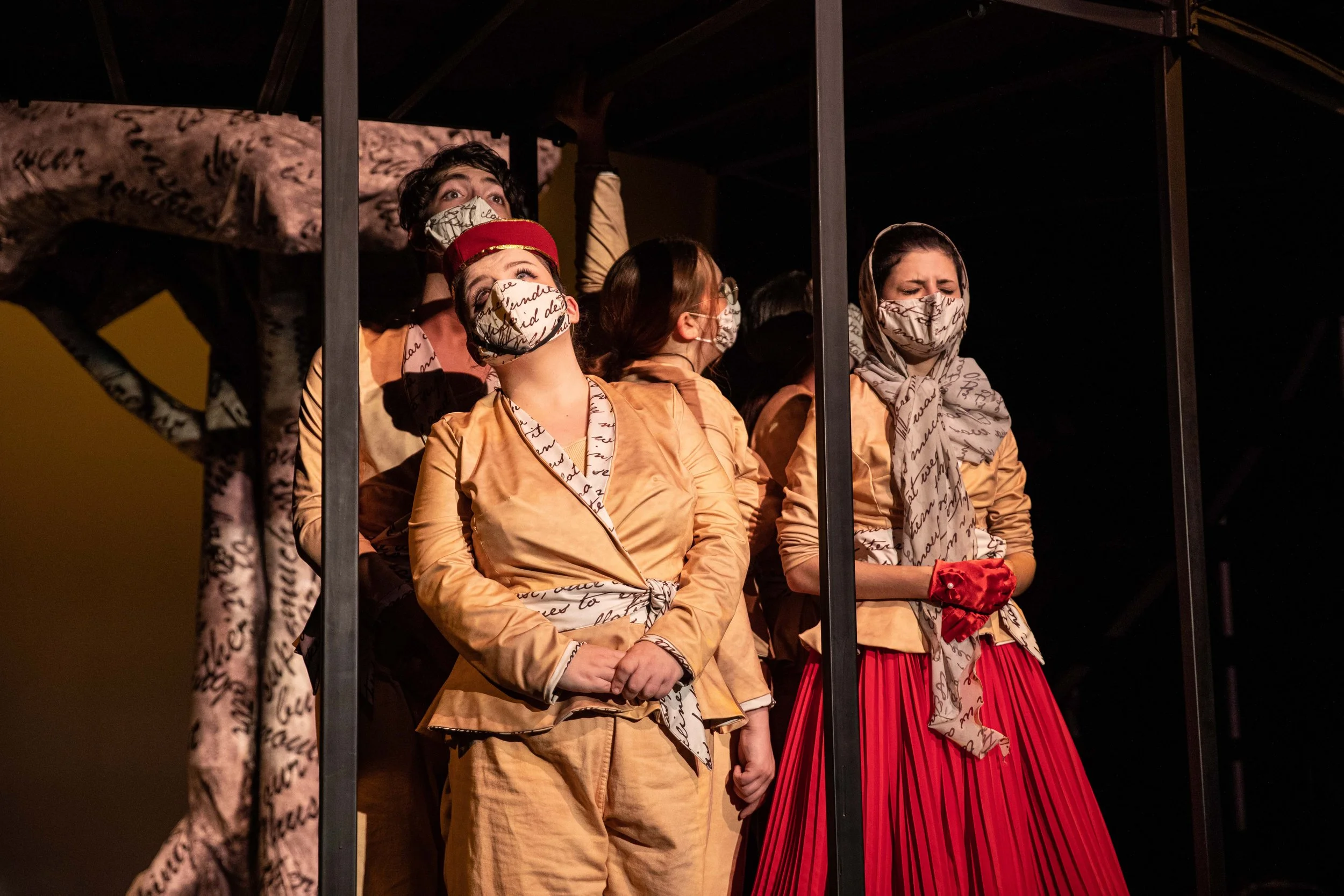
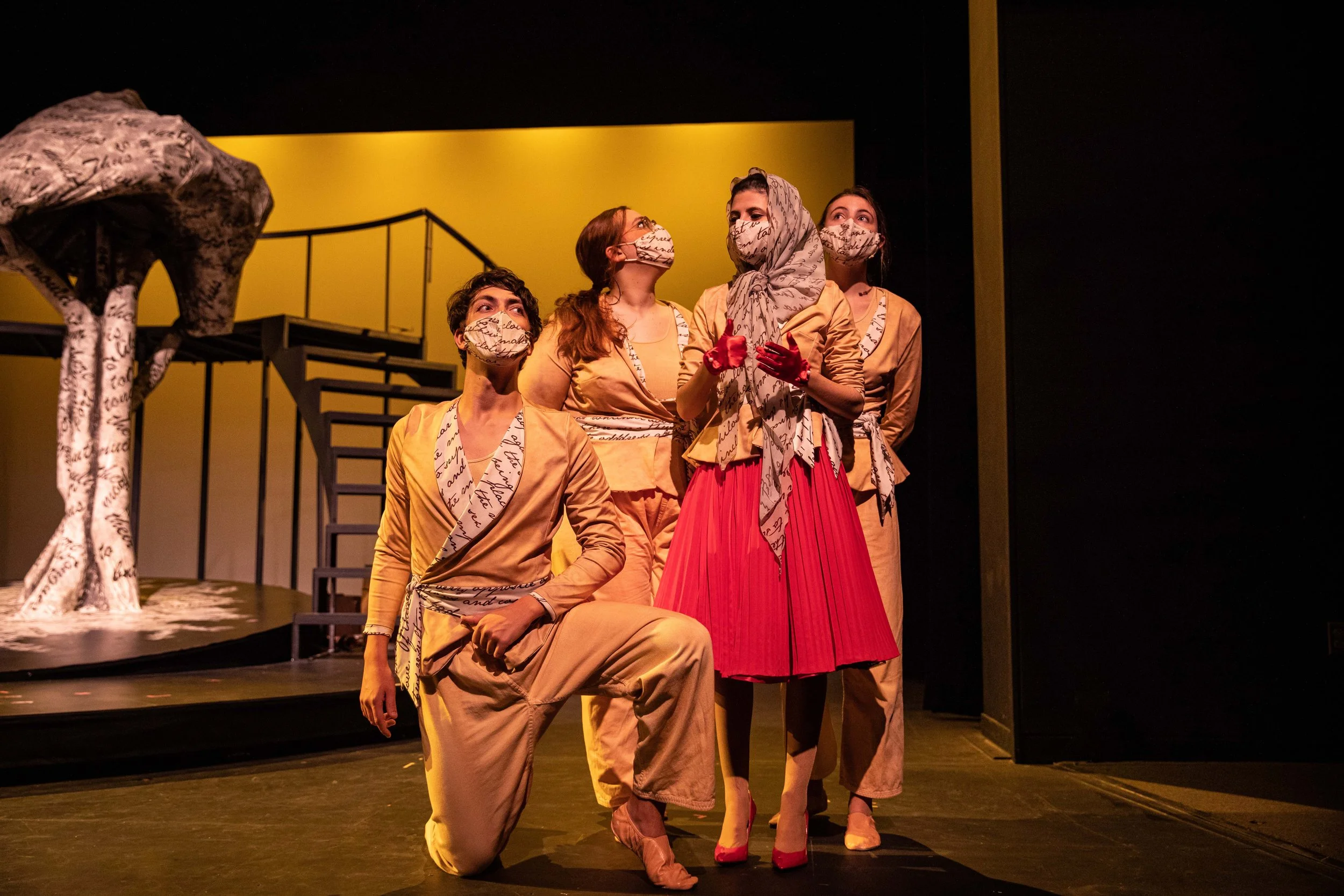
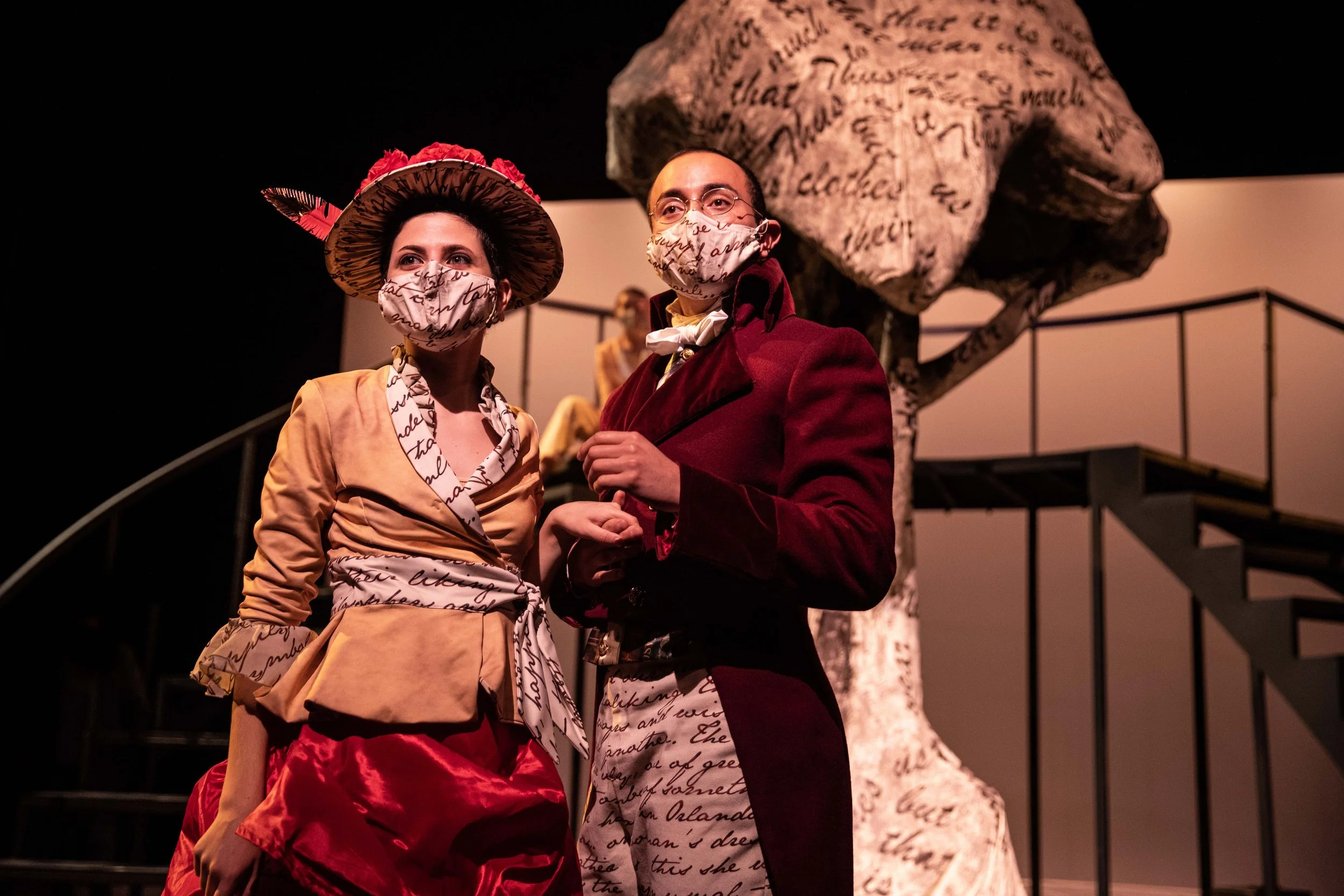
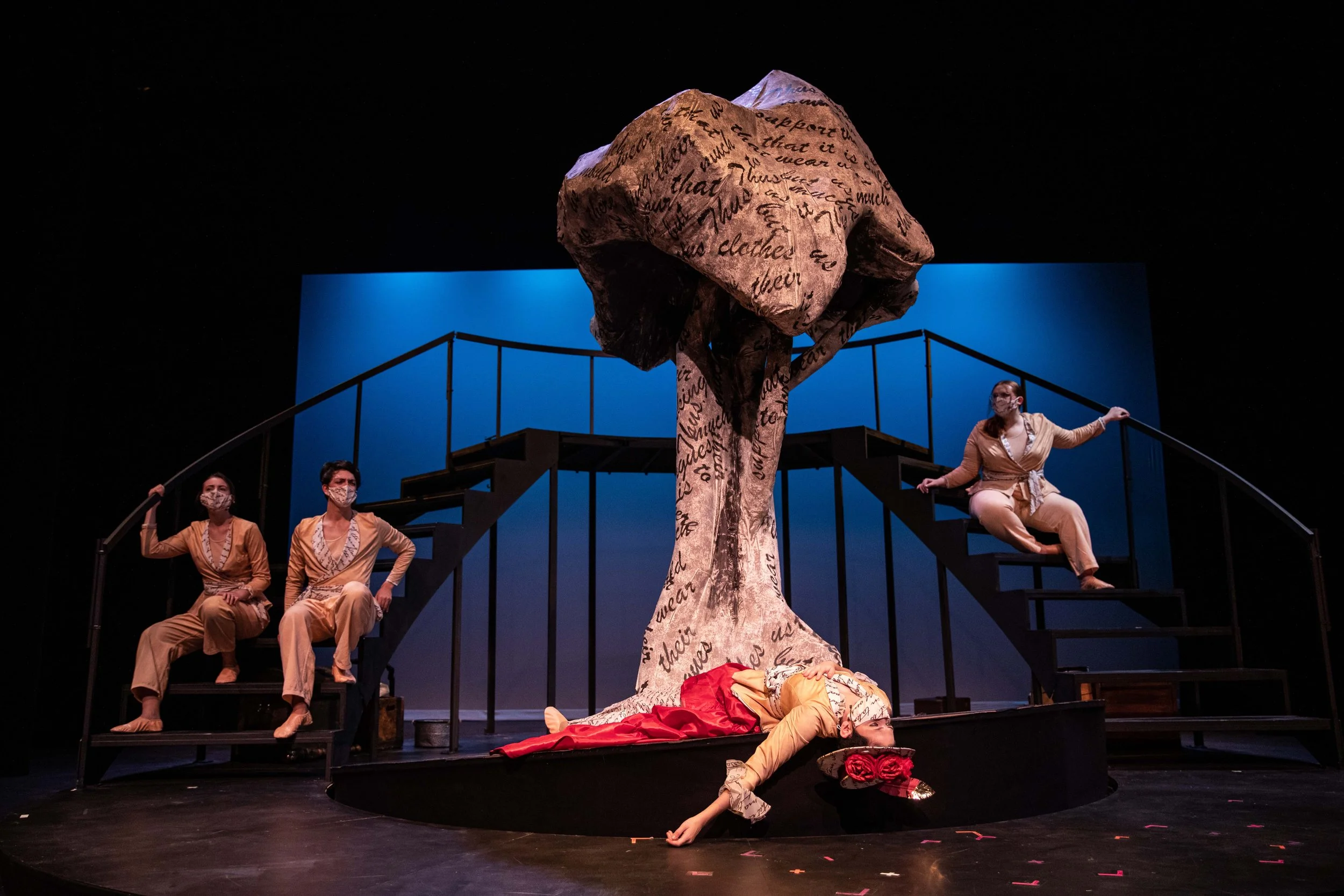
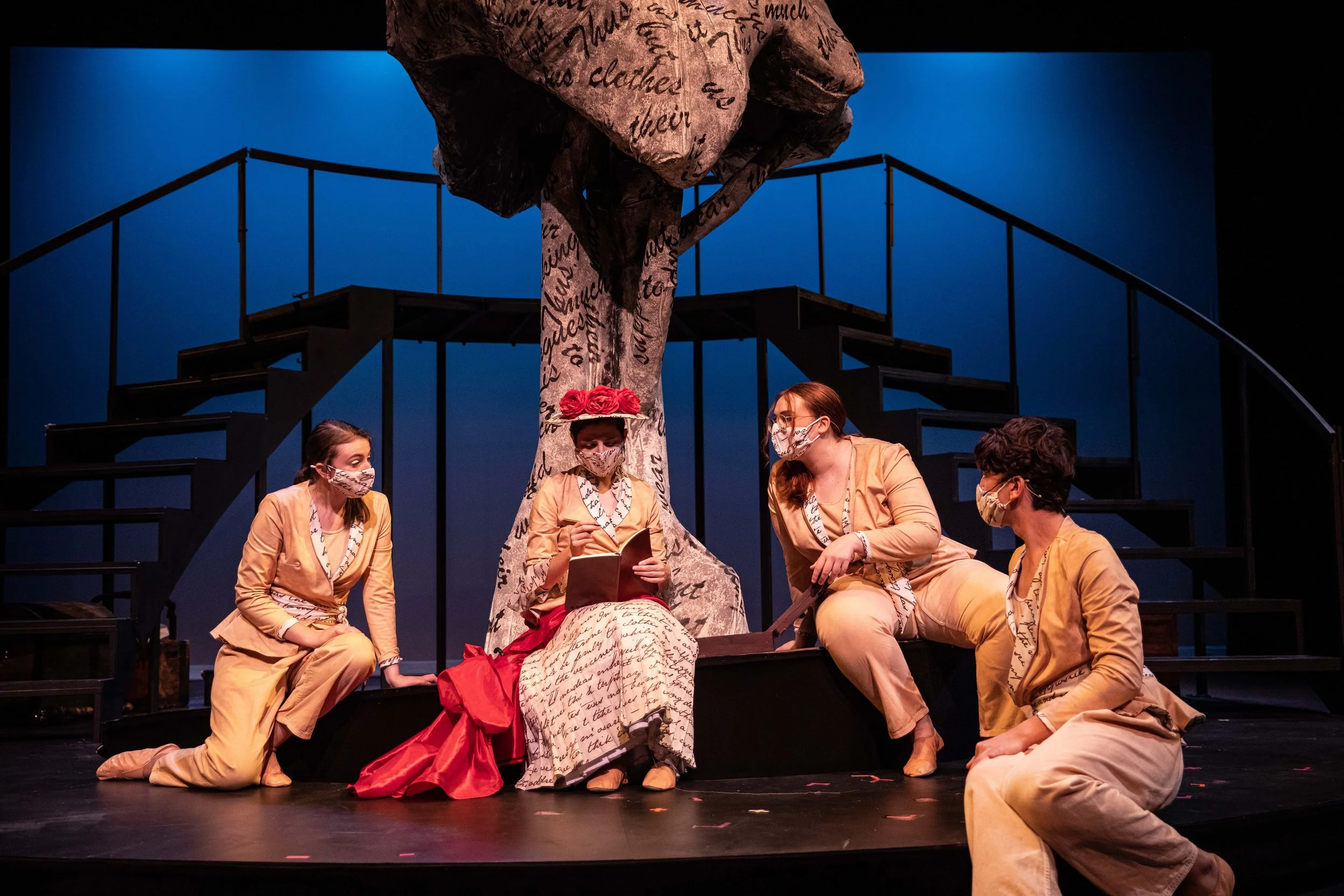
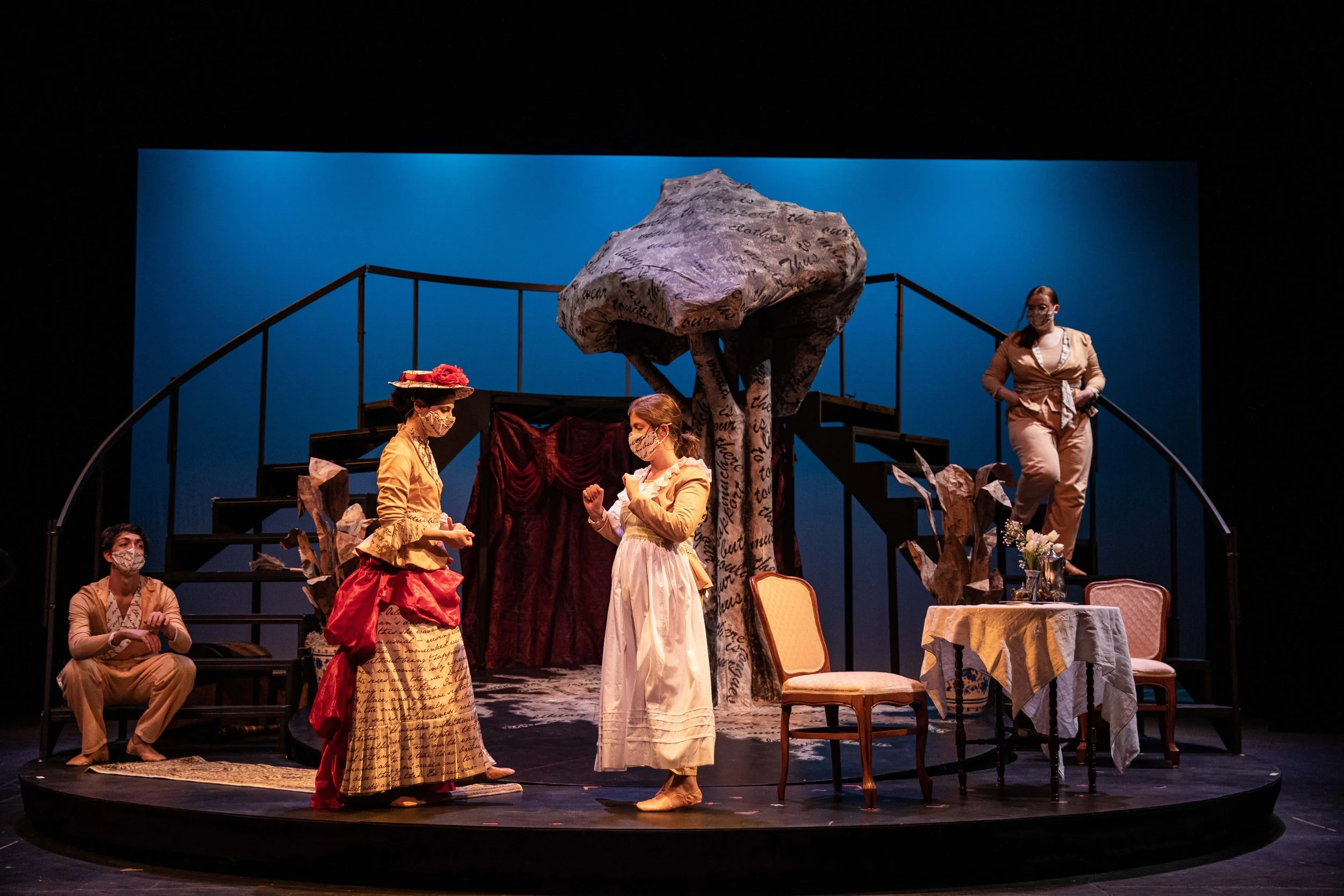
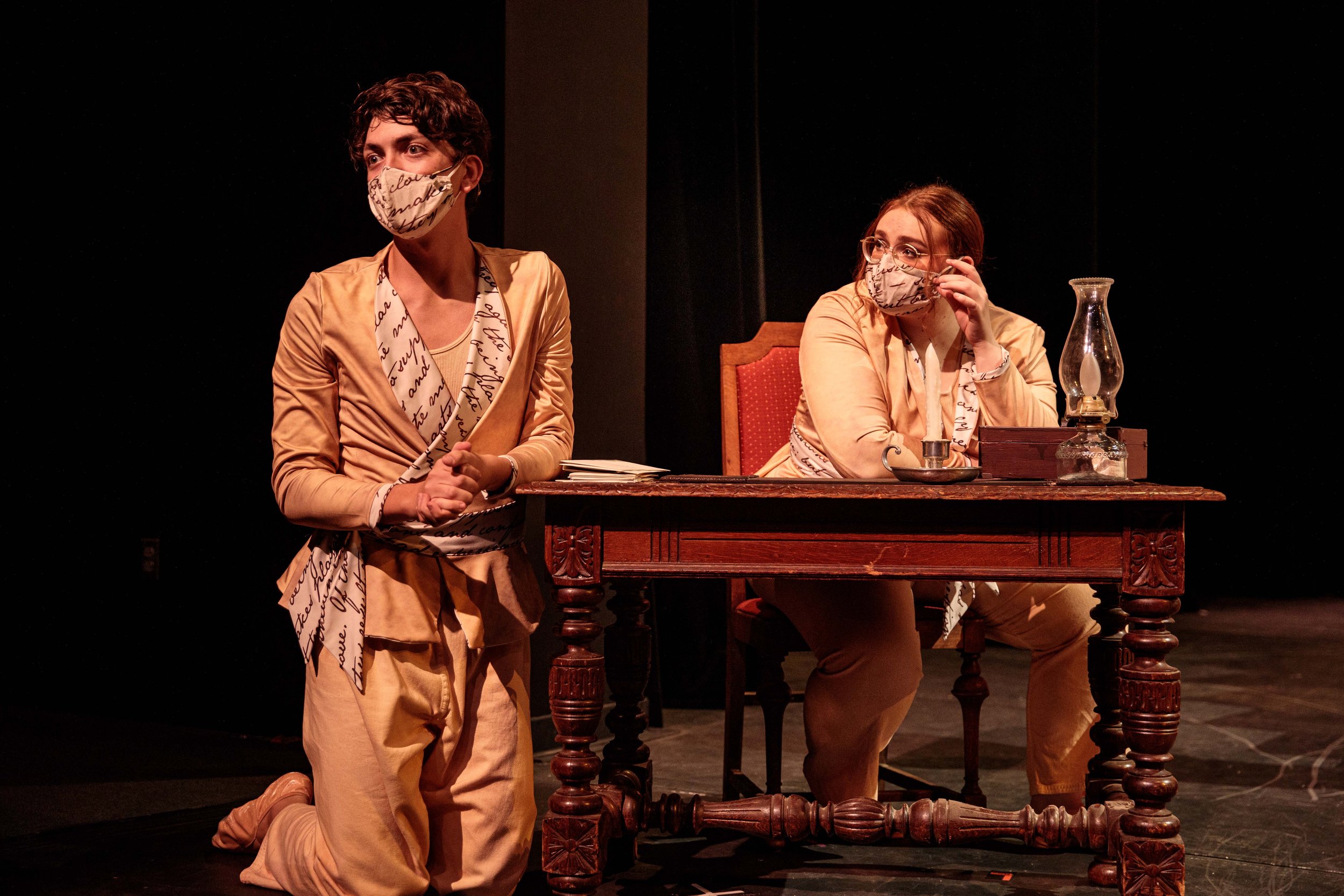
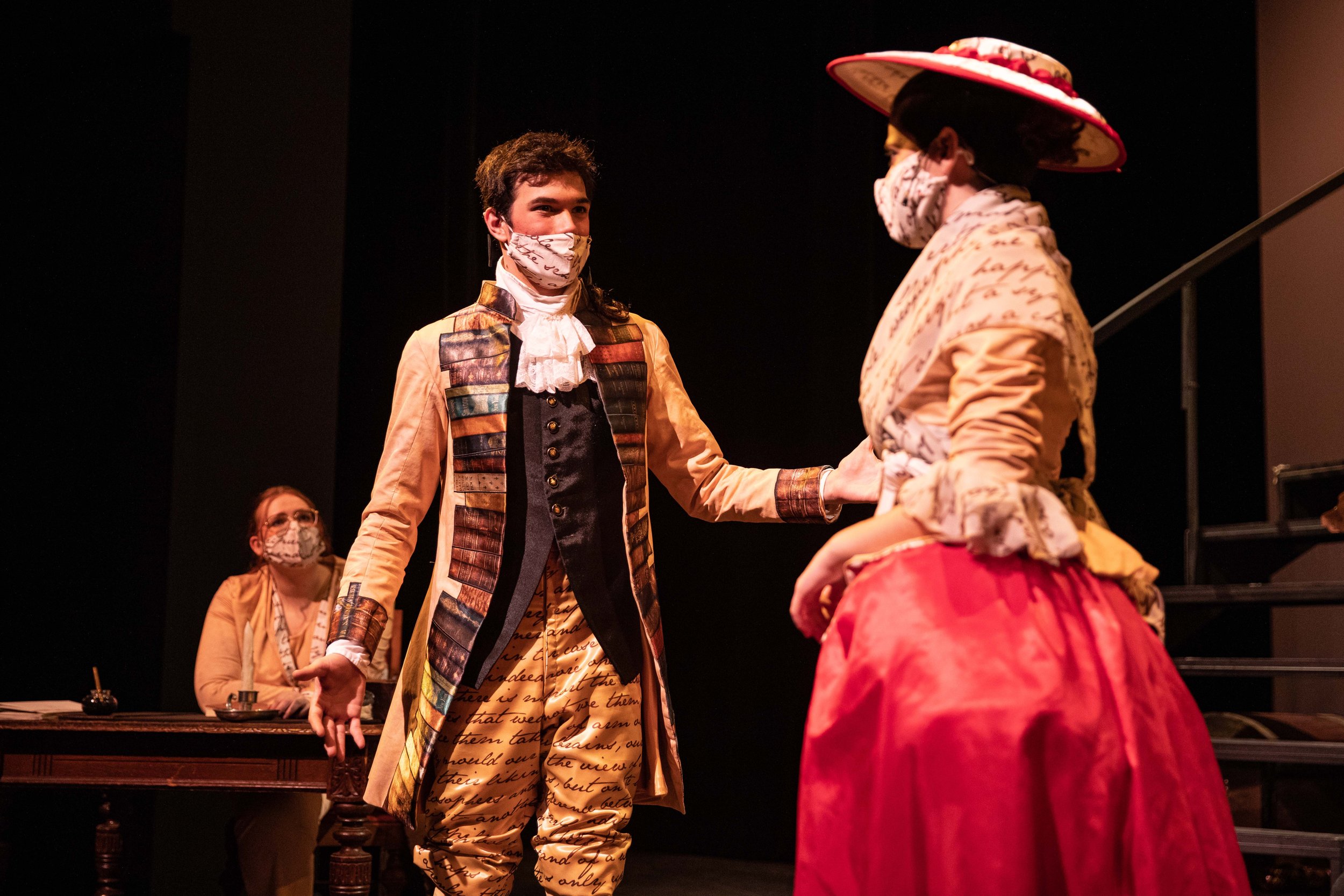
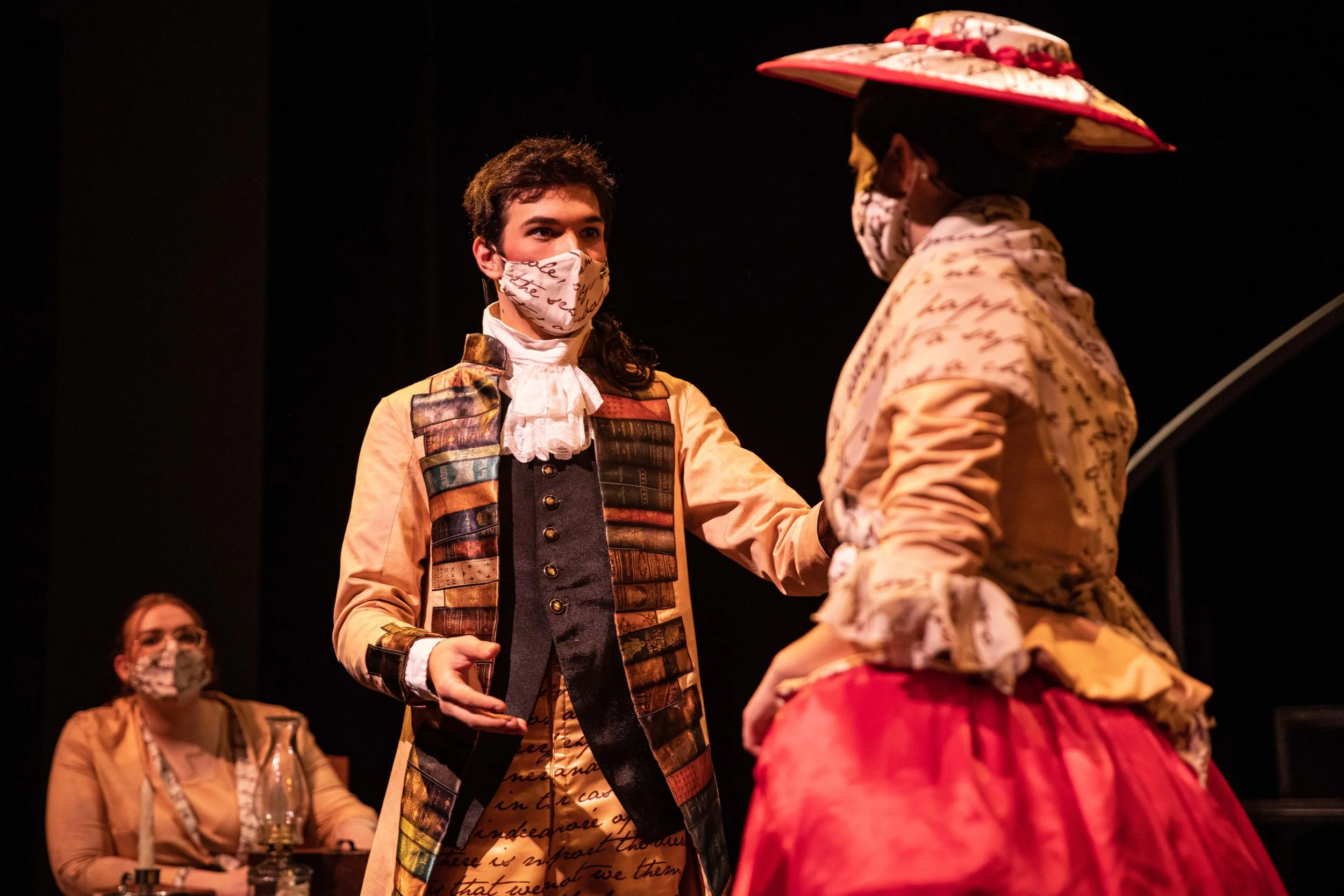
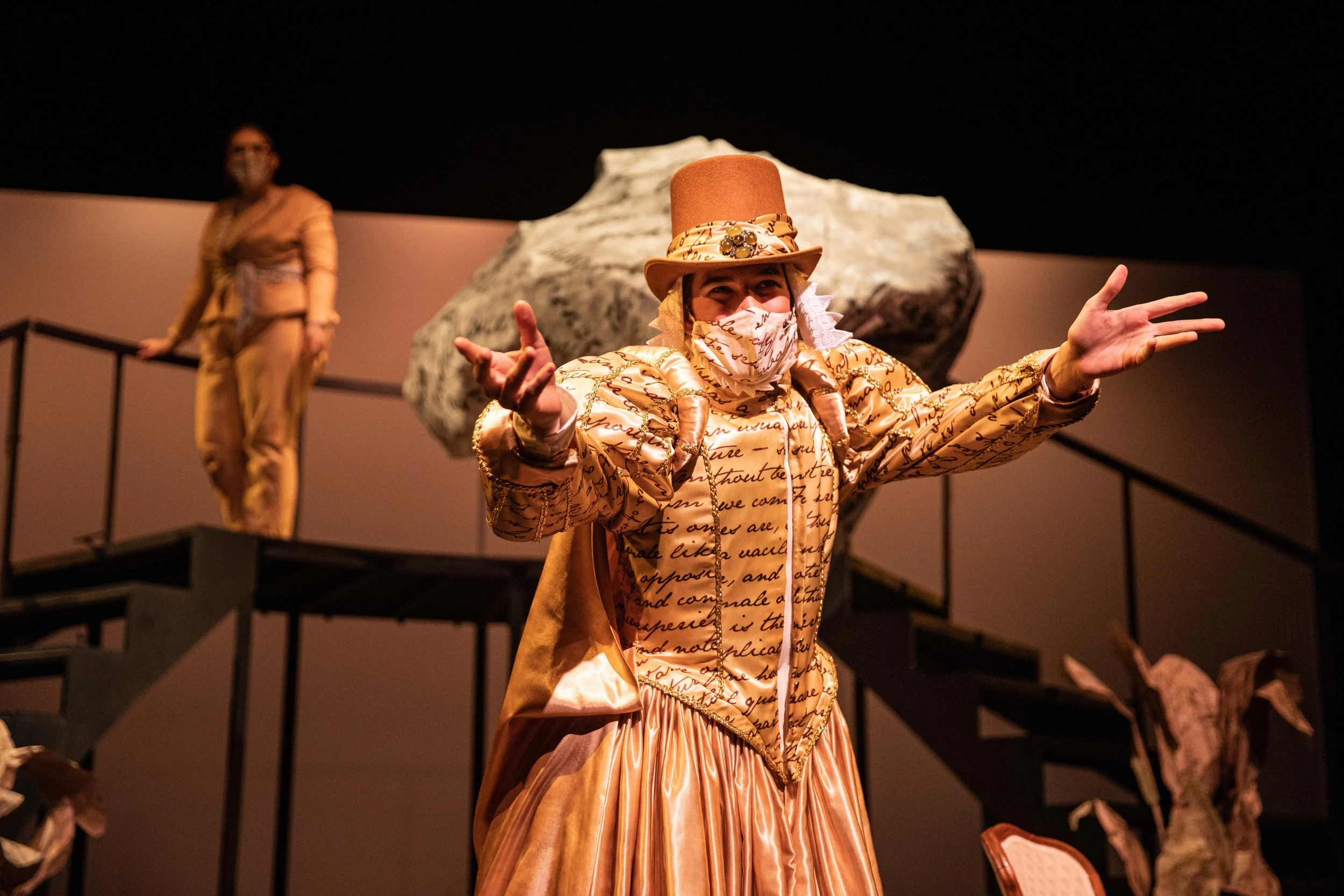
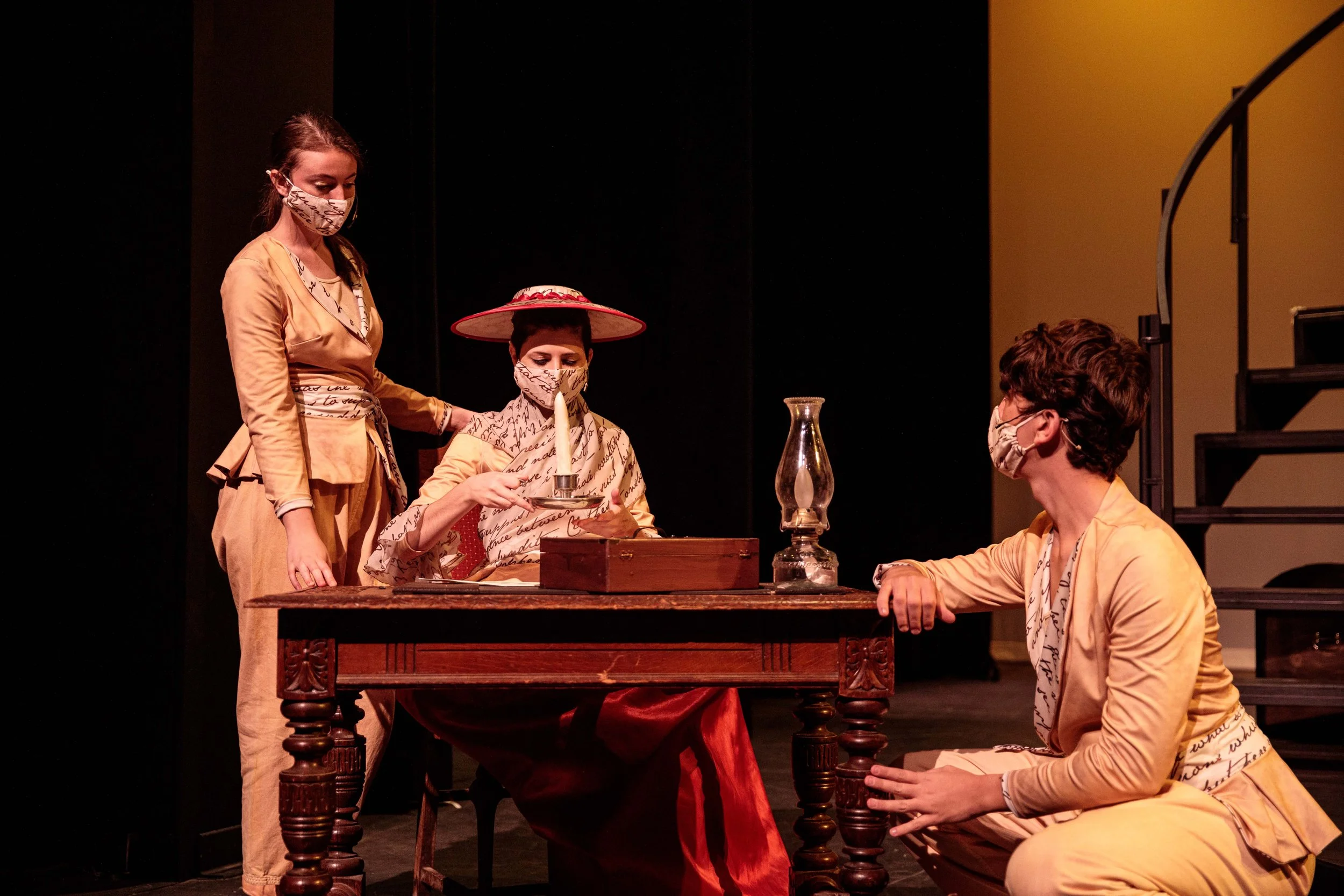
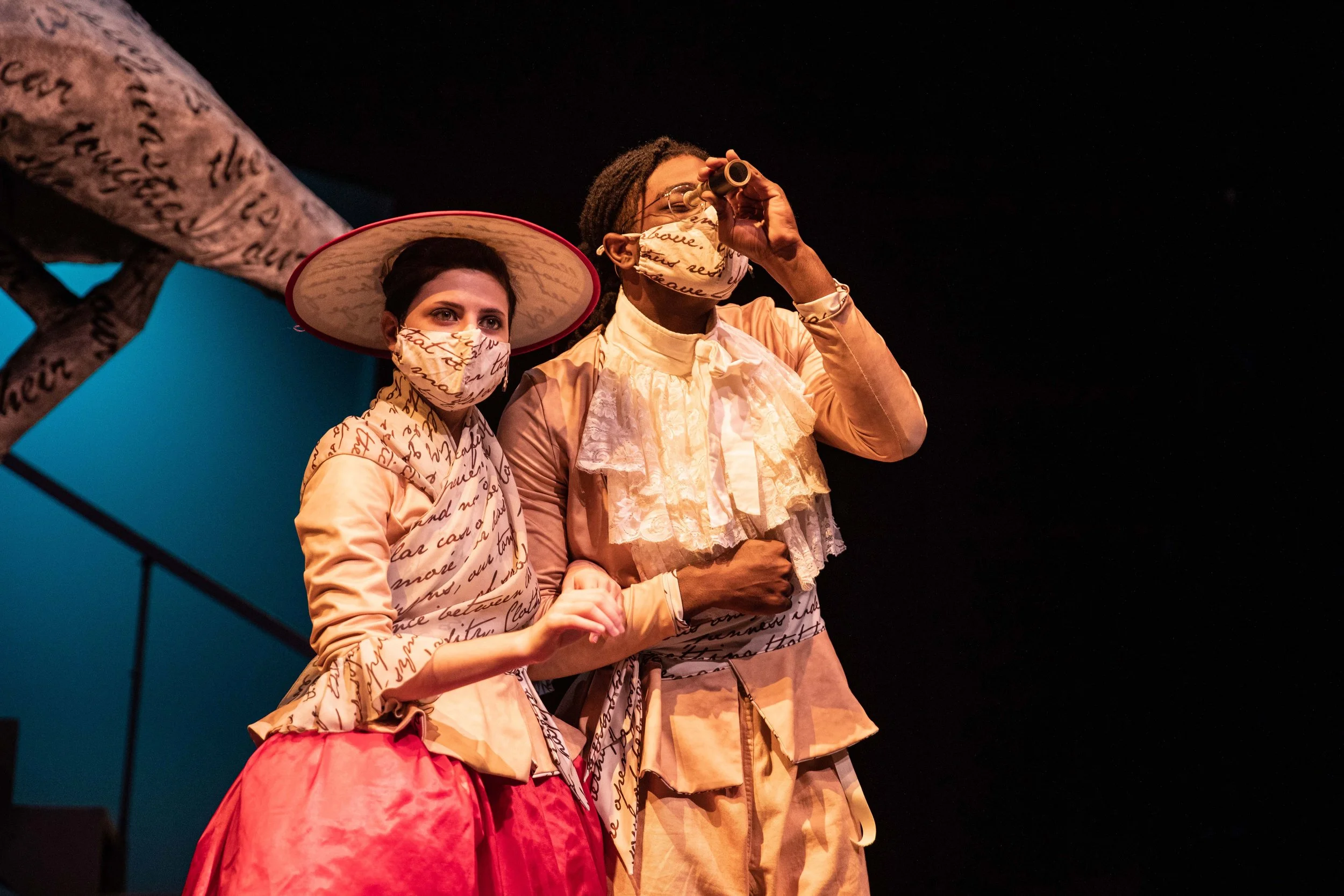
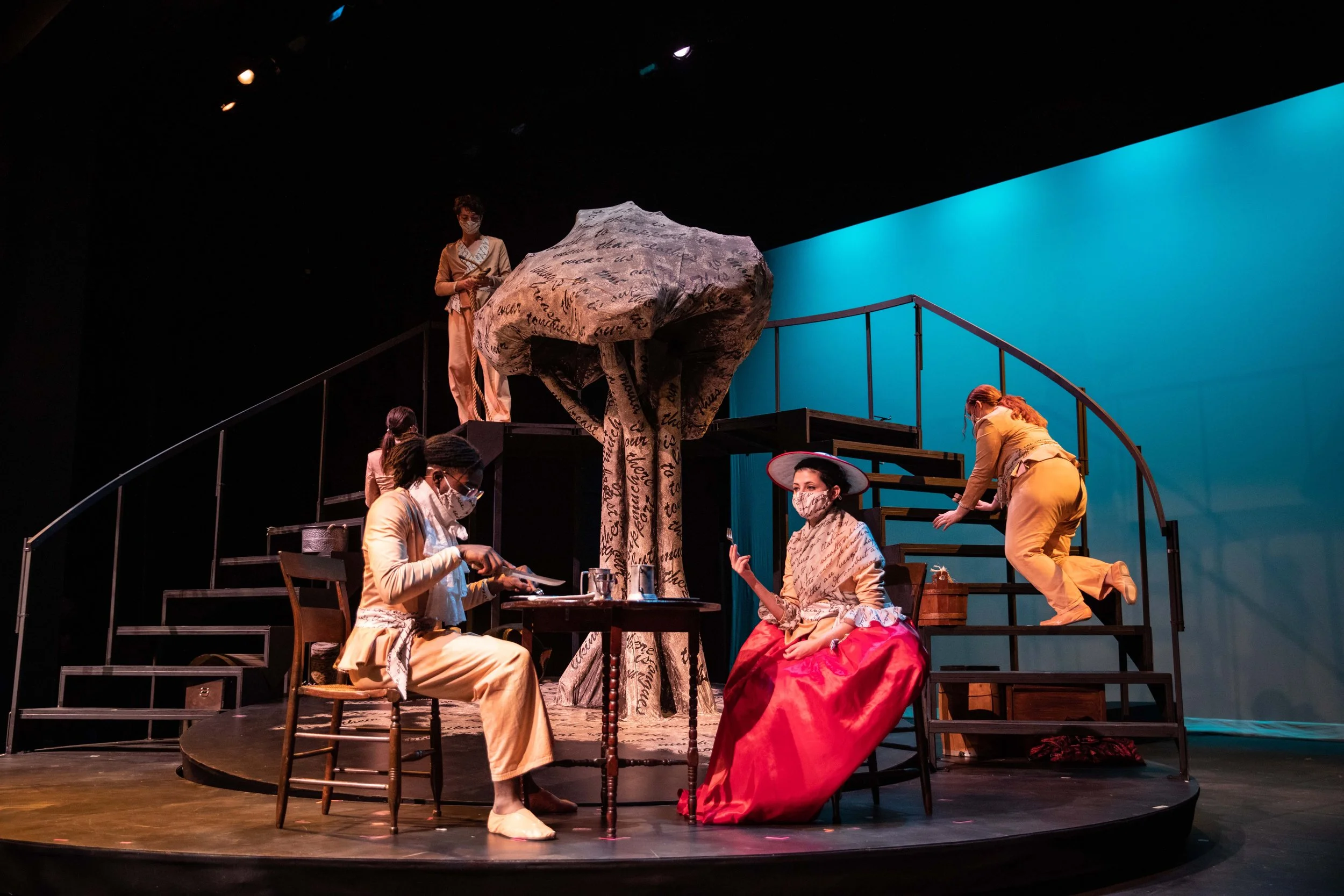
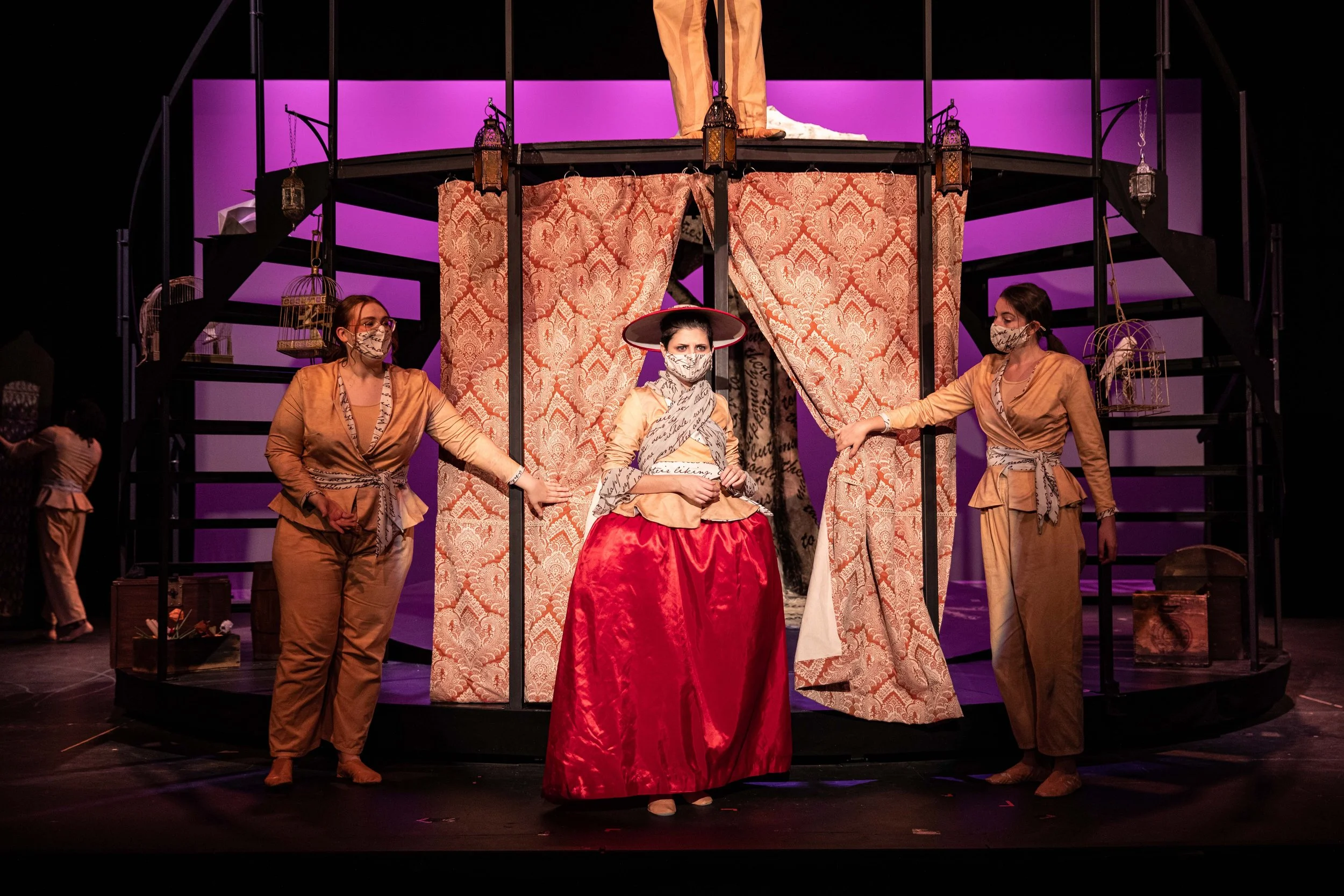
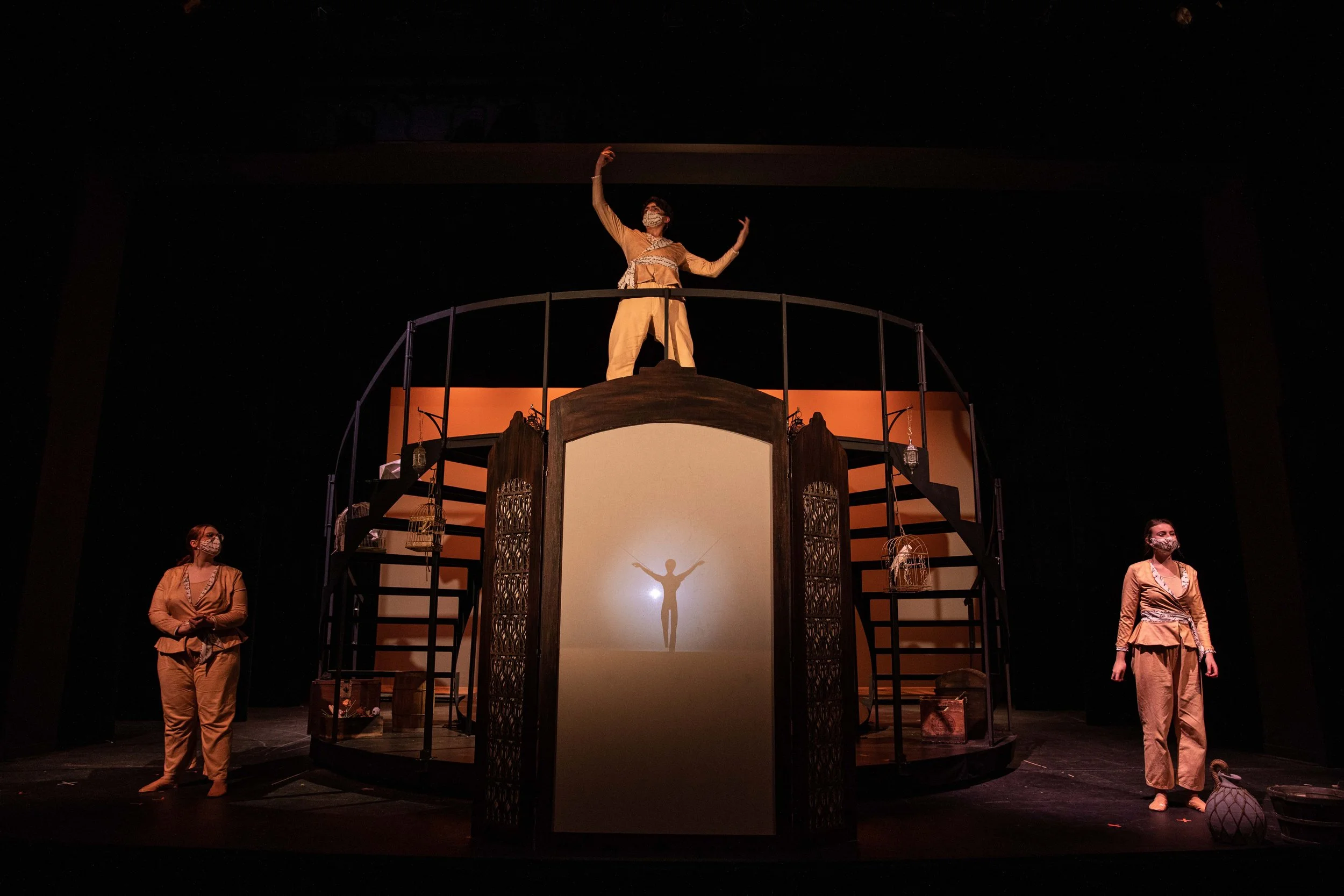
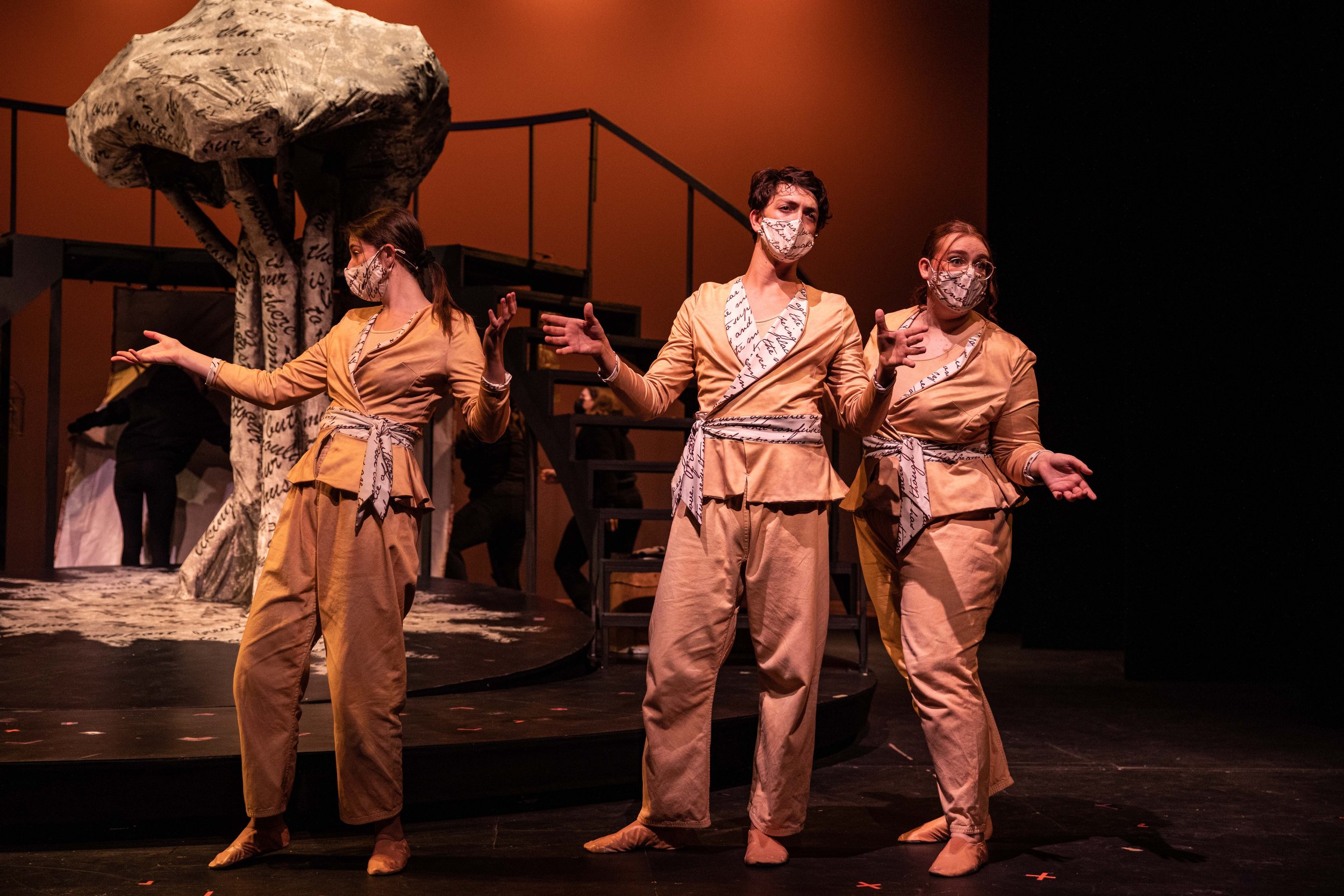
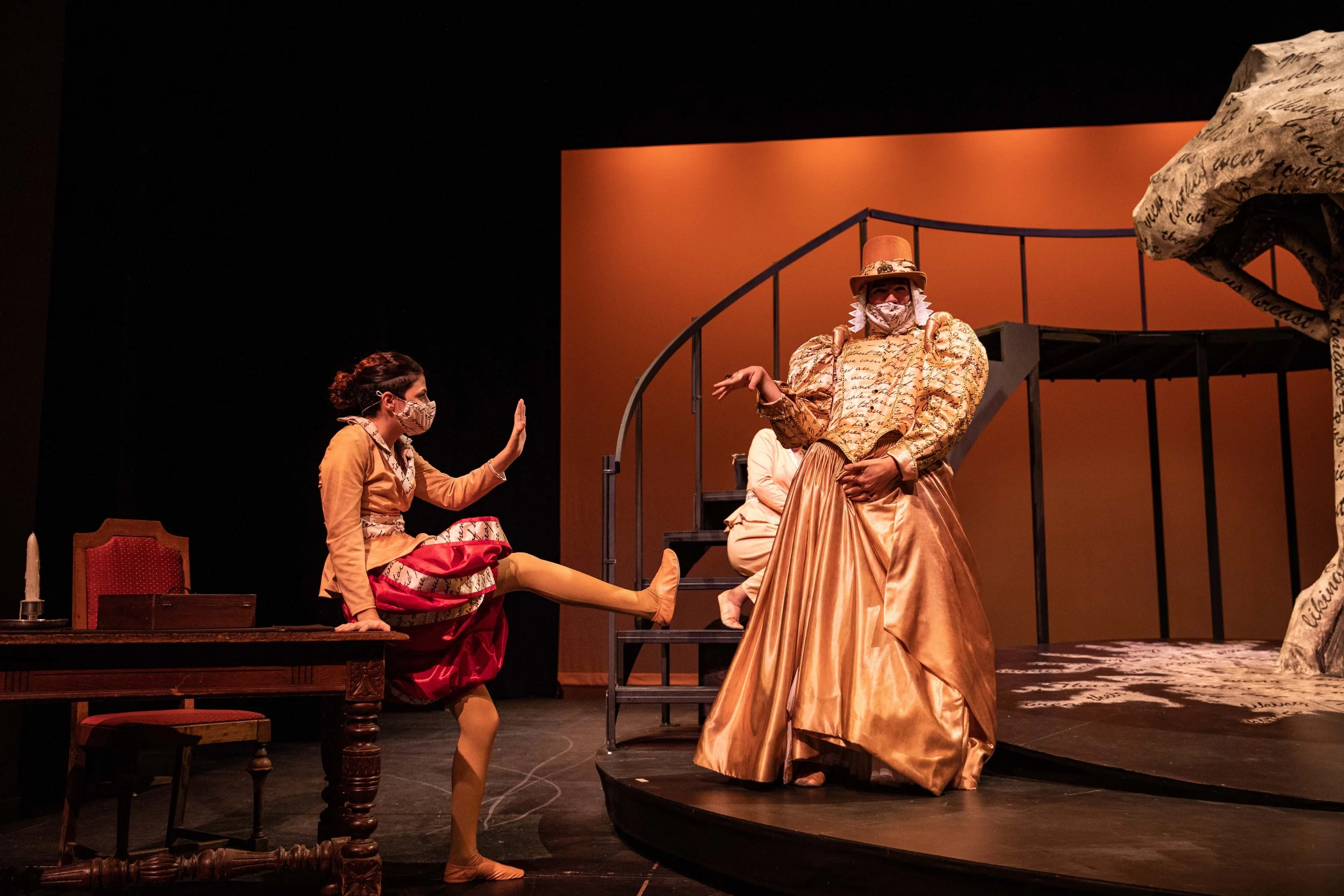
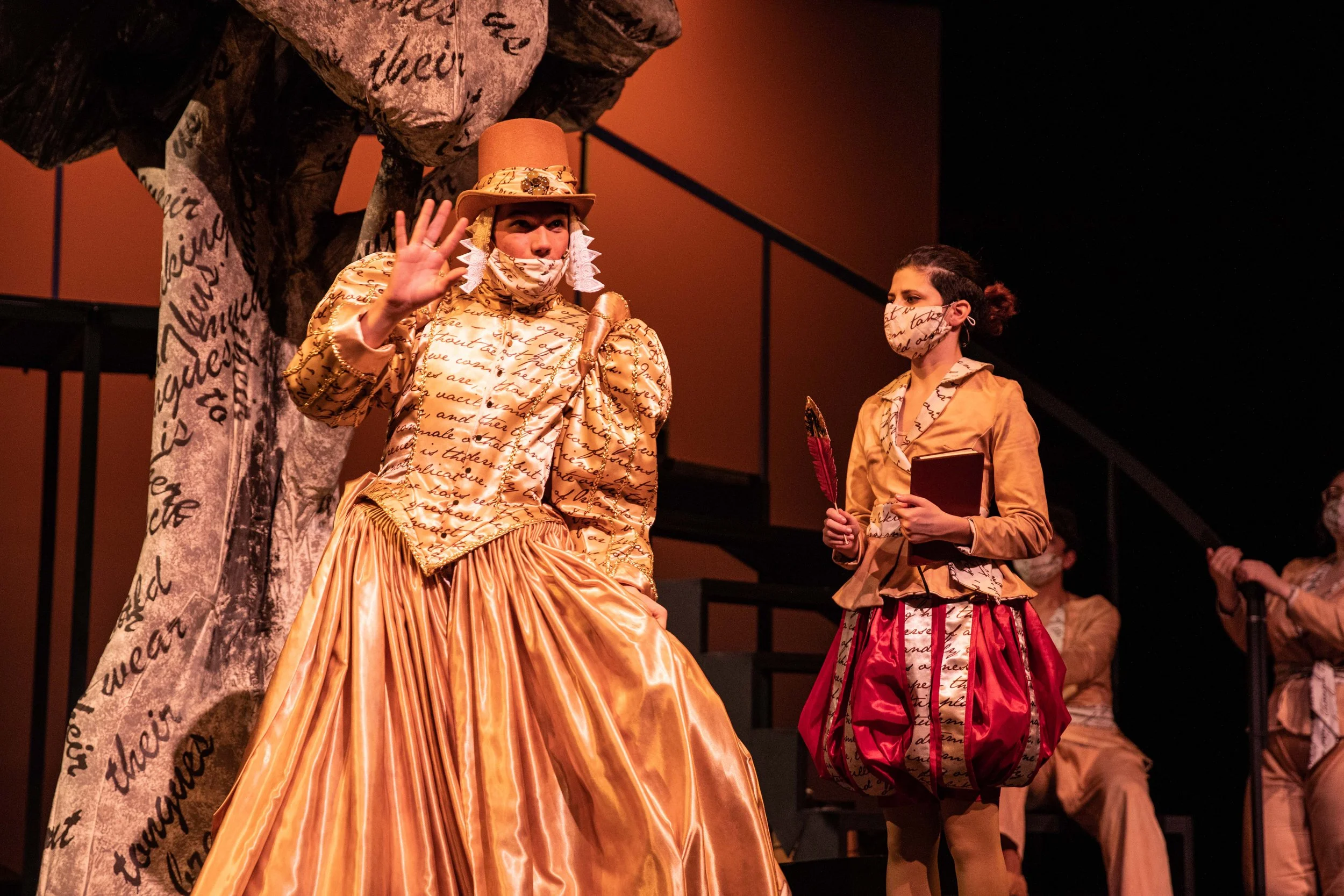
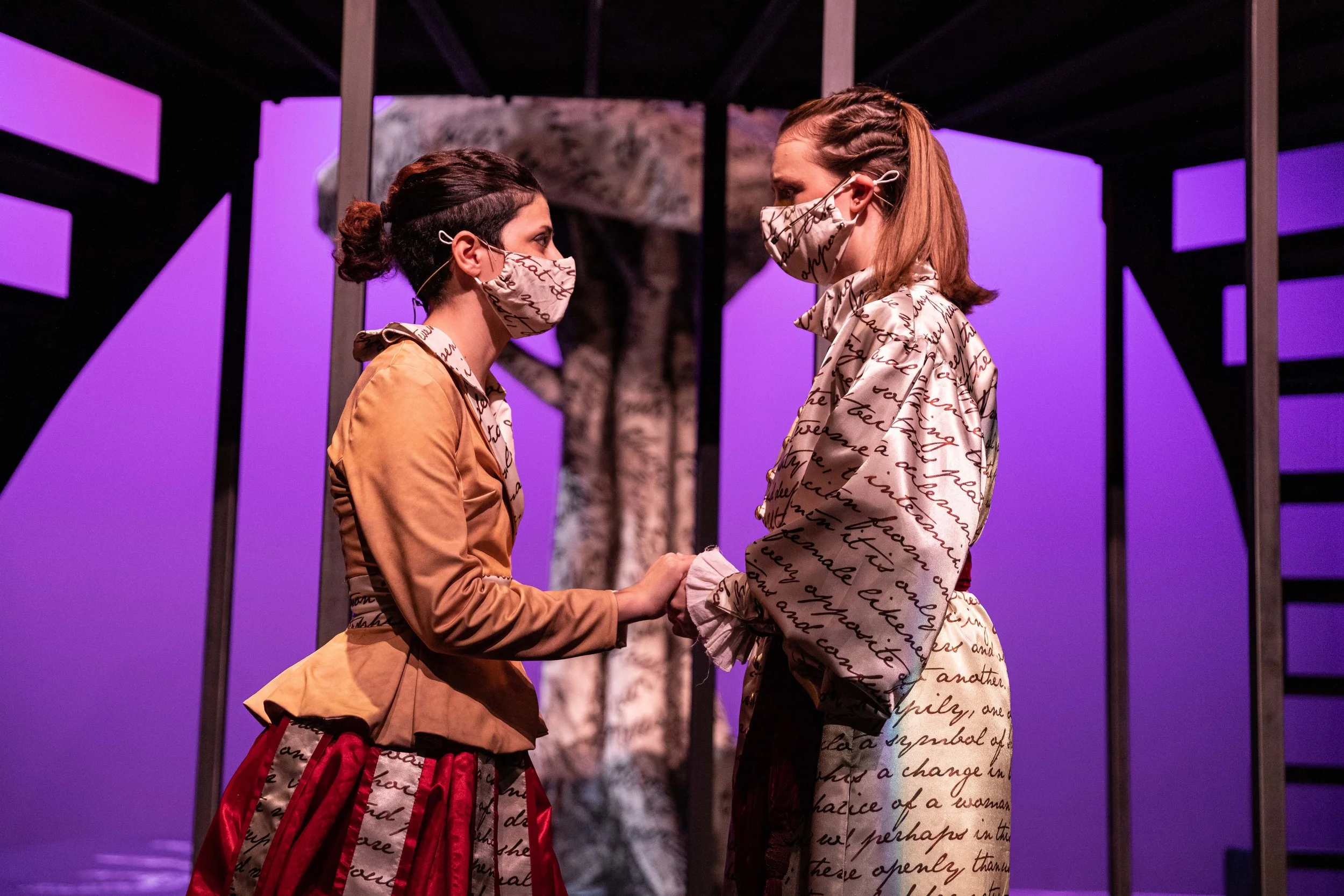
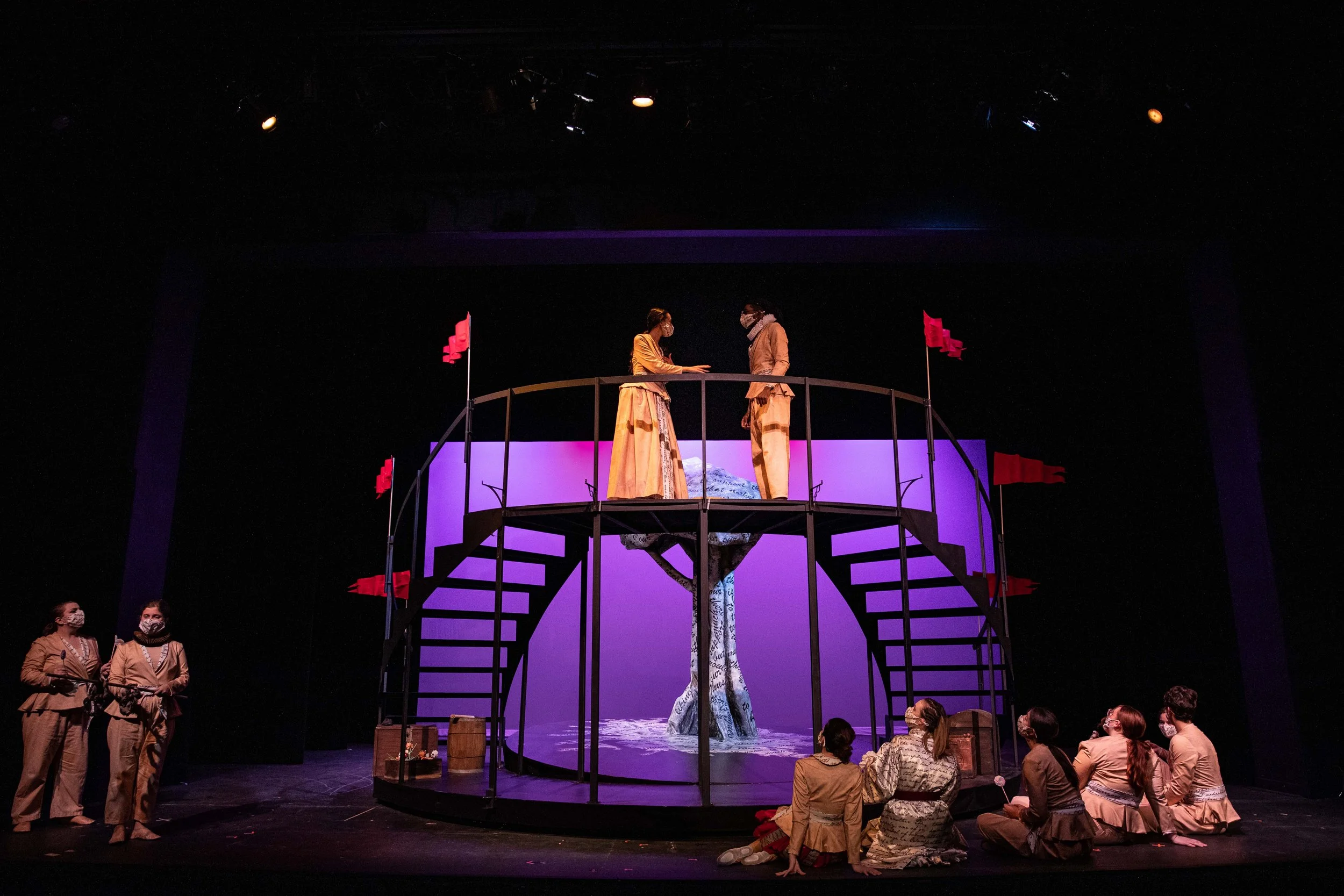
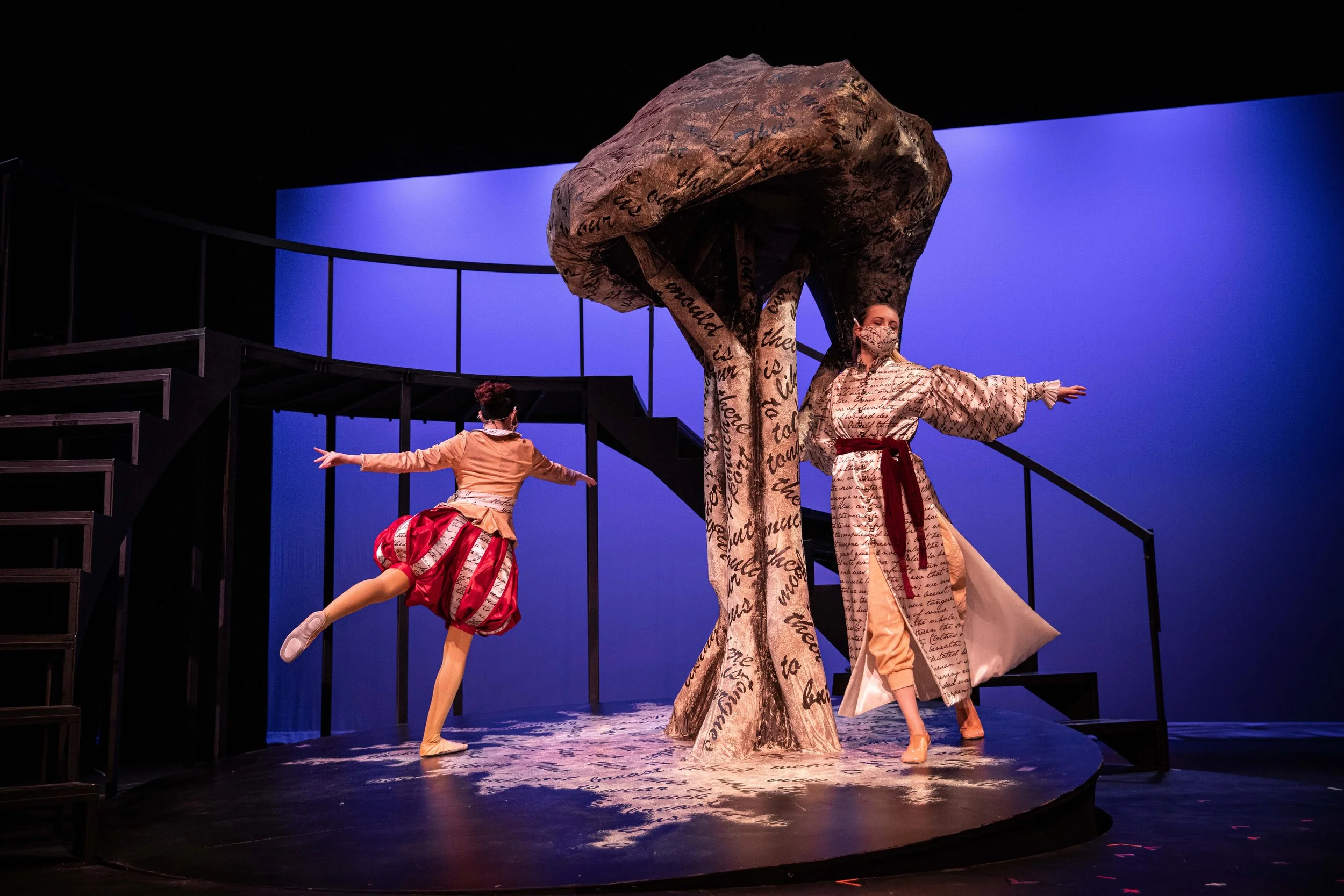
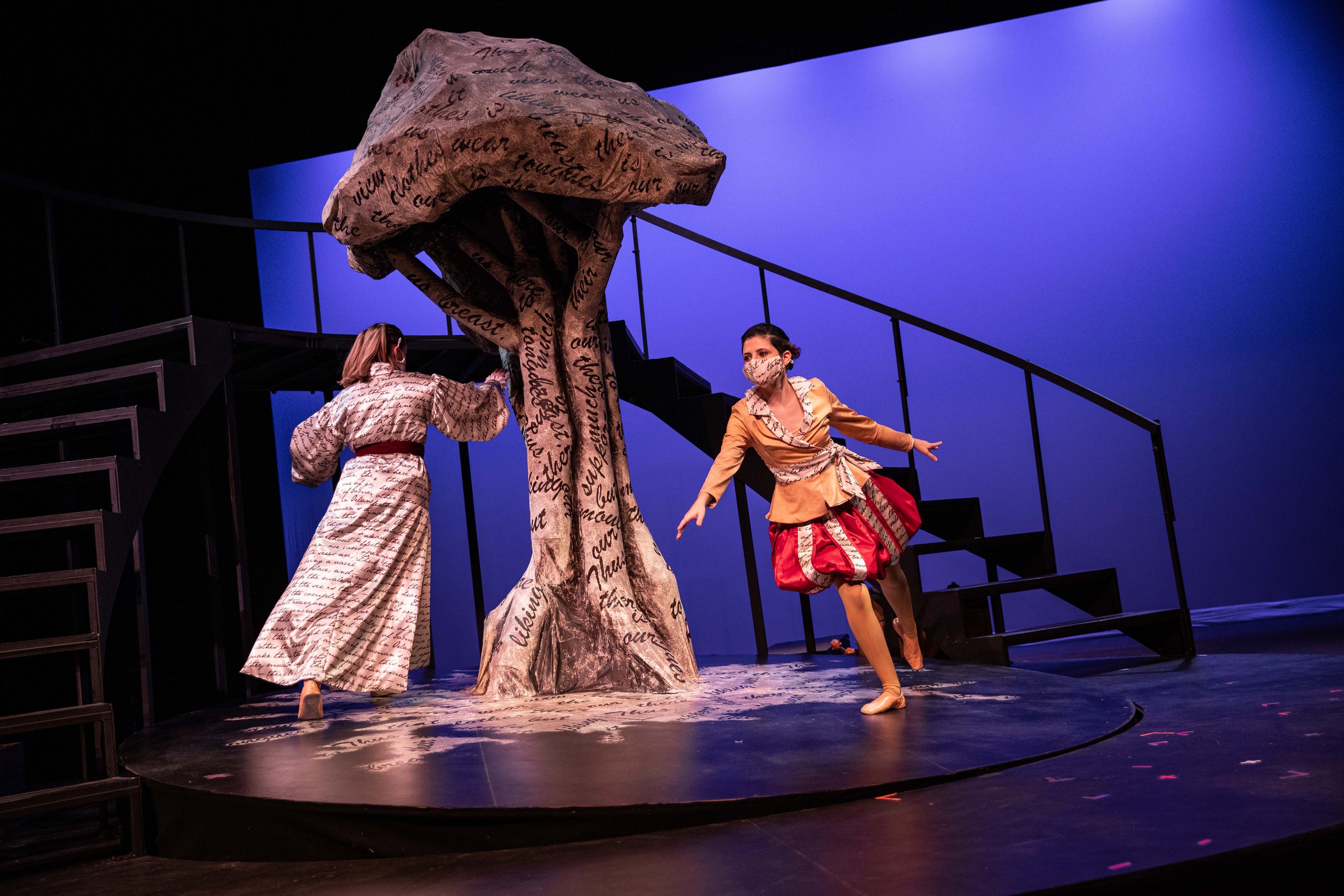
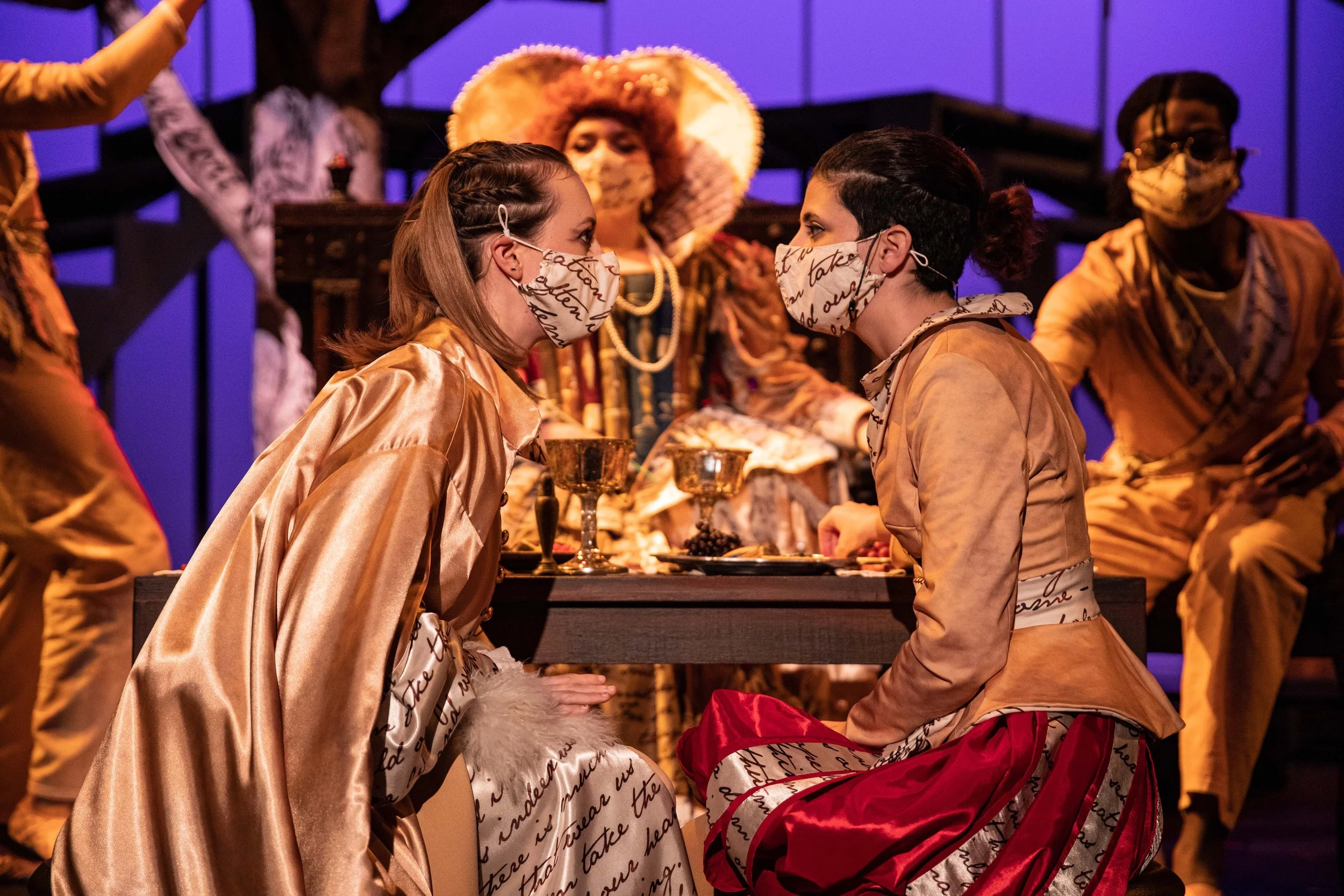
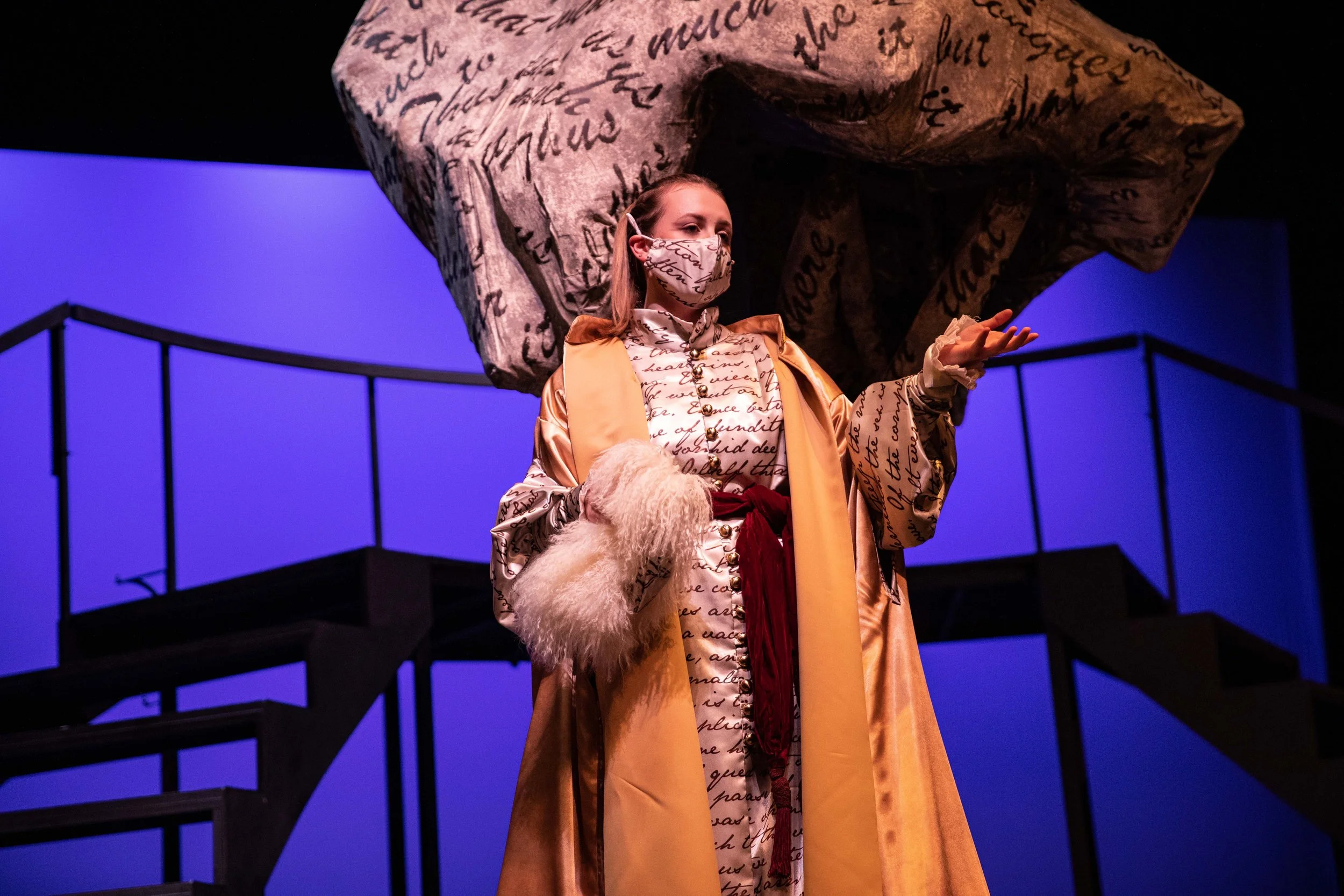
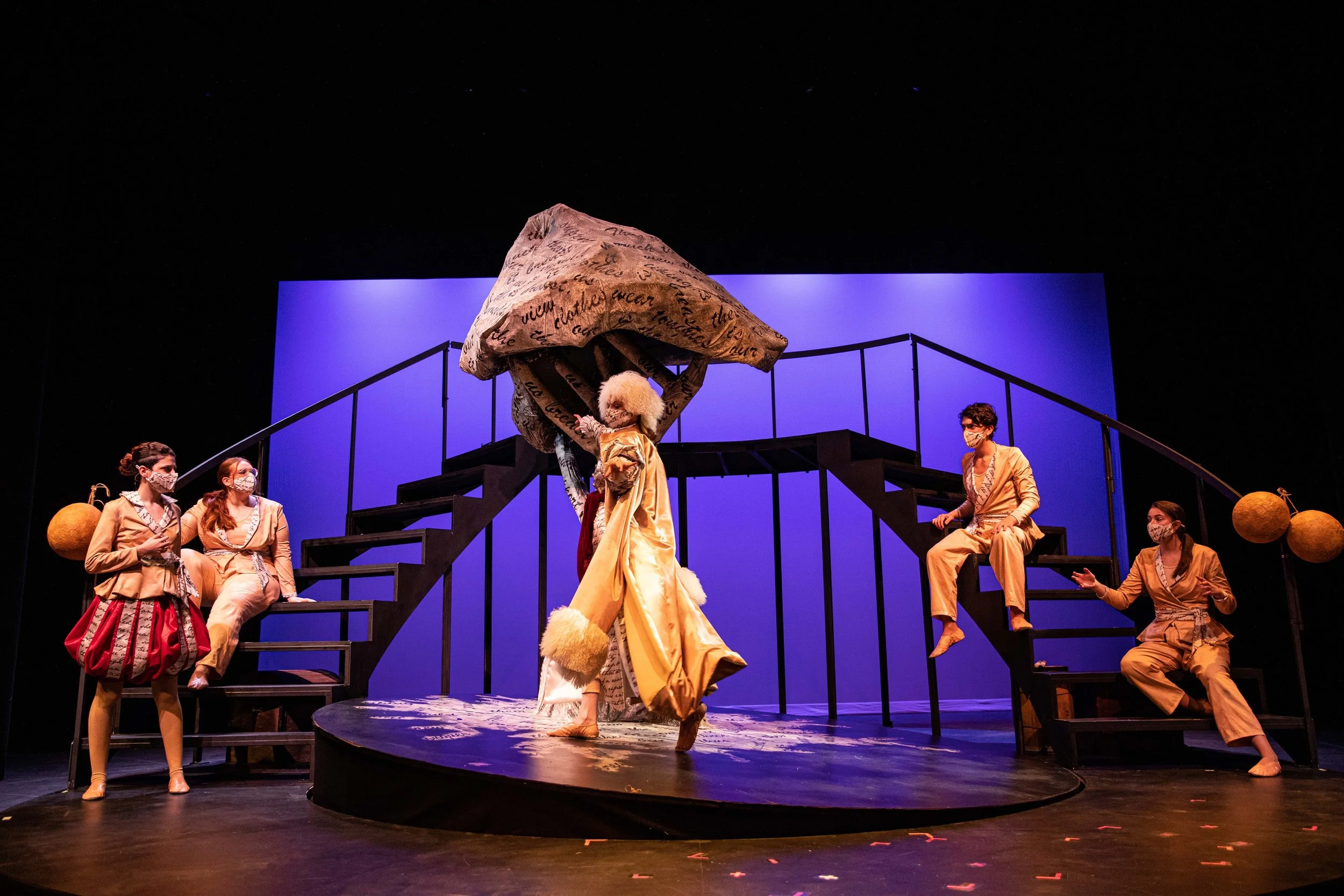
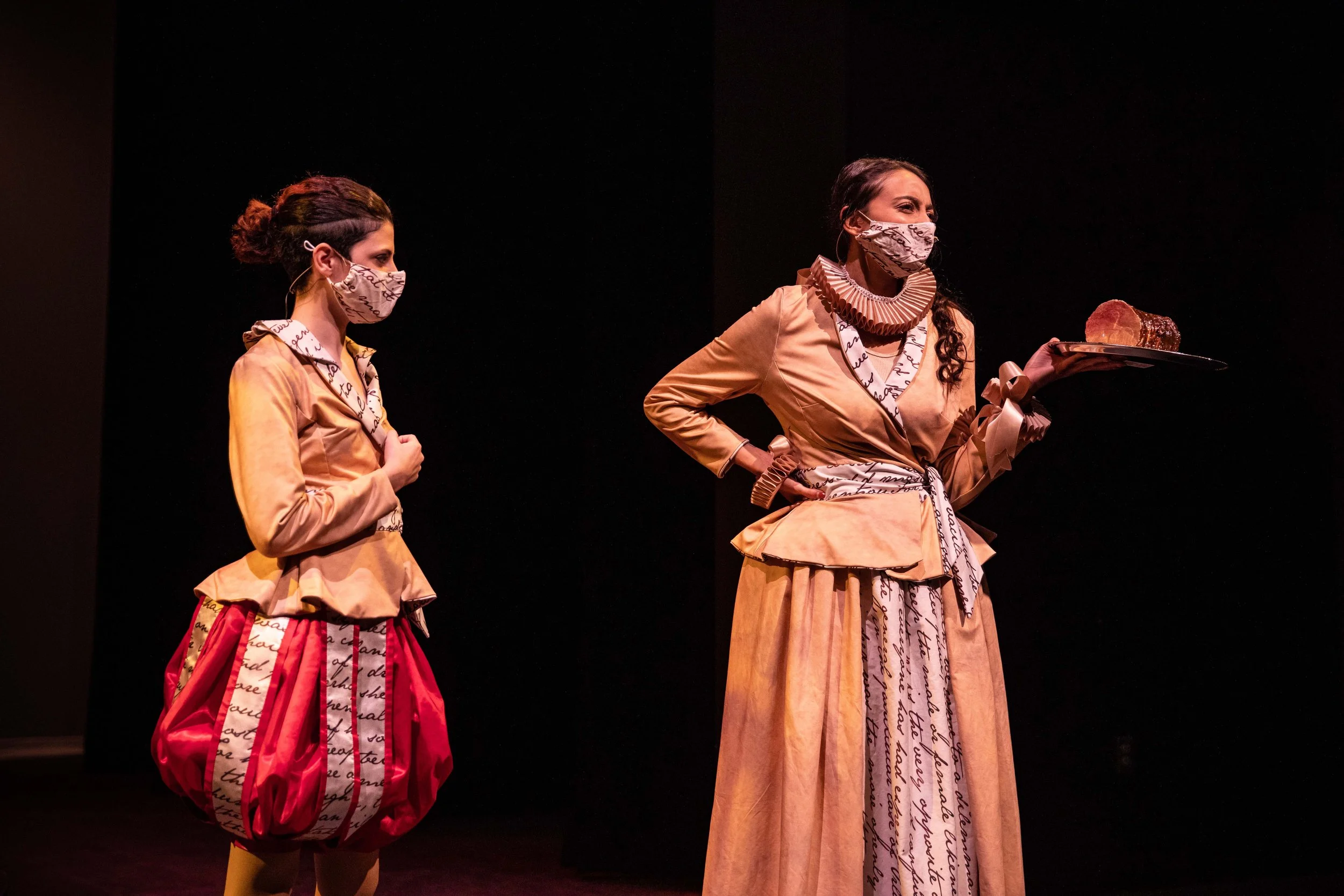
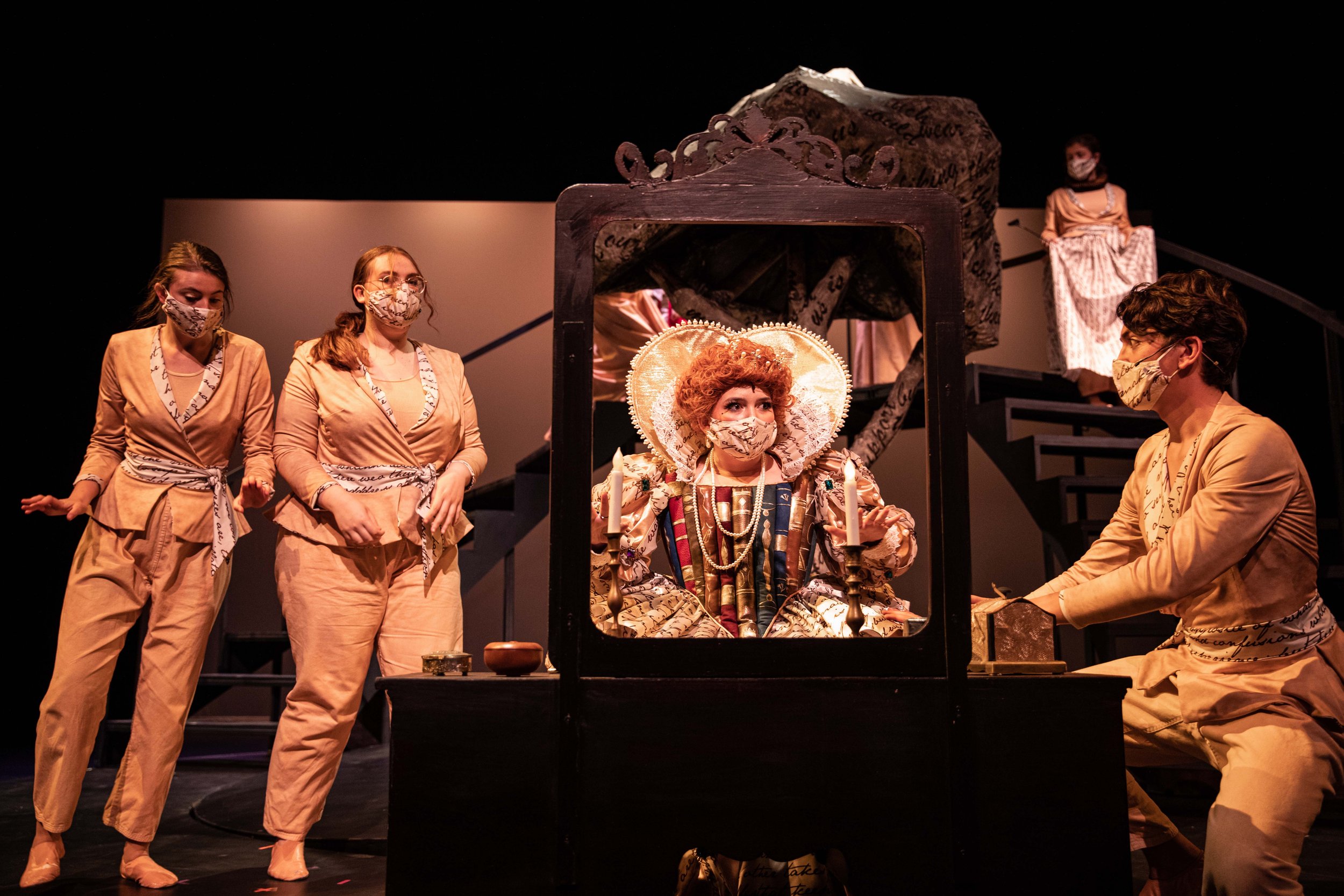
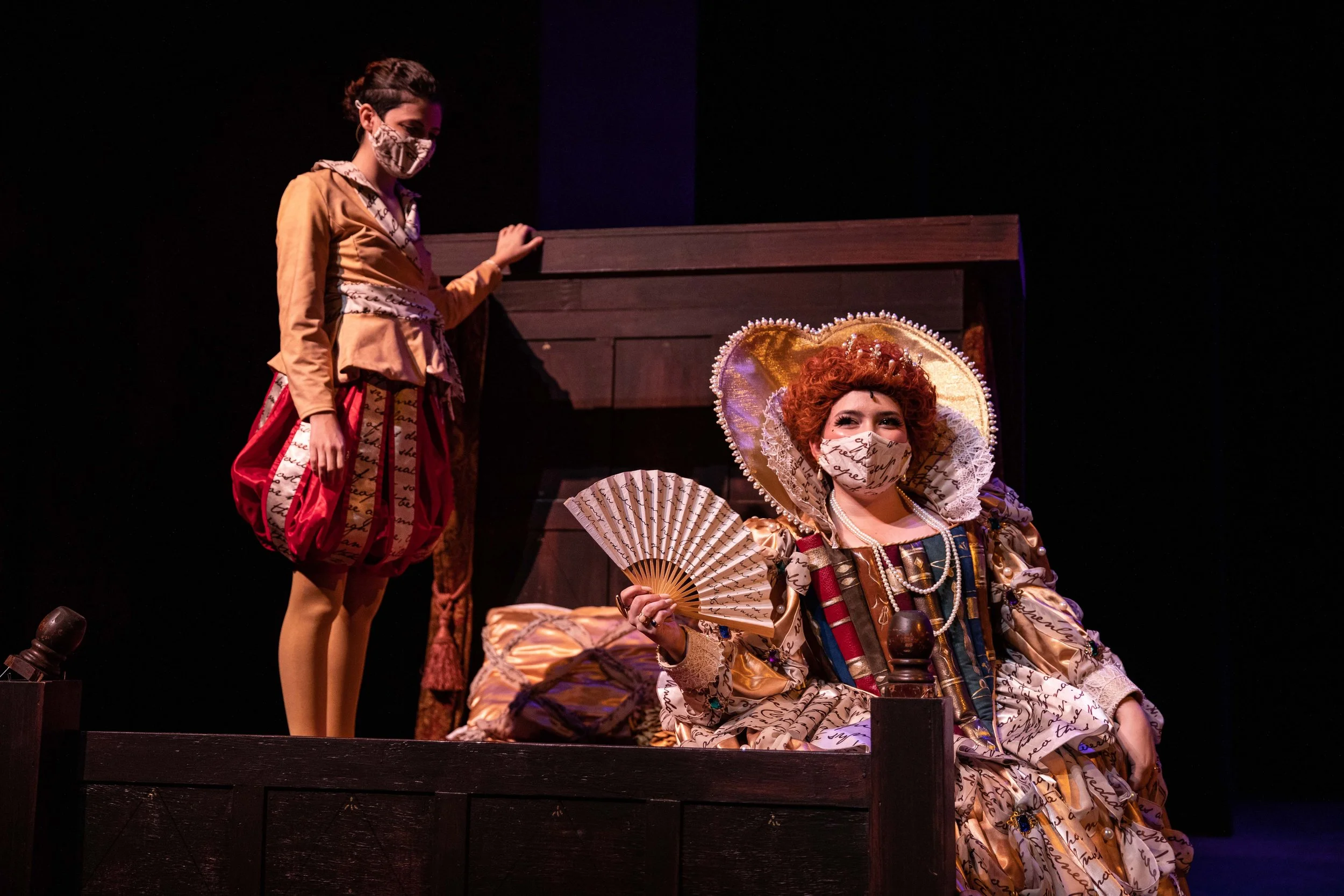
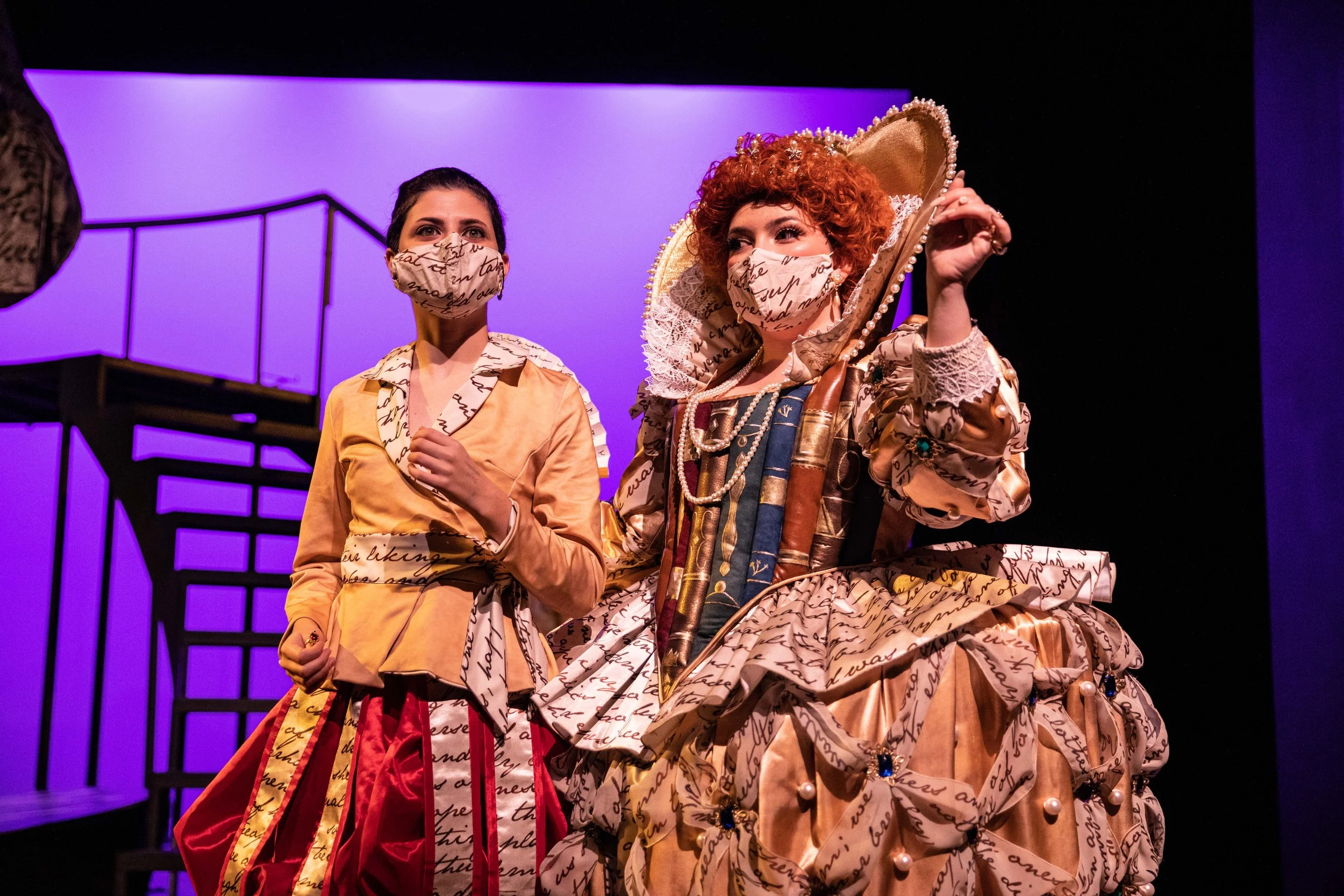
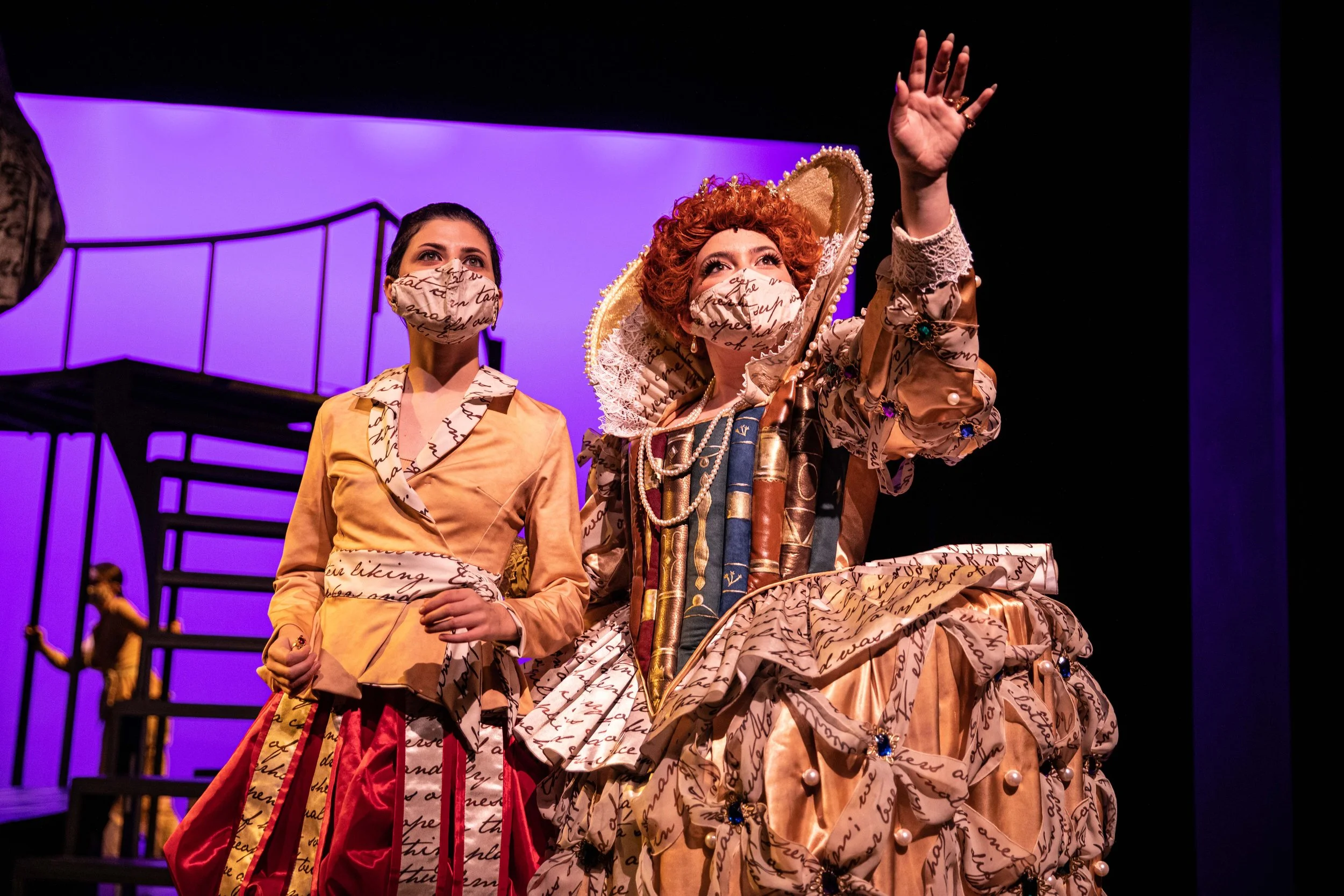
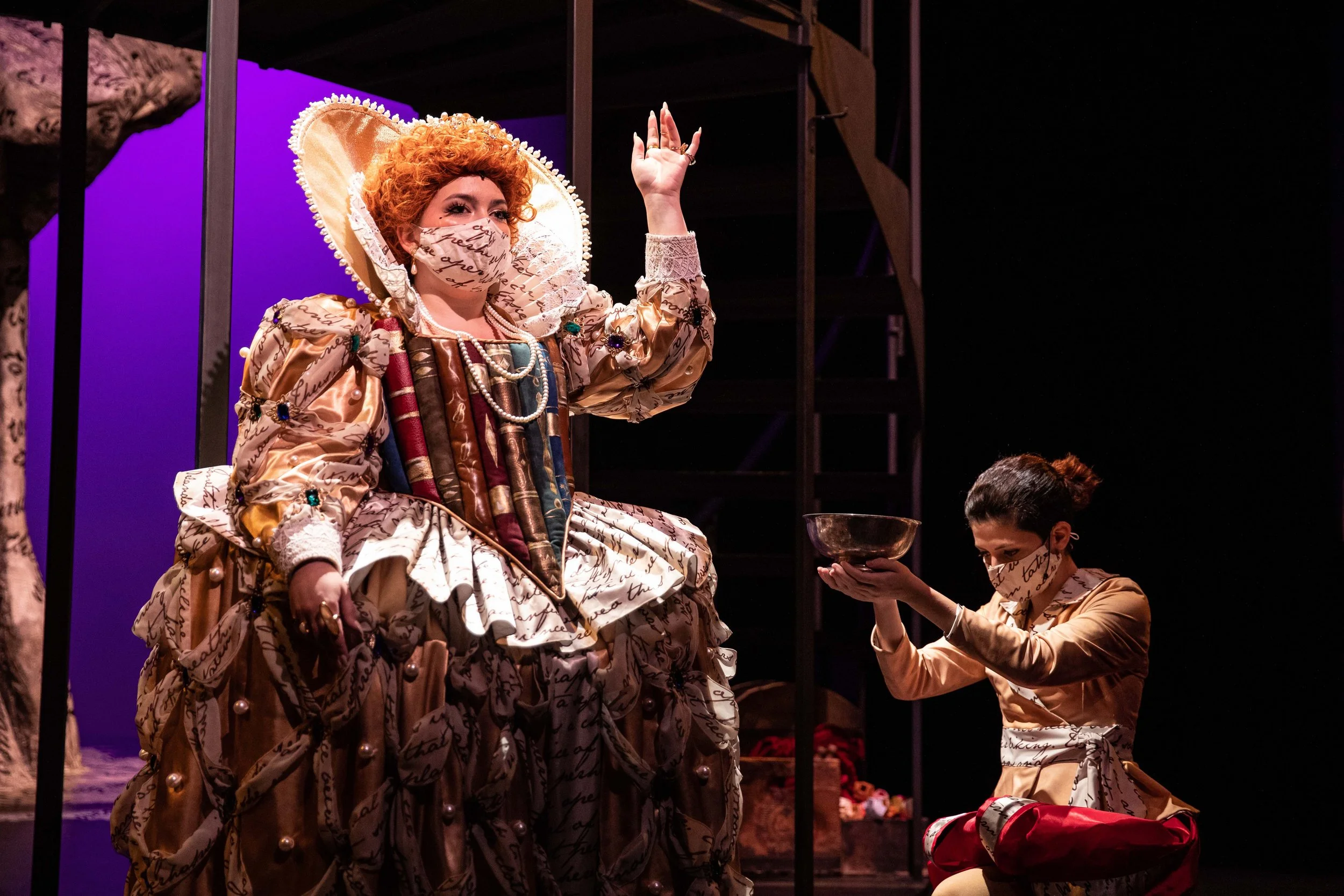
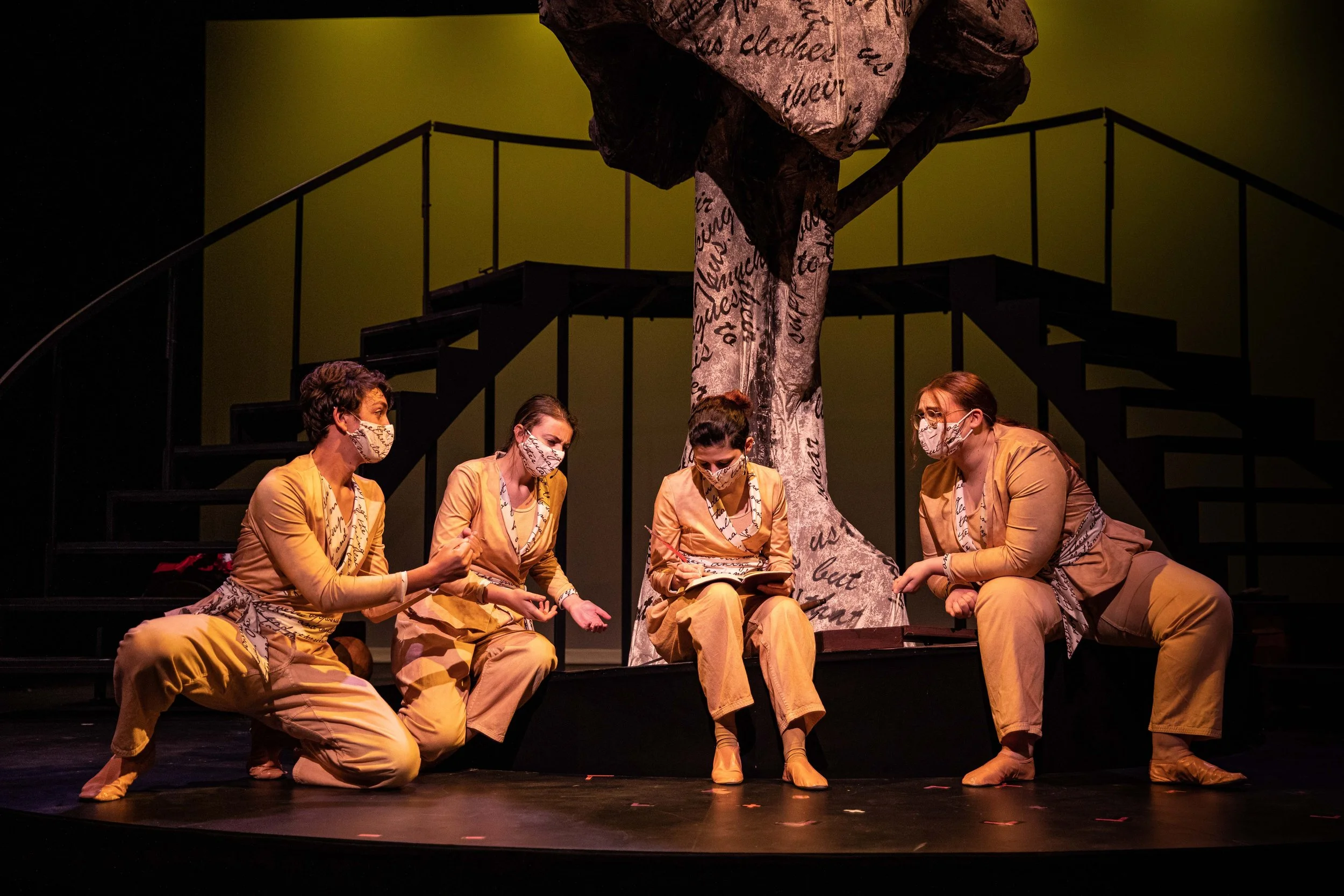
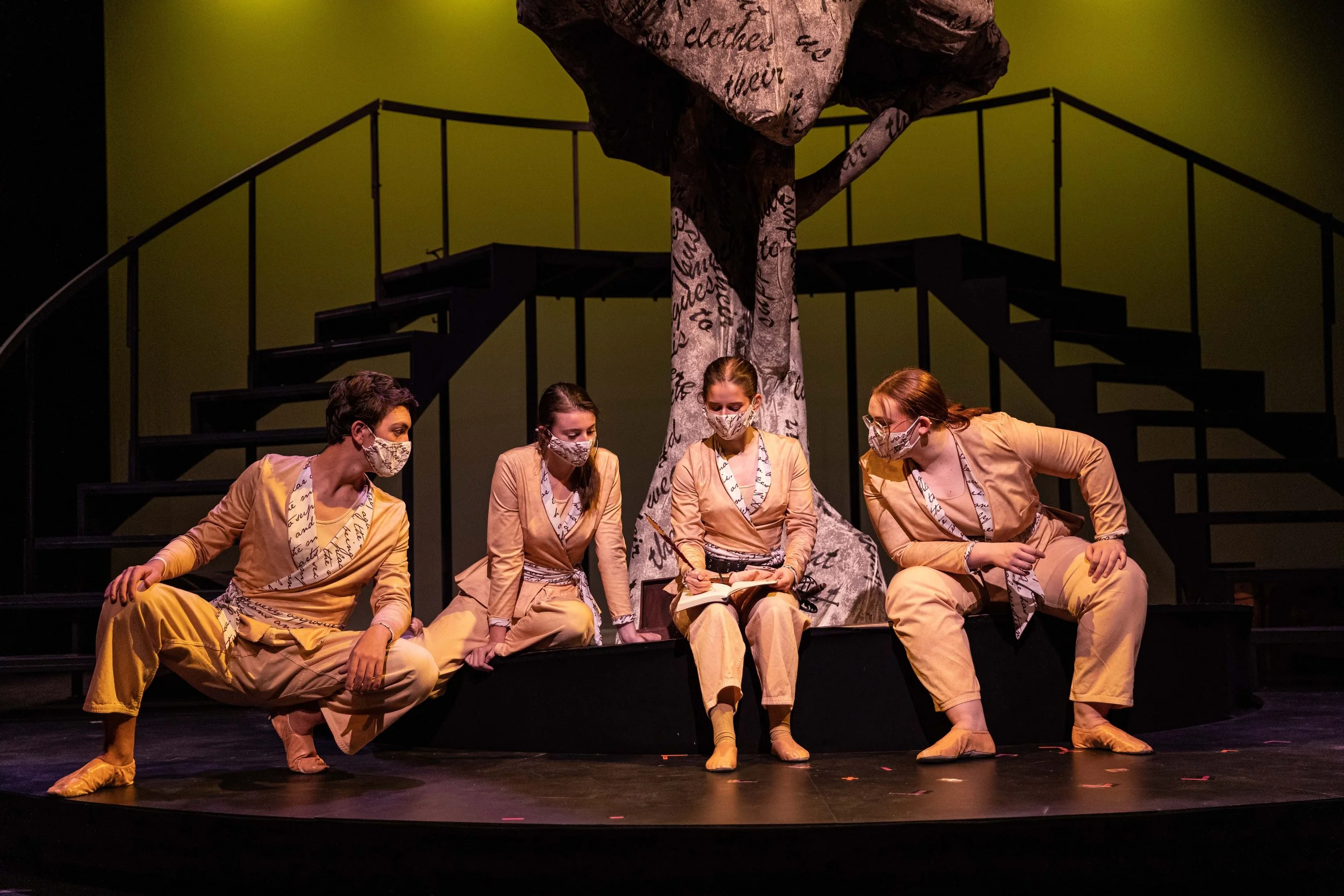
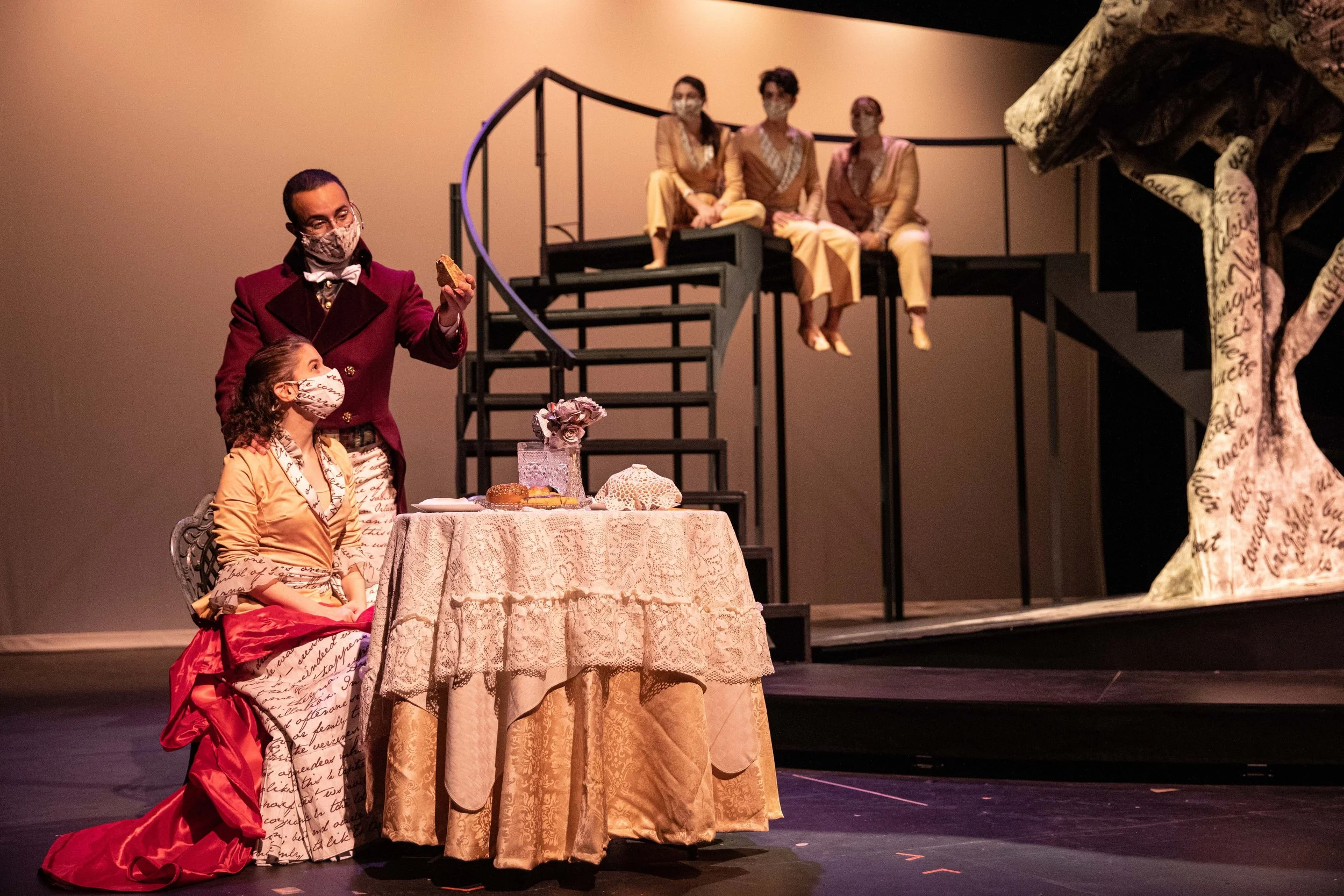
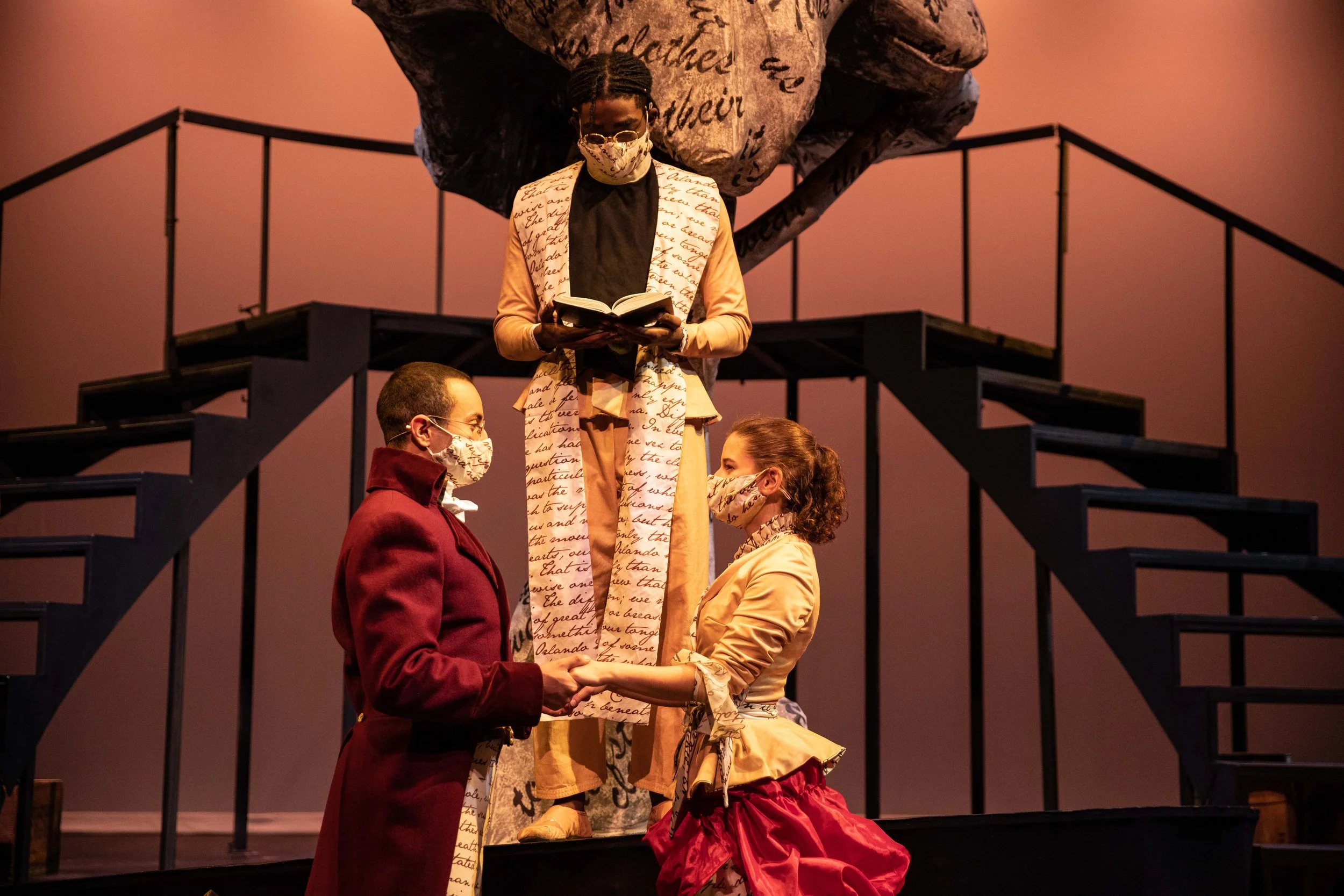
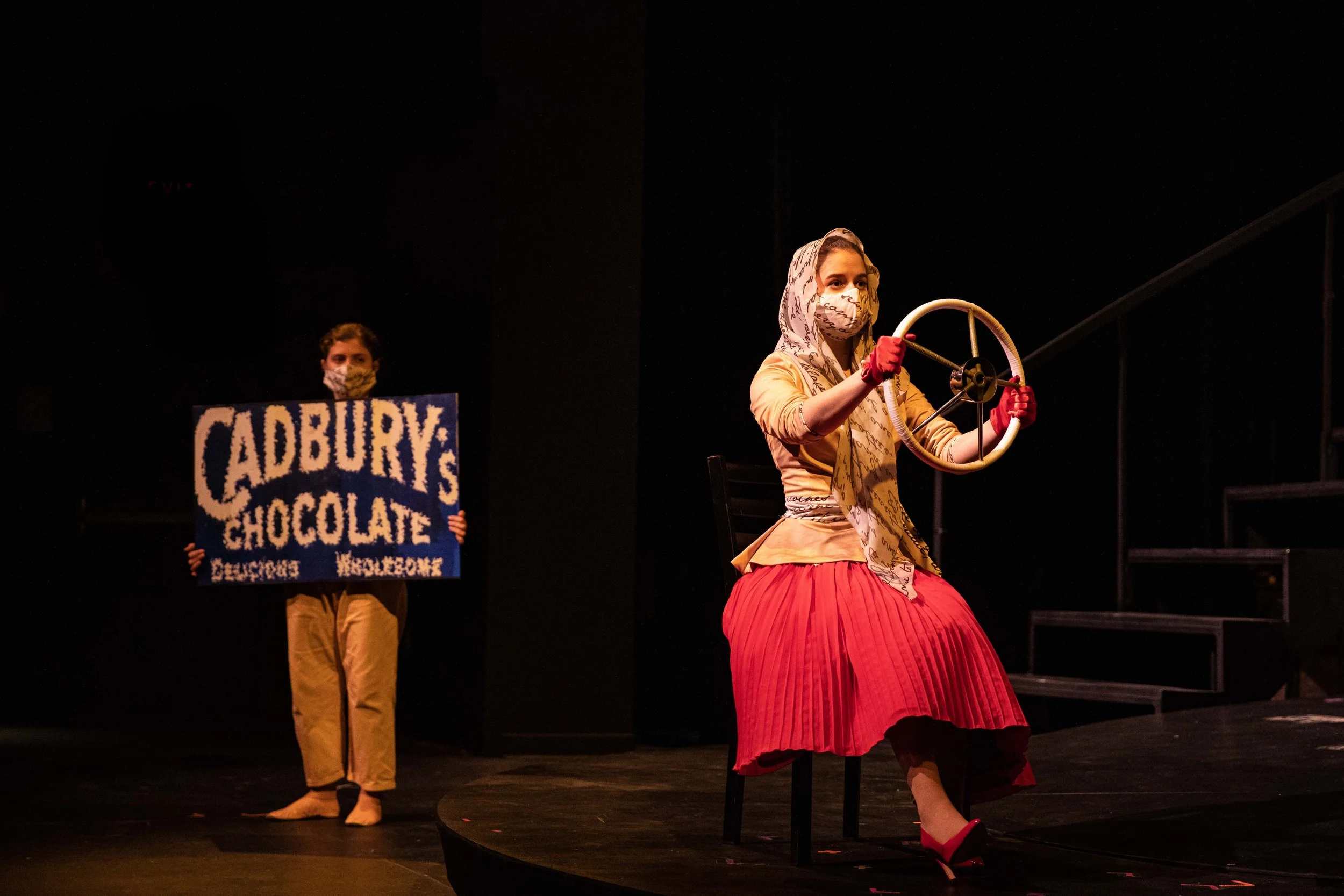
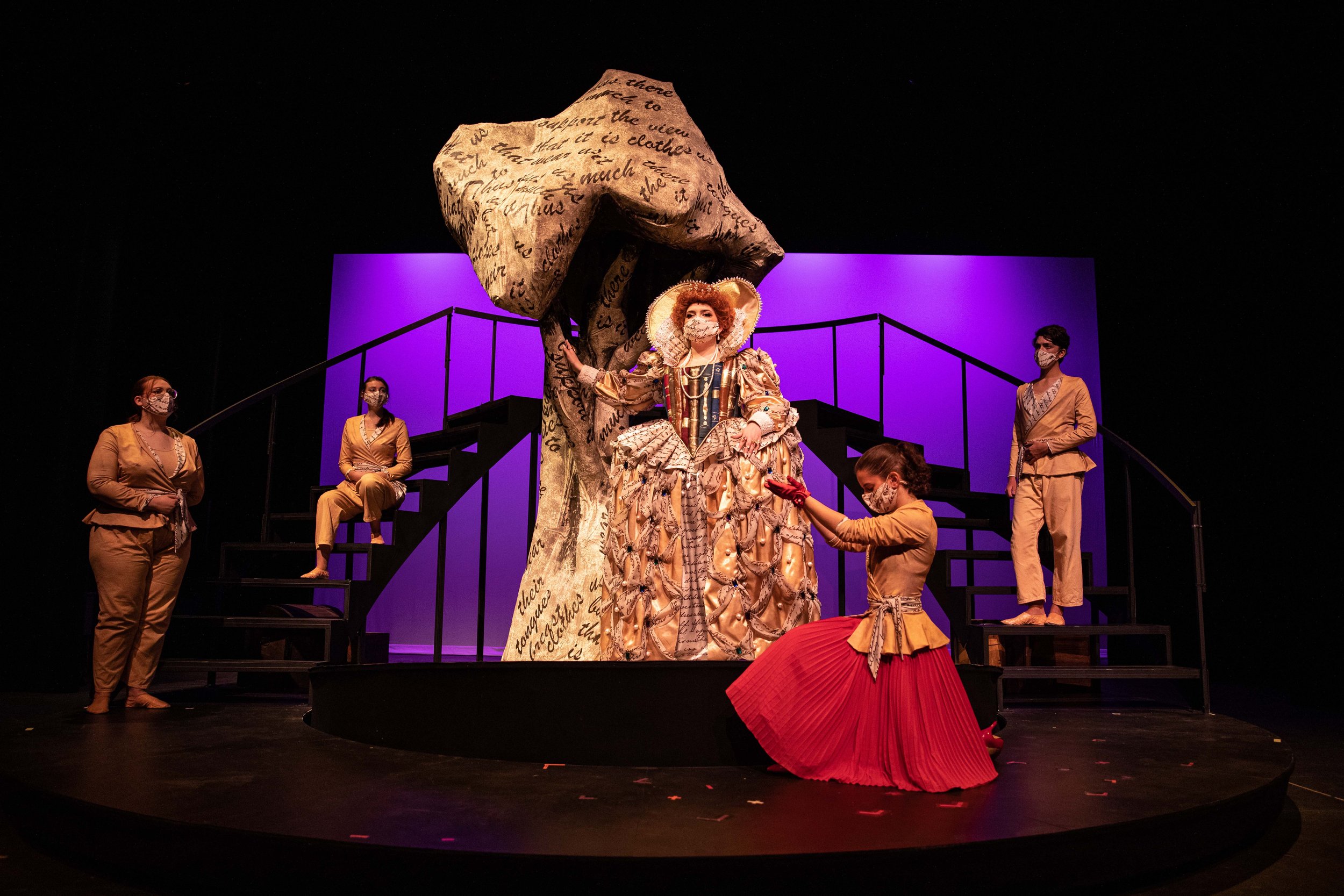
This production was inspired by the play’s themes of time and transformation. Orlando discovers they can simultaneously be many things. Ruhl and Woolf’s language is poetic, both simple and complex. Scenic designer Jane Hillier-Walkowiak gave our production a set composed of two concentric circles able to literally spin Orlando through time and transform into any environment. The inspiration to visualize transformation was taken from origami, where the same piece of paper can become innumerable objects. Orlando’s poem The Oak Tree, while sometimes elusive, is always present on the stage, reminding us that our passions are inside our hearts and minds. Custom printed fabrics, with words from the novel, bring to life the line “Vain trifles as they seem, clothes change our view of the world and the world’s view of us. In fact, there is much to support the view that it is the clothes that wear us and not the other way ‘round.”
Orlando takes hundreds of years to discover themselves and, in the process, allows the audience to peer into society's mirror and reflect on how norms and conceptions shape our self-perceptions, our identity, our loves, our self-discovery, and ultimately our self-acceptance.
Thank you for supporting live theatre. Enjoy the show!
Julie Kiernan
Director
October 14, 2022